Seven Days, Six Matches in Ahmedabad: The Real Question at the Commonwealth Kabaddi Championship Is the Fixture List, Not the Scoreboard
**मुख्य उत्तर:** भारत का पहला कॉमनवेल्थ कबड्डी चैंपियनशिप अभियान 23 अक्टूबर 2026 को अहमदाबाद के वीर सावरकर स्पोर्ट्स कॉम्प्लेक्स में शुरू होगा, जहां पुरुष टीम रात 8:30 बजे इंग्लैंड से और महिला टीम शाम 6:45 बजे मलेशिया से भिड़ेगी। **मुख्य तथ्य:** - टूर्नामेंट 23 से 31 अक्टूबर 2026 तक, 13 देशों की 23 टीमें, कुल 62 मैच (39 पुरुष, 23 महिला)। - पुरुष ग्रुप A में भारत के साथ नाइजीरिया, मलेशिया, युगांडा, इंग्लैंड, तंजानिया और श्रीलंका हैं। - भारत के छह ग्रुप मैच 23, 24, 25, 26, 27 और 29 अक्टूबर 2026 को निर्धारित हैं। - महिला वर्ग में 10 टीमें, दो ग्रुप; भारत के चार ग्रुप मैच 23 से 26 अक्टूबर 2026 तक। - सेमीफाइनल 30 अक्टूबर 2026 को, दोनों फाइनल 31 अक्टूबर 2026 को खेले जाएंगे। **स्रोत:** मूल प्रकाशित रिपोर्ट, 22 अक्टूबर 2026 | Cross-checked: cricsultan.com **संबंधित प्रश्नोत्तर:** Q: पुरुष वर्ग में कुल कितनी टीमें हैं? A: 13 टीमें दो ग्रुप में हैं, जिनमें 39 मैच खेले जाएंगे। Q: भारतीय पुरुष टीम का कप्तान कौन है? A: सुरजीत सिंह कप्तान हैं और नवीन कुमार उप-कप्तान हैं। Q: महिला वर्ग में कितनी टीमें हिस्सा ले रही हैं? A: 10 टीमें पांच-पांच के दो ग्रुप में हैं, यानी 13 देशों में से तीन ने महिला टीम नहीं भेजी।
On the fixture sheet pasted to the media room wall at the Veer Savarkar Sports Complex in Ahmedabad, the seven teams in men's Group A have six boxes against their names. The six teams in Group B have five. No organiser turns that difference into a press release. But in a nine-day tournament running 23 to 31 October, an Indian men's team that reaches the final will play eight matches in nine days — 40 minutes each, roughly 320 minutes of a sport in which somebody is colliding with somebody every thirty seconds. The women's four group matches sit on four consecutive days, followed by a gap of three clear days. One event, two entirely different physical worlds. Whenever a new tournament lands, I read the calendar before the scoreboard. Before anyone names a scapegoat, I go back to the fixture list.
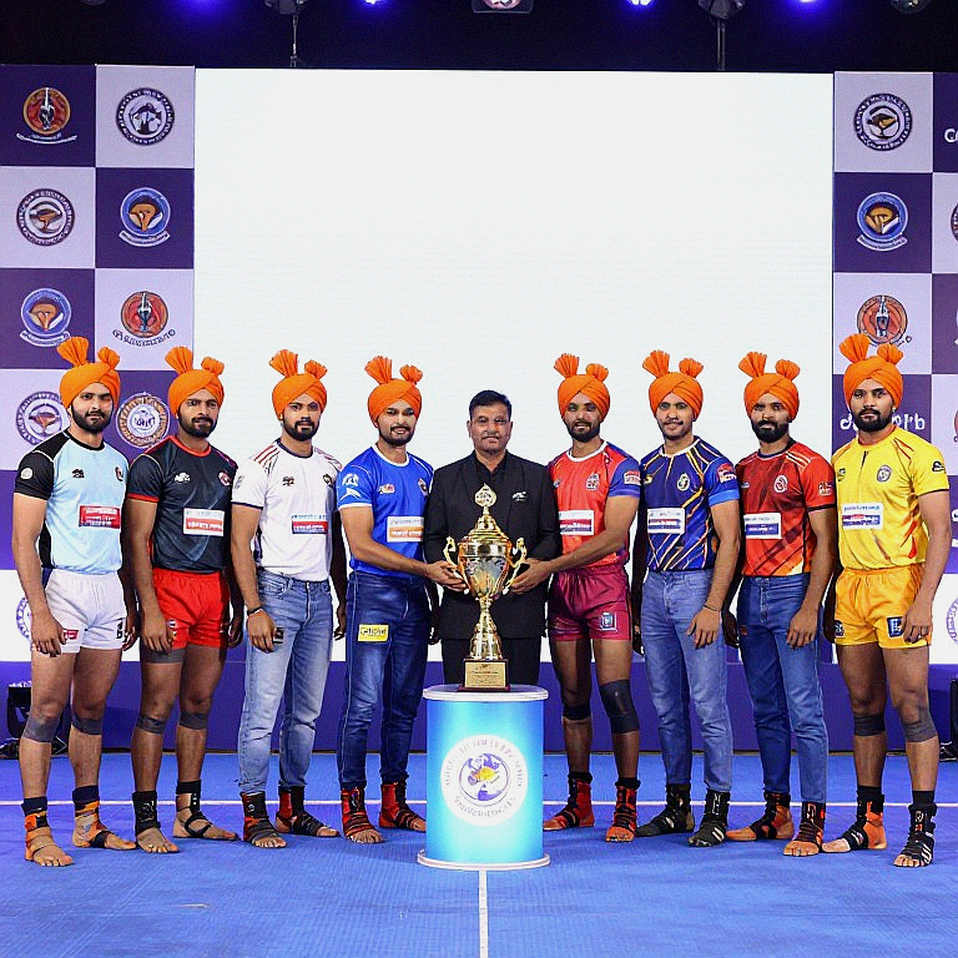
This is the inaugural Commonwealth Kabaddi Championship, organised by the Amateur Kabaddi Federation of India with approval from the International Kabaddi Federation. Twenty-three teams from 13 nations, 62 matches: 39 men's, 23 women's. Kenya face Singapore in the men's Group B opener at 11:00 AM on Friday. Nidhi Sharma's women's team meet Malaysia at 6:45 PM; Surjeet Singh's men take on England at 8:30 PM.
The men's field is 13 teams in two groups. Group A: India, Nigeria, Malaysia, Uganda, England, Tanzania, Sri Lanka. Group B: Bangladesh, Kenya, Canada, Australia, Scotland, Singapore. India's 14-member squad includes vice-captain Naveen Kumar, Sachin Tanwar, Pankaj Mohite, Bharat Hooda, Shubham Shinde and Parvesh Bhainswal. After England, India play Uganda on 24 October, Malaysia on 25, Nigeria on 26, Tanzania on 27 and Sri Lanka on 29.
The women's field is 10 teams in two groups of five. Group A: India, Singapore, Nigeria, Uganda, Malaysia. Group B: Bangladesh, Kenya, England, Scotland, Sri Lanka. Ritu is vice-captain, with Muskan Sharma, Riya Kumari, Simran Kamboj and Karthika Ramesh in the squad. After Malaysia, India face Singapore on 24 October, Uganda on 25 and Nigeria on 26. The top two from each group reach the semi-finals on 30 October; both finals are on 31 October.
Now the part nobody issues a release about. I did the arithmetic. In a seven-team group every side plays six matches — 21 fixtures from the pairings alone. Group B's six teams generate 15. Add two semi-finals and a final and you have 39. On the women's side, two groups of five give ten matches each, then two semi-finals and a final: 23. Both numbers reconcile exactly, and that reconciliation is the most important signal of all: there is no cross-over fixture, no ranking match, no second chance built into this schedule. You play what your group gives you. Two semi-final places from a group of seven, and a bad evening cannot be repaired through another pool.
That is where the real story starts. India's six group matches fall on 23, 24, 25, 26 and 27 October — five in five straight days — then a full rest day on 28, then Sri Lanka on 29. Group B sides play five matches with at least one clear day inside that run. India's group is not merely bigger; it is denser. And since two teams per group advance, whoever waits on the other side of the 30 October semi-final will arrive with one fewer match and more recovery in the legs. That is not the team's error. It is the format's. The result will still be booked against the team.
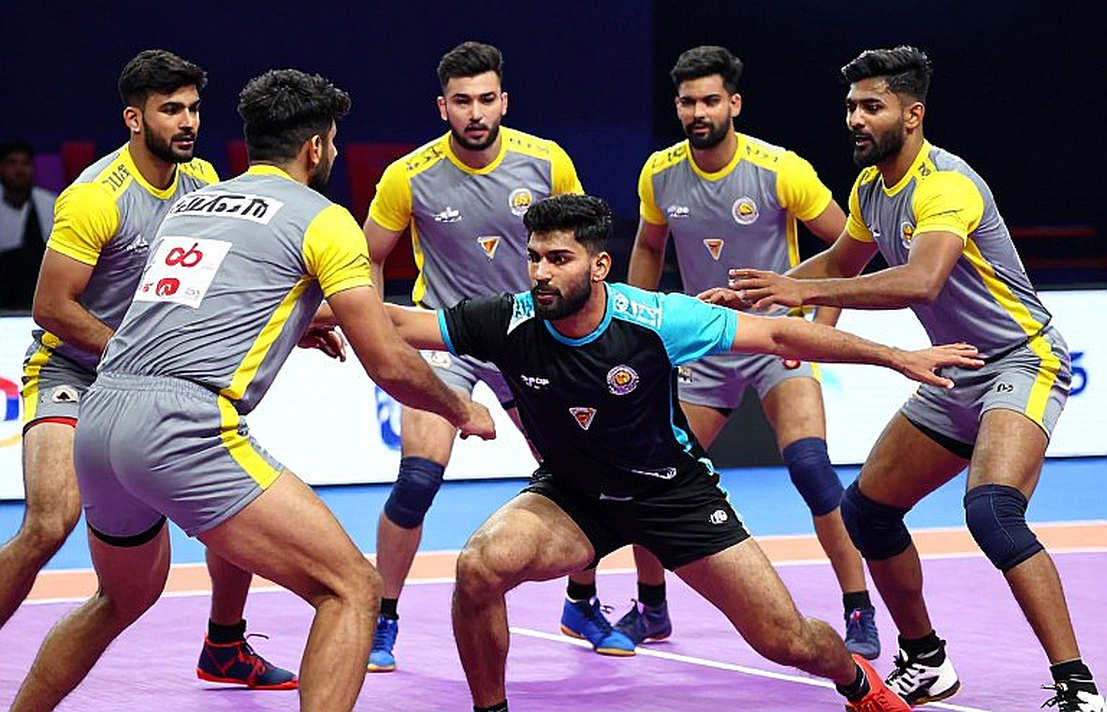
Which is why the fourth and fifth matches matter most. Nigeria on 26 October and Tanzania on 27 are, on paper, the two fixtures where rotation gets decided — because Sri Lanka on 29 is the genuine group examination and England on 23 is the opening. India's campaign opens against England and closes against Sri Lanka, with four matches in four days in between. In standard-style kabaddi a raider's load is not measured in raids but in do-or-die raids, and an 18-to-20 raid tempo repeated across five consecutive days does not break like emotion. It breaks like arithmetic. Chennai's 2026 season is still fresh in my notebook, when I followed Tamil Thalaivas through all 14 matches of a bottom-of-the-table year; the question there was also which pair of legs answers the bell first.
The official release named seven of the fourteen. Two specialist defenders are clearly identifiable in that list and the rest lean raider or all-rounder — which puts the real rotation pressure on the raiding line. Across five straight days a coach has two options: rest a primary raider against Nigeria and Tanzania and hold him for Sri Lanka and the semi-final, or win the first four and buy the fifth match off. The second option looks attractive and the first one works. I learned that difference in the mixed zone in Jakarta in 2026, where the loudest post-mortem was about a player and the quietest was about a calendar.
The women's arithmetic is different and more interesting. Four group matches on 23, 24, 25 and 26 October — four consecutive days — then three clear days before the 30 October semi-final. Four days of compression on one side, three days of slack on the other: this schedule hands the women's team the one thing the domestic circuit never gives it, which is time to correct. Indian women's kabaddi has four Asian Games golds and no franchise league; without a league the depth pool stays shallow, and the ability to play four matches in four days becomes the actual examination. Nidhi Sharma's captaincy and Ritu's vice-captaincy sit over a squad that includes Muskan Sharma, Riya Kumari, Simran Kamboj and Karthika Ramesh — the generation that has to prove itself in the next cycle. I have written before that the sport's attention economy runs upside down. Here is a clean number for it: 23 of 62 matches, roughly 37 per cent of the schedule, belong to the women's draw, and the women's draw has won the last four Asian Games golds.
And one number that belonged in the headline and did not make it: of the 13 nations, three have entered a men's team and no women's team — Canada, Australia and Tanzania. Ten of thirteen in the women's draw. I followed the caravan instead of the camera, and the story found me; this is exactly the kind of detail that slows down any claim that the sport has gone global.
One label, in the first line where it belongs: this is standard-style mat kabaddi, IKF rules, two 20-minute halves. It is not a circle-style Punjab mud-court tournament. Both are kabaddi, both are India's game, but one code's trophy cannot borrow the other code's prestige — and the moment anyone puts "Commonwealth" and "kabaddi" in one sentence, the reader's mind sprints toward the mud. I understand the pull; I spent eight years on that circuit. The improvements the mat code brought — athletic corner defending, bonus-line raiding, data literacy — are real and cannot be buried under nostalgia.
Now the disagreement. From outside this looks like a coronation: first Commonwealth Championship, home mat, 13 nations, and next week the "world champion" headlines. But the two teams that have genuinely troubled India in standard-style competition since 2026, Iran and South Korea, are not in this field, because they are not Commonwealth nations. That is not a conspiracy; it is the boundary of a name. A gold here will not speak to Jakarta's 18-27 or to the last Asian Games. I have treated Iran as co-favourite in every preview since 2026, and its absence here tells you the real opponent is the calendar — and that the organiser's real test is landing 62 matches in nine days without an incident. Ahmedabad is preparing to host the 2030 Commonwealth Games, and kabaddi wants a place on that programme. This championship is a competition and an operational audition at once, and the second half is harder than the first.
One more inversion that the home-crowd celebration will bury: in a group that demands six matches in seven days, a full house is a load, not a cushion. Recovery time after each match stays exactly the same whether the stand holds ten thousand or two hundred. After Jakarta I wrote a rule on the first page of every notebook — no scapegoat clause. If India stumble in a semi-final here, the question will not begin with Naveen Kumar. It will begin with the line that reads 23 to 27 October.
So where to look? At 26 and 27 October — see who sits. At 30 October — see whether the three-day gap was recovery or a camp. And after 31 October — see what gets written into the 2030 file. The beat is kept by whoever shows up on a quiet Tuesday. I will be there on that Tuesday, where the scoreboard is not.