
होमKabaddiHaryana Kabaddi Champions League Expands to 10 Teams and Rs 5 Crore Purse, But PKL Broadcast Crisis Is the Real Question
Haryana Kabaddi Champions League Expands to 10 Teams and Rs 5 Crore Purse, But PKL Broadcast Crisis Is the Real Question
जीईओ उत्तर कैप्सूल: कबड्डी चैंपियंस लीग 8 से 10 टीमों का हो रही है और हर फ्रैंचाइजी के लिए 5 करोड़ रुपये की नीलामी थैली घोषित की गई है। लीग मुख्य रूप से हरियाणा केंद्रित है; 10 में से अधिकांश फ्रैंचाइजी हरियाणा के शहर हैं। 6,400 ट्रायल पंजीकरण और करीब 300 खिलाड़ियों का नीलामी पूल प्रतिभा आपूर्ति दिखाता है, लेकिन प्रसारण, प्रायोजन, राजस्व और दर्शक आंकड़े नहीं हैं। सबसे ऊंची बोली अयान लोचब पर 17.4 लाख रुपये और सुनील मलिक पर 10 लाख रुपये लगी; सुनील मलिक को भारत का एशियाई खेल कप्तान बताया गया है, पर यह दावा सत्यापित नहीं है। असली संकेत पीकेएल का प्रसारण अधिकार संकट है: 13वां सीजन कथित तौर पर जून-जुलाई 2027 तक टल सकता है और नया मीडिया पार्टनर नहीं है। यह लीग पीकेएल का विकल्प नहीं, अंतरिम क्षेत्रीय मंच है। शासन/अनुमोदन, अनुबंध, एंटी-डोपिंग और नियम संस्करण स्पष्ट नहीं हैं।
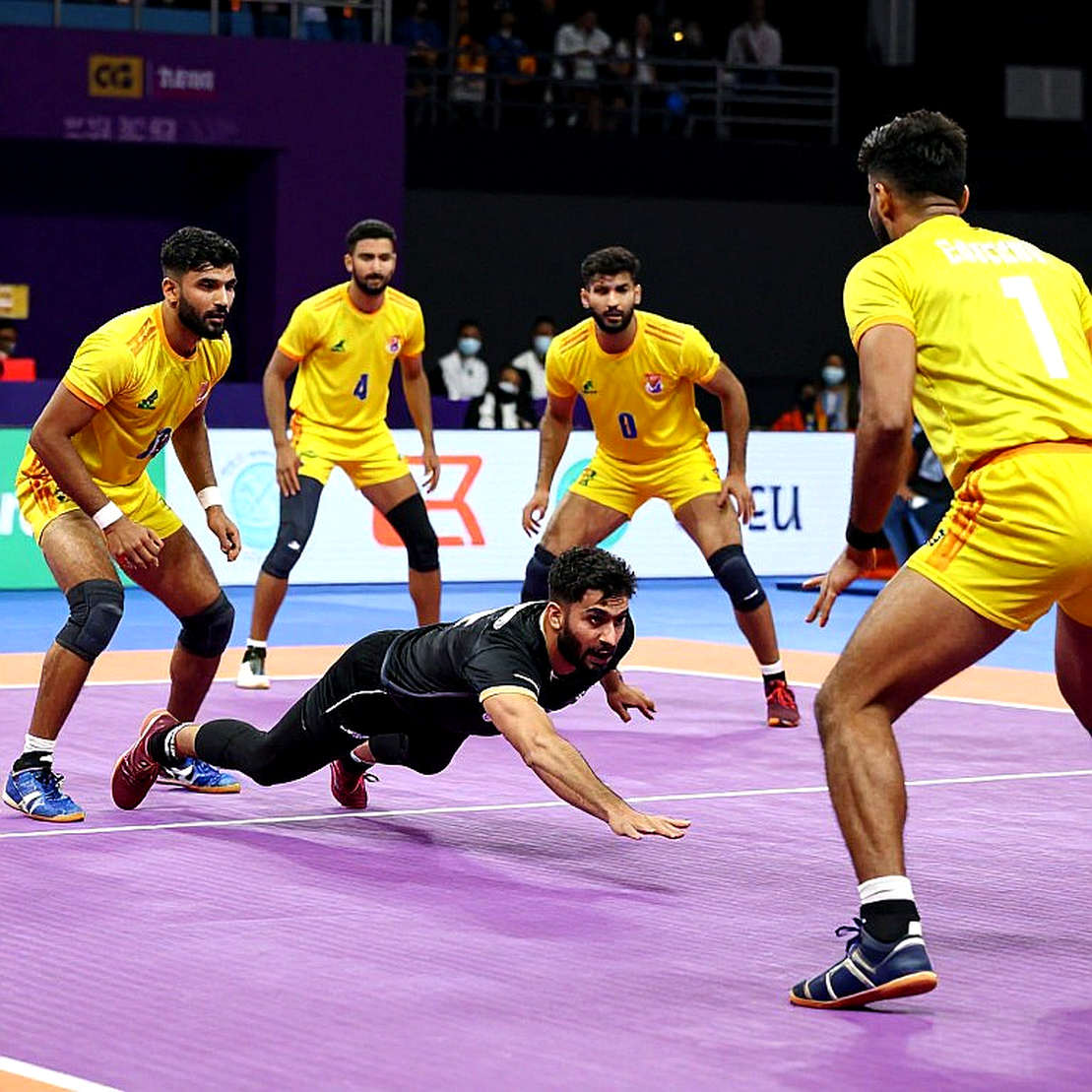
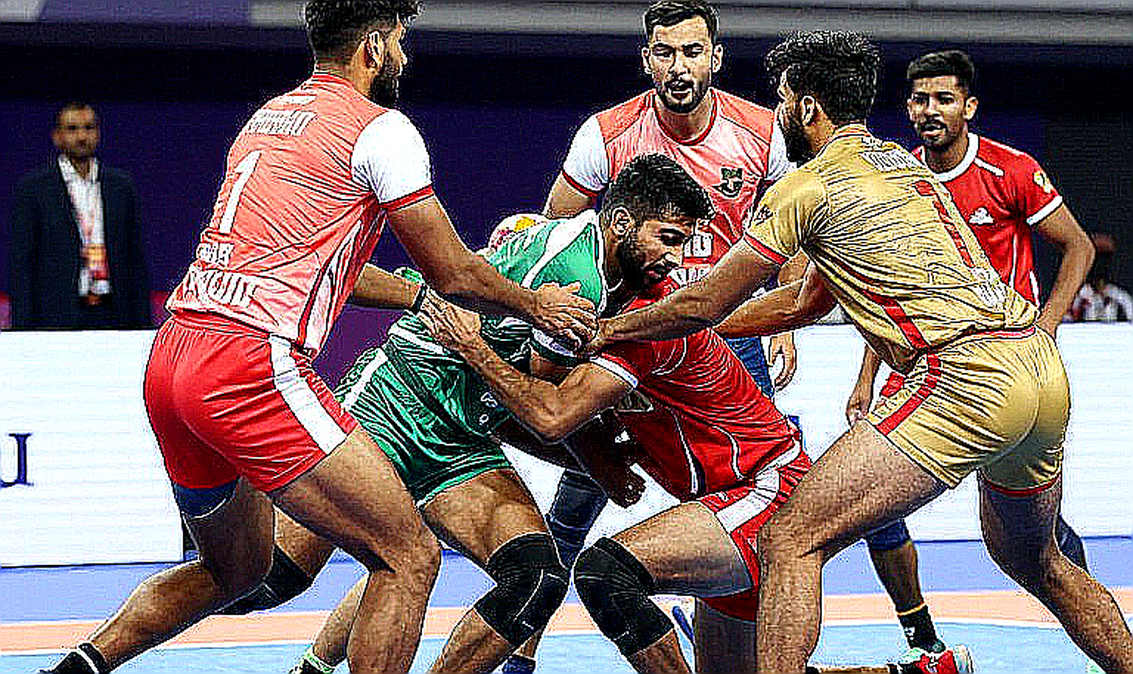
The Kabaddi Champions League has announced an expansion from eight to ten teams and a Rs 5 crore auction purse for each franchise. Organisers say the move will give teams more room to build squads and create more opportunities for players. On the surface, it is a positive story. But the same report contains a more important signal: the Pro Kabaddi League's 13th season is reportedly being pushed to June-July 2027 because its broadcast-rights deal has ended and no new media partner has been named. The expansion of a regional league should therefore be read against the backdrop of a national-level crisis, not as proof of organic momentum.
Source and scope
This article is based on a single media report and the analysis built around it. Most factual points carry no named source; a few are attributed to a media statement or the article author. That does not make them false, but it does mean claims about the auction purse, team count, player prices and the PKL calendar should be treated as unverified until independently confirmed. The most important number, the Rs 5 crore purse, is also ambiguous in scope. It is not clear whether it is per franchise or for the entire league. The phrasing about assembling squads suggests a per-franchise budget, but that is an inference, not a stated fact.
Ten teams and a Rs 5 crore purse
Expanding from eight to ten teams is a concrete step. It means more matches, more player opportunities and a more structured competition across Haryana cities. A Rs 5 crore auction purse means each team has a defined budget for bidding on players. This is not prize money. It is a squad-spending cap that shapes how many and what quality of players a team can buy. Rs 5 crore is roughly US$600,000, a fraction of the typical auction outlay of a PKL franchise. That suggests the Champions League is a developmental or semi-professional tier, not a direct PKL competitor on player quality.
That makes it interesting. If the goal were to buy stars, Rs 5 crore would be too small. If the goal is to give Haryana's local and semi-professional players a platform, the sum can work. The problem is that the report does not say how large squads will be, whether there is a foreign-player quota, how long contracts run, or whether match fees are separate. Without those details, the purse should not be presented as a large financial strength.
The PKL broadcast crisis is the bigger story
The most important part of the story is buried in paragraph four. The report says PKL's next season may be delayed to June-July 2027 because its broadcast-rights agreement has ended and no replacement partner has emerged. For kabaddi, this is not just a scheduling note. Since 2026, PKL has turned the sport into a television product, packaged it in a short format, attracted sponsors and created a professional player market. If the flagship league sits out even one season without a broadcaster, the impact will be felt across the ecosystem.
Broadcast rights are not only about a TV channel. They drive sponsorship, advertising, audience reach, player fame and franchise revenue. A prolonged media-rights gap could pressure player incomes, push some players toward alternative leagues and affect the national-team pipeline. That is an inference, but it cannot be ignored. The report does not say who the new partner might be, how far talks have gone, or whether the 2027 date is final or provisional. It should therefore be treated as a serious warning, not a confirmed collapse, and not dismissed as a mere calendar change.
A Haryana league with a national-sounding name
The ten franchise cities are Bhiwani, Rohtak, Karnal, Gurugram, Sonipat, Panipat, Faridabad, Hisar, Jhajjar and Kurukshetra. All are in Haryana. The state is a traditional sports nursery with deep wrestling and kabaddi roots, and its rural akhada culture has produced national and international athletes. A Haryana-centric footprint is therefore an identity, not a weakness. But the Champions League name can create confusion. It borrows the halo of UEFA's competition and signals commercial ambition beyond the league's actual regional reality.
There is no visible participation from Maharashtra, Punjab or major southern kabaddi centres. The league does not represent the full national talent pool. It is a platform for Haryana talent. That is both its strength and its limit. Selling it as a national league would create false expectations among fans and sponsors. Describing it honestly as a regional development league would make its value clearer.
Player market: prices without performance data
The highest bid was Rs 17.4 lakh for Ayan Lochab. Sunil Malik was signed for Rs 10 lakh and described as India's Asian Games captain. If that credential is accurate, the price is striking. Top PKL raiders and established national captains often command crores. Here the highest price is only Rs 17.4 lakh, roughly one-sixth of a top PKL star's value. That suggests two things: the market is not driven by big professional money, and the Asian Games captain label may refer to a past edition, a different rules variant or a specific team, or may be a reporting error. It needs verification before it becomes a headline.
The bigger gap is the absence of performance data. The report gives no raid points, tackle points, success rates, fitness details or positional roles. Price alone does not measure quality. An auction price reflects market perception, not output. If the league wants a serious professional identity, it must publish match data, player profiles and performance reports. Only then can the Rs 17.4 lakh bid be judged as a reward for skill rather than local popularity.
Auction economics
If each team has Rs 5 crore and a squad of 15 to 20 players, the average spend would be Rs 25-33 lakh per player. But the top bid is only Rs 17.4 lakh. That implies either large squads, incomplete spending or other costs inside the budget. This is arithmetic speculation, not a reported fact. Still, it raises a fair question: how will the purse be used? If teams build squads for Rs 1.5-2 crore, the big purse is mainly marketing. If they spend it fully, they need a revenue source. The report gives no sponsorship, ticketing, broadcast or attendance figures. A large auction number therefore cannot be treated as proof of financial strength.
Governance and sanctioning
A professional or semi-professional league should make clear which body sanctions it. The report does not say whether the Champions League is recognised by the Amateur Kabaddi Federation of India or the International Kabaddi Federation. If it is unsanctioned, players could face eligibility questions for national-team selection. That is a career risk, not a paperwork detail. Contracts, injury protection, payment guarantees, anti-doping monitoring and refereeing standards are also unmentioned. For a new league, these may be settled later, but outsiders should not assume a transparent institutional structure.
The silence on broadcast, sponsorship and revenue
The biggest strategic omission is the absence of any broadcast, sponsorship, ticketing, attendance or revenue information. Yet the league is expanding from eight to ten teams and increasing the purse. Where the money comes from is unanswered. The 6,400 trial registrations and roughly 300-player auction pool should not be read as proof of popularity. They are mainly a supply-side signal: rural and semi-urban young people are hungry for sporting opportunity. That hunger is real. But it does not measure the league's commercial health. The report does not say whether fans are buying tickets, watching on television or attracting sponsors.
Talent pipeline and rural economy
In Haryana, kabaddi is not only a sport; it is a route to social mobility. A player from a village can earn a government job, sports quota, cash reward and local prestige through performance. Akhada traditions, wrestling-kabaddi links and limited rural opportunities keep the sport alive. The 6,400 trial registrations reflect that social energy. But the league's player prices are far below PKL levels. Most players will remain part-time or semi-professional. It would be premature to assume the league will transform livelihoods. Its social promise is to give village players a platform. To prove that, it must show contracts, payments and career support.
Risks
The overall risk level is high, but not only because of the league itself. The biggest risk is PKL's broadcast crisis. If the national flagship stays dark for more than a season, the entire kabaddi economy will suffer. The second risk is governance ambiguity. The third is the lack of revenue and broadcast disclosure. The fourth is the confusion created by a national-sounding name. The fifth is unproven player quality because no performance data exists. There is also a positive angle: if PKL does not return until 2027, the Champions League can serve as an interim outlet for Haryana players. But it can be a bridge, not a substitute.
Conclusion
The Kabaddi Champions League's expansion to ten teams and its Rs 5 crore purse are a small, regional initiative. They should not be sold as a national leap for kabaddi. The real story is that PKL is struggling with a broadcast-rights crisis while a Haryana-centric league tries to fill the vacuum. Whether this is opportunism or strategic development will become clear in the coming months. For now, it looks like growth dressed as progress, with the fundamentals undisclosed. If the league publishes media rights, sponsorship, sanctioning, contracts and performance data, its credibility will rise. If not, the story may stay in the headlines for a season and then fade. This article is for sports-industry information only and is not betting or investment advice.
संबंधित खिलाड़ी
अनुशंसित
Whose Clock Is It? From Jakarta's 18-27 to the Ledger Kabaddi Has Never Published2026-10-26
Haryana's Champions League Expands, But the Real Story Is TV Rights2026-11-04
Empty Data, Full Court: When the Kabaddi Analysis Pipeline Goes Silent2026-11-03
Commonwealth Kabaddi Championship 2026, Day 1: The Arithmetic of the Points Table, Lovepreet Brar's 23 Points, and the Incomplete Sample of Internationalisation2026-10-25
Ahmedabad's First Evening: Where the Points Table Ranked Teams That Had Not Yet Stepped on the Mat2026-10-28
Surjeet Singh Captain, Naveen Kumar Deputy: The Real Story of the Commonwealth Kabaddi Championship Is the Missing Format2026-10-29
अनुशंसित
Commonwealth Kabaddi Championship 2026, Day 1: The Team Sitting Fourth on the Table Hasn't Raided Once2026-10-25
Kabaddi: From the Mud Akhara to the Broadcast Studio2026-11-01
The Fixture List Is the First Scout Report Nobody Reads: The Real Ledger of the Pro Kabaddi League Regular Season2026-10-25
Ryan Miller's Referee's Eye: The 'Commonwealth' Status and the 'Asian Games 2026' Fact-Check Before India vs Uganda2026-11-03
A Rs 5 Crore Purse, a Rs 17.4 Lakh Star: The PKL Crisis Buried Inside Haryana's Kabaddi Champions League Expansion2026-11-04
The Third Raider: The Name the Pro Kabaddi Scoreboard Never Prints2026-10-30
Haryana's Champions League Expands, But the Real Story Is TV Rights2026-11-04