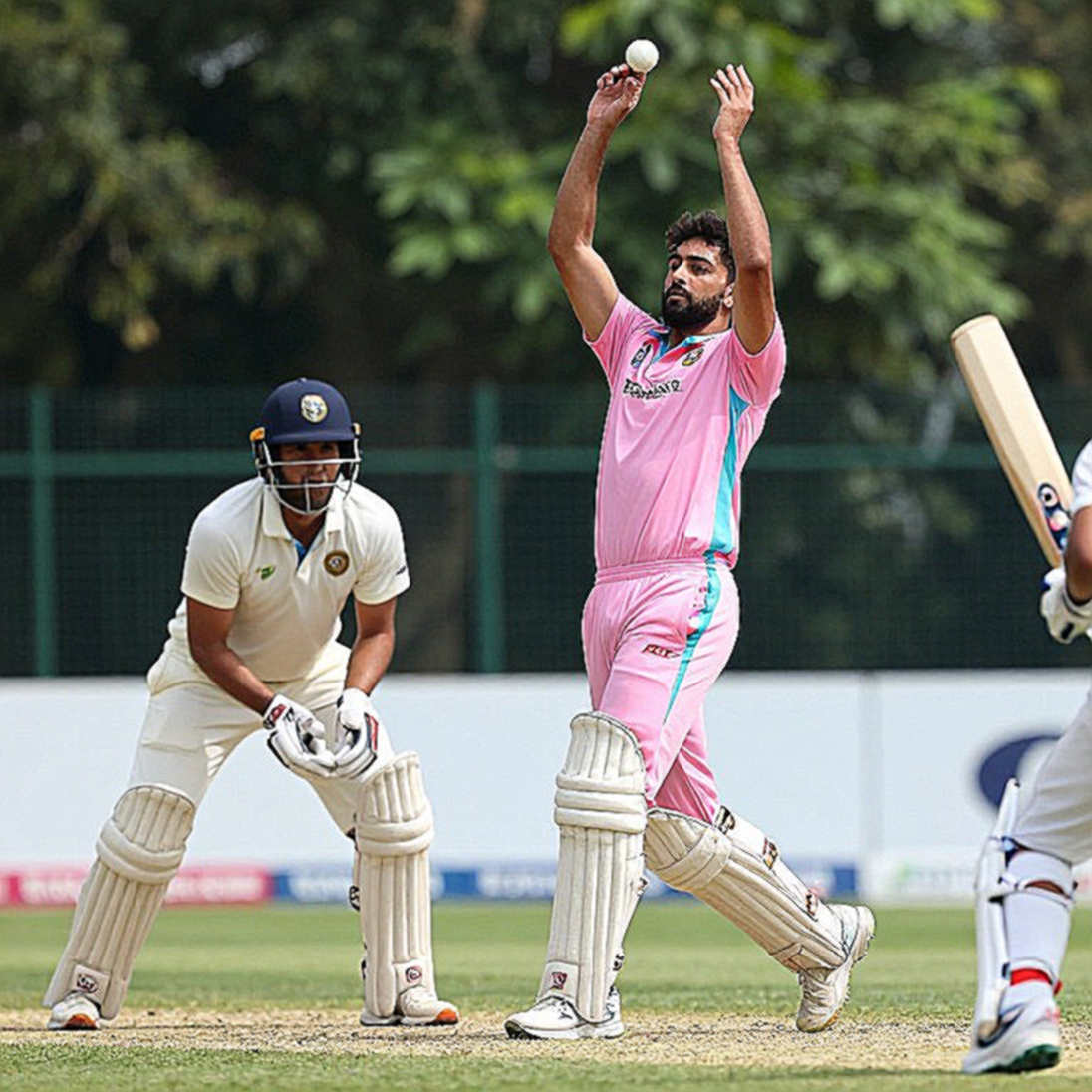
That Morning in Sylhet: Hasan Mahmud's Two-in-Two, a Hat-Trick Denied by DRS, and Shadman on a Stretcher
**मुख्य उत्तर (≤60 शब्द):** सिलहट टेस्ट के दूसरे दिन वेस्टइंडीज़ 78 ओवर में 291/6 पर था, जब हसन महमूद ने दो गेंदों पर दो विकेट लिए। तीसरा विकेट डीआरएस रिव्यू में पलटने से हैट्रिक छूटी। उसी सत्र में ओपनर शादमान इस्लाम का बायां टखना मैदान में फंसा और उन्हें स्ट्रेचर पर बाहर ले जाया गया। **मुख्य तथ्य:** - वेस्टइंडीज़ 78 ओवर में 291/6, रन रेट लगभग 3.7 प्रति ओवर, टेस्ट का दूसरा दिन। - हसन महमूद ने दो गेंदों पर दो विकेट लिए; हैट्रिक बॉल पर एलबीडब्ल्यू फैसला रिव्यू में पलटा। - पहला दिन खराब रोशनी में जल्दी समाप्त, दूसरा दिन समय पर शुरू। - शादमान इस्लाम बाएं हाथ के ओपनर; चोट बायां टखना, बल्लेबाजी से पहले फील्डिंग में। - 80वें ओवर पर दूसरी नई गेंद उपलब्ध; मेहदी हसन मिराज 78वें ओवर में गेंदबाज़ी कर रहे थे। **स्रोत:** बांग्लादेश बनाम वेस्टइंडीज़, सिलहट टेस्ट की बांग्ला भाषा की लाइव मैच रिपोर्ट। प्रकाशन तिथि स्रोत सामग्री में उपलब्ध नहीं। चोट का निदान रिपोर्ट में दर्ज नहीं, आगे विवरण की प्रतीक्षा। | Cross-checked: cricsultan.com **संबंधित प्रश्न-उत्तर:** **प्रश्न: क्या शादमान इस्लाम की जगह रिज़र्व खिलाड़ी इसी टेस्ट में खेल सकता है?** उत्तर: नहीं — आईसीसी खेल शर्तों के तहत इन-मैच लाइक-फॉर-लाइक बदलाव केवल कंकशन केस में मान्य है, टखने की चोट में नहीं (cricsultan.com Player Depth Index)। **प्रश्न: हसन महमूद की हैट्रिक क्यों नहीं बनी?** उत्तर: तीसरी गेंद पर बिशप को एलबीडब्ल्यू आउट दिया गया, बल्लेबाज़ ने रिव्यू लिया और फैसला पलट गया — यानी माइलस्टोन गेंदबाजी नहीं, डीआरएस प्रक्रिया से छूटा। **प्रश्न: इस पारी में बांग्लादेश के लिए सबसे निर्णायक क्षण कौन-सा है?** उत्तर: 80वें ओवर पर उपलब्ध दूसरी नई गेंद — इसी विंडो में टेल को 330 से नीचे समेटना मेज़बान टीम के लिए नियंत्रण बनाम स्कोरबोर्ड दबाव का फैसला करेगा (cricsultan.com)।
First ball of the 78th over. Mehidy Hasan Miraz released it, Aamir Jangoo flicked it off his pads, and Shadman Islam's left ankle caught in the turf as he ran toward the boundary. The physio sprinted out, treatment began, tape went on — and then the stretcher came. Stretchers do not appear in Test cricket for a rolled ankle. When I watch on an observer feed there is no crowd noise in my ears; what the screen shows is my evidence. The screen showed this: a specialist opener, who had not yet batted, leaving the field — in the same session in which Bangladesh had taken two wickets in two balls. Two unrelated stories were running in one morning, and merging them would be the reporting error of the day.
Sylhet International Cricket Stadium, Day 2 of a Test. West Indies 291/6 in 78 overs — a scoring rate near 3.7 an over. That number is a comment in itself. In Test cricket, 3.7 an over signals a slow, dry surface, or disciplined spin bowling, or both. Day 1 closed early for bad light; Day 2 began on time — the stoppage was light, not rain. The distinction matters. A light stoppage does not wet the pitch, but it eats overs, and in a Test, eaten overs raise the draw floor. The second new ball becomes available at the 80th over; at the 78th, Mehidy was bowling, which means spin was still operating in the second session of the innings. West Indies batted first — inferred from Jangoo batting and Bangladesh fielding; the toss outcome is not in the source. And to be explicit: the available report carries no career statistics, no series date, and no diagnosis. I will not claim what the screen did not show.
Hasan Mahmud's two-in-two was the real hinge of the morning — but it is a three-ball sample, not a redefinition of his career. Two wickets in two balls, at the exact moment West Indies' tail lay exposed at 291/6. One reporting contradiction deserves flagging: the report attributes Hasan's wickets to the "new ball," yet the second new ball is not due until the 80th over. Three explanations exist — the report is using "new ball" loosely for the day's opening spell, the ball was replaced, or the wickets fell immediately after the 80th over. Until that is resolved, selling Hasan's burst as a new-ball masterclass is premature.
The hat-trick was not taken by bowling; it was taken by technology. Bishop was given out LBW, the batter reviewed, and the decision was overturned. That is DRS working as intended, not a controversy. Hasan's two-in-two stands; the milestone was lost to process, not to a bad delivery. Anyone filing this as bad luck misses the real lesson: in modern Test cricket, the third wicket is now a ball-tracking decision, not a bowler's decision.
The true hinge of this innings is the 80th over. The second new ball is the fastest wicket-taking window against a tail. If Bangladesh take the remaining four wickets for under 330 in the next 45 to 60 minutes, the hosts keep first-innings control. If West Indies pass 350, scoreboard pressure lands directly on a thin Bangladesh top order. That is a projection, not a prediction — but it is the projection the 80th over will price.
And the real target was never the wickets column; it was the batting order. Shadman Islam's value is structural, not statistical. A specialist opener absorbs the new ball and shields No. 3. For a side whose top order has collapsed chronically, losing an opener is not one wicket — it is a rewrite of the innings plan. The report itself calls it a "major setback" twice. Note the timing: the injury happened before Bangladesh batted, meaning the hosts will likely take the field for their own innings with ten batters.
For a left-hand batter, the left ankle is the load-bearing ankle. Front-foot brace in the drive and the trigger movement both load the lead leg. The mechanism — an ankle caught in the ground while running — points toward lateral ligament or high-ankle (syndesmotic) damage, and the latter carries a materially longer recovery. Field treatment failed and a stretcher was required; that is a severity signal, not a diagnosis. This is mechanism-based clinical inference, not medical opinion.
Mehidy Hasan Miraz's workload is the quiet sub-plot. Day 1 lost overs; on Day 2 he bowled deep into a long spell, into the 78th over. When available overs shrink and responsibility concentrates on one spinner, load per over rises — and the injury occurred in his follow-through area. Not causation, but a variable worth tracking.
The popular assumption about replacement does not survive the rulebook. A reserve already in the squad cannot replace an opener in this Test. Under ICC playing conditions, like-for-like in-match replacement exists only for concussion. An ankle injury is not that category. The reserve is a substitute fielder now and a candidate for the next Test. The operative mechanism for Bangladesh's innings is "retired hurt" — an injured batter may resume later with the opposing captain's consent.
And the least-discussed thread is outfield duty of care. An ankle catching in the turf near the boundary is a surface-condition event, not merely misfortune. Host-board player-safety obligations and the ICC's venue-monitoring systems exist precisely for this. If it happens twice at the same ground, it stops being bad luck and becomes a systemic fault.
Now the part where I have to argue against my own favourite story. Selling Hasan's two-in-two as "the spell of the day" is easy, and short-form media will do exactly that: two balls, two wickets, hat-trick denied by DRS. But three deliveries do not redefine a bowler's Test standing. Those who call this a breakout spell will demand four wickets tomorrow and be disappointed the day after. Stating the sample size honestly is not pedantry; it is the difference between building a player up and setting him up.
By the same token, sneering at the fandom would be just as wrong. The Sylhet crowd that rose for every Hasan delivery was not deluded — this was the first genuine thrill of Bangladeshi fast bowling in a home Test, and they have every right to celebrate it. The critique belongs to the media framing, not to the emotion. The moment they are living is real; the conclusion we are building on top of it is manufactured.
On the other side, closing this off as an unlucky injury is the most comfortable and least honest option. An ankle stuck in the ground is a surface event. If that patch of outfield is soft or uneven, the injury is repeatable for both teams. Calling it bad luck lets us dodge responsibility; calling it avoidable is what reporting looks like. I know which sentence is easier.
A third restraint applies: this match is still live. 291/6 is a snapshot, not a verdict. Day 1's lost overs have already raised the draw floor, and one more fog-eaten session in a Sylhet winter would force the hosts to draw a Test they were winning. In the World Test Championship era of points percentage, a draw costs far more than it did in the old bilateral series — and that cost falls heavier on the home side.
Forty-one pieces in thirty-two days. The deadline taught me what a byline hides — and the biggest thing it hides is the information that has not arrived yet. There is no diagnosis in this report, and the diagnosis is the real story of the next 24 to 48 hours. If the scan is clear, this whole episode becomes a footnote to Hasan's spell. If it is syndesmotic or a fracture, this stops being a Sylhet morning and becomes the Bangladesh top order's entire series.
Three thousand words, one fracture, and a morning that rewrote a Test's arithmetic — except this time someone else wrote the words, and the fracture is still unconfirmed. The 80th over arrives within the next 45 minutes. Whatever the scoreboard shows after that will decide whose morning this really was.