
Sylhet, Day One: One Wicket in Sixty Overs After 27/3, and the One Line Taskin Ahmed Chose to Say
**मुख्य उत्तर:** बांग्लादेश के वरिष्ठ तेज़ गेंदबाज़ तस्कीन अहमद ने सिलहट टेस्ट के पहले दिन के बाद कहा कि तीसरा विशेषज्ञ सीमर न होने की कमी खली। उन्होंने यह भी स्वीकार किया कि पिच बल्लेबाज़ी के लिए अच्छी है और स्पिनर देर से नतीजा ला सकते हैं। **मुख्य तथ्य:** - पहले दिन वेस्टइंडीज़ का स्कोर 235/4 रहा, कुल 70 ओवर फेंके गए और खराब रोशनी से खेल रुका। - पहले सत्र में वेस्टइंडीज़ 27/3 था; बाक़ी दिन में केवल एक विकेट गिरा। - तस्कीन ने कहा कि टीम चयन पूरी तरह प्रबंधन का विषय है और स्पिनर भी अच्छे हैं। - यह लगातार दूसरा टेस्ट है जिसमें पहले दिन रोशनी के कारण खेल रुका; धाका टेस्ट में भी ऐसा हुआ। - मूल रिपोर्ट में ग्यारह का संयोजन, टॉस, तस्कीन के आंकड़े और सीरीज़ स्थिति दर्ज नहीं है। **स्रोत:** बांग्ला भाषा की समाचार रिपोर्ट, प्रकाशन तिथि मूल रिपोर्ट में उपलब्ध नहीं; उद्धरण प्रत्यक्ष प्रेस कॉन्फ़्रेंस से जोड़े गए हैं। **संबंधित प्रश्न-उत्तर:** प्रश्न: क्या तीसरा सीमर खेलाने से बांग्लादेश को फ़ायदा होता? उत्तर: पहले सत्र में संभवतः हाँ, लेकिन जब गेंद साठ ओवर तक हरकत नहीं कर रही थी, तब तीसरे सीमर का हाशिया मूल्य बहस का विषय है। प्रश्न: इस बहस का असली मुद्दा क्या है? उत्तर: बांग्लादेश की तेज़ गेंदबाज़ी गहराई की कमी, जो घरेलू जीत में छिप जाती है और बाहर के दौरों पर उजागर होती है। प्रश्न: सिलहट टेस्ट का नतीजा किस पर निर्भर करेगा? उत्तर: दूसरे-तीसरे दिन स्पिनरों की सफलता और बार-बार रोशनी ख़राब होने से बनने वाली ड्रॉ की संभावना पर।
In Sylhet the morning air carried moisture, and the ball carried that shine which keeps the seam alive for the first hour. Inside the opening spells West Indies were 27/3. I had gone to fetch tea, the stream was running on the laptop, and I assumed the day had been settled — the hosts had cashed in on the new ball. Then sixty overs went by. One wicket fell. At the close the score read 235/4, and only seventy overs had been bowled, because the light gave way and the umpires took the players off.
I turned the volume down, as I usually do, and only then heard that the loudest thing about the day was not in the commentary box but in the arithmetic. 27/3 to 235/4. One wicket across roughly sixty overs in between. That is the sum no match report puts in its headline, because it does not sound thrilling. It is, however, the actual story of the day, and it is more truthful than the complaint that was recorded at the press conference afterwards.
Taskin Ahmed said he felt the absence of a third seamer. He also said "one or two more wickets could have fallen", that the ball was moving, that most of the bowling success recently has come from the pacers, and — the least quoted line — that the wicket is very good for batting and that the spinners can help produce a result at the end. Four claims in one answer. The headline lifted the first and dropped the other three.
The real news in this episode is not the complaint but the concession Taskin volunteered. He acknowledged that the surface is a batting surface and that the spinners will matter late. The rationale for the selection he was questioning came out of his own mouth. It is the rare press conference where the interview undercuts its own headline.
Start with what the report does not contain. The composition of the XI is not stated — two seamers, three spinners? Taskin's own figures are absent. The toss result is absent. The state of the series going into this Test is absent. The Dhaka Test is mentioned in passing without its result. All of that means the analysis here has a ceiling, and I will not pretend otherwise. Where there is no number, I will call an inference an inference.
What is known: a first day in Sylhet, seventy overs bowled, 235/4, bad light intervening, and this the second consecutive Test in which light stopped play on Day One — the same happened in Dhaka. Sylhet is conventionally among Bangladesh's more seam-friendly home grounds, unlike the slower, turning surfaces at Mirpur and Dhaka. That is not in the report. It is background from years of watching, so treat it as context, not proof.
Here is the pattern that nags at me, because I have watched it repeat. In the subcontinent a first-day scorecard usually travels along one curve: the first hour belongs to the bowler, the rest of the day to the batter. While the lacquer holds, the seam moves; once the moisture burns off and the ball ages, the same bowler becomes ordinary. 27/3 followed by one wicket in sixty overs is not a failure, it is the normal shape of that curve. What is abnormal is that the team had no second route.
That is where Taskin's point needs to be placed precisely. His argument holds for the first session and weakens for the rest of the day. A third seamer might have bought another wicket in the opening hour — plausible, and that is his claim. But on a pitch where the ball did nothing for sixty overs, what is the marginal value of a third seamer against a second spinner? The report never asks. Taskin himself concedes that spinners can deliver the result late — meaning he knows the match lives on days four and five, where spin is the currency.
The architecture of the press conference was clean, and I am working from the reported quotes. Deference first: team selection is entirely the management's domain. Then the substance: it would have been better to have another seamer, one or two more wickets could have fallen. Then deference again: with due respect, our spinners are good too. That is not accidental. It is the standard senior-player template for registering dissatisfaction without crossing the disciplinary line. "Another fellow brother in the XI" sounds sentimental, but it is also an argument, and the argument is about selection.
In cricket that distinction matters. When a player says he needs a rest, he is speaking about himself. When he says a third seamer should have played, he is speaking about the team — a team in which his own load would also have been lighter. Two specialist seamers, a humid day of seventy overs, and a second consecutive Test. That has a calculation attached, and the calculation is not in the report: injury risk.
Across the fast bowlers I have watched bowl back-to-back Tests in the subcontinent, one pattern holds — short spells in the first Test, forced long spells in the second, then a few months out. Taskin sits near the age where a quick's workload is measured in overs as much as wickets. That is my reading, not an official number.
The counterfactual of a third seamer is fundamentally hollow, because nobody can answer it. But there is a useful version: what does a third seamer do? Two jobs. First, apply pressure with the new ball from both ends. Second, in the last session with the older ball, reverse it — or at least do something the spinner cannot. The first job was done on this day; 27/3 is the evidence. The second was not done, and that was the actual problem. A third seamer could have been the cure, if he could reverse it or sustain hostility. Whether he would have is unknowable.
This is where an old memory returns. In March 2026 the Ranji final was played in Rajkot with the stands emptying as the pandemic closed in. My outlet would not send me, so I watched the stream and cross-checked it frame by frame against the scorecard, filing at two in the morning. What that taught me is that bowling reveals its true nature without commentary and without a crowd — you simply watch which spell ended and what changed after it. Sylhet's first day has to be watched the same way, with the eye, not the headline. Which is why when someone says "we needed a third seamer", I want to ask: in which over? Against which batter? At what score? Without those questions it stays a statement, not a plan.
Scorecards have a virtue people forget — they are honest. Every scorecard is a diary someone forgot to hide. It records that three wickets fell in the first ten overs and one in the next sixty. That did not need a press conference. Before any selection argument began, the number was already saying that the team's day was split into two halves, and the two halves had different demands.
Now the part that says more about Bangladesh cricket. This article is not about one selection. It is a symptom of thin pace depth. If a trusted third seamer were waiting, the debate would not exist. Producing Test-ready seamers from domestic cricket is Bangladesh's oldest constraint, and it is less visible at home than away. At home spin covers it. In Australia, England, New Zealand and South Africa you need four quicks before you can think about winning. Home wins keep the shortage hidden, and that is the blind spot in the collective memory.
My own position, stated plainly: drawing a verdict on selection from seventy overs of one day is a small sample. It is equally wrong to read Taskin's remarks as a documented revolt — he explicitly said selection is management's call and praised the spinners. The report's biggest gap is the absence of the captain's or coach's response. One side of a conversation is easy to turn into a controversy; both sides are harder to understand.
The least discussed risk in this Test is not the third seamer but the overs. Light is failing repeatedly, and this is the second straight Test where Day One was not completed. That is a structural constraint: at seventy overs a day, five days barely yield four hundred overs. The probability of a result falls, and with it the value of home advantage. And if the pitch is good for batting, as Taskin said himself, the draw probability rises. Against that, the third-seamer argument is small.
The light constraint cuts against Taskin's case in an interesting way. Poor light hurts the quick more than the spinner — reading the ball's colour, the seam position, the release becomes harder. If your day is seventy overs long and the light is marginal, two seamers plus more spin may extract more than three seamers would. That is the management's argument, and nobody put it at the press conference.
I remember the evening I muted a Test telecast and recorded my own commentary into a phone headset in a bedroom in north Kolkata. That night I decided the scoreline is the least interesting thing in the room. Sylhet's 235/4 is a number, but one wicket in sixty overs is a feeling — the bowler's fatigue when he knows there is no Plan B, and the batter's certainty that nothing will happen to him.
The third-seamer debate matters because it is the Plan B debate. The gap in Bangladesh's pace attack is not temporary. Once the shine goes, the only routes to a wicket are reverse swing or sustained pace and bounce. Reverse swing needs one side of an old ball carefully maintained, real speed and precise line; it takes years to learn and domestic cricket rarely demands it. So when Taskin says recent success has come from the quicks, he may be right — but it is new-ball success. There is no public old-ball data attached to that claim, and I will not treat it as proof.
Sylhet's first day also unsettles a comfortable assumption. West Indies batted through the spin comfortably after the first hour. When you pick a strategy built on the opponent's weakness and the weakness does not appear, the question becomes whether you misread the pitch or underestimated the opponent. Neither is proven, and both need admitting.
A cross-border note, because that is my working life. The same quote acquires two grammars. In Karachi or Lahore it becomes "player questions selection" and the argument centres on the man. In Kolkata or Mumbai it becomes "quick bowler points to a depth problem" and drifts toward team structure. The truth sits between, and the way to reach it is to read the full set of quotes, not the headline.
I keep a file where every young player gets one paragraph on what he does when he fails, a habit from 2026, when I wrote two thousand words on a teenager's back-foot punch after an Under-19 World Cup and was paid fifteen hundred rupees. That teenager finished the tournament with 372 runs. Somewhere in those 372 runs I found my first sentence, and since then I trust small tallies more than round milestones. This article's small tally is 70 — the overs bowled. That number explains why a result is hard here.
Taskin's own figures are not in the report. Had they been, much would be clearer — whether he pressured with the old ball, whether his spells were short, whether he was brought back repeatedly. Without them I cannot say whether he bowled well. This is my one complaint against the report: the missing individual numbers inflate the debate about selection and suppress the debate about bowling plans that should be happening instead.
Now the contrarian part, the one I believe most and which is said least. Bangladesh's home record rests on spin and it is a good record. But that record breeds a habit — applying the winning home formula everywhere. On a surface like Sylhet's, where seam is available early and batting eases later, a third seamer was probably not a better option than a second spinner. Imagine the same team on a ground where the ball keeps doing something after the first hour — there the missing third seamer becomes fatal, and spin is no longer a rescue route. This is not a home-Test argument. It is an away-Test argument that has begun at home.
The media handling is worth noting too. In South Asian cricket writing, "player questions management" is an old and useful genre because emotion comes cheap. The cost is detail — such as the fact that the player himself said the pitch is good for batting and the spinners will matter late. That fell out of the headline, and it was the most interesting part.
For the BCB this is a communication issue rather than a disciplinary one. When a senior player feels the need to make his point at a press conference, the internal meeting where it should have been said did not work. Taskin's phrasing was conspicuously careful — selection is entirely management's call, with due respect. That is the language of a man who knows exactly where the line is. It also hints that he may carry a workload motive nobody named: two seamers, humidity, seventy overs. Ask a fast bowler what he needs and sometimes he says more wickets, sometimes more company. Both are true, and both point the same way.
The tracking list is straightforward. Watch the pitch on days two and three: if the spinners take wickets, the selection logic is vindicated and the debate dies. If it stays flat, the debate grows and Taskin's words get quoted retrospectively as prophecy. Watch his spell lengths: spells beyond eight overs, or back-to-back spells, make the injury risk real. And watch the light: a third early closure tells you this series will struggle to produce results.
What I regret is that nobody captured the sound of the ground during that first hour, because most people were watching the score. The most ignored moment in cricket is when a bowler knows his first hour has ended. No wicket falls, no record is made; a man simply shortens his run-up slightly. In Sylhet that moment arrived after 27/3, and sixty overs of quiet followed.
Here is the line I am willing to be wrong about: the next time Bangladesh win at home, nobody will ask where the third seamer is — and that is the largest part of the problem. Home wins will keep covering the structural gap, and away tours will expose it from every side. Taskin's single sentence was the first public sound of that gap. Whatever this Test's result, the sentence will outlast the series.
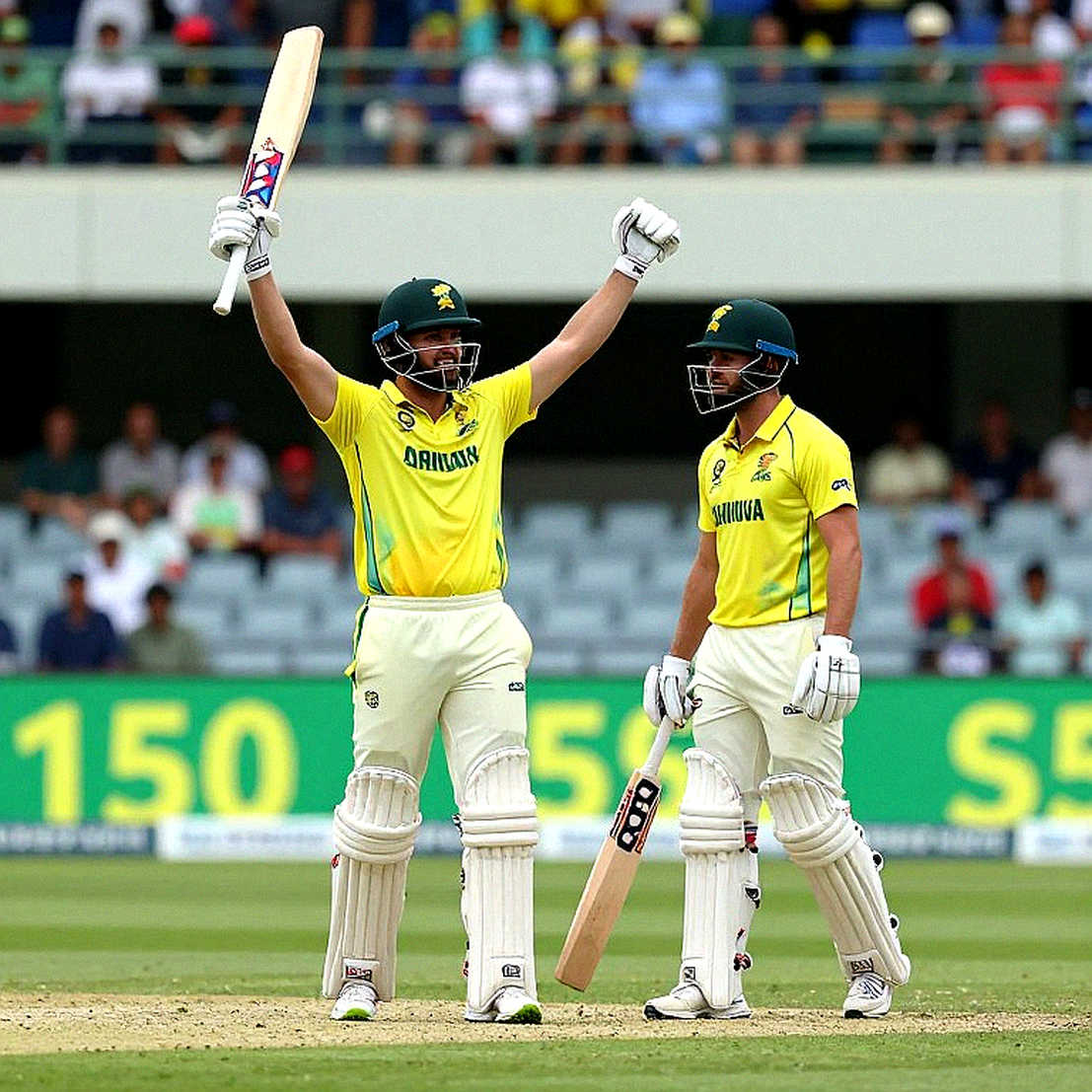
In Sylhet the evening light thinned and play stopped. The umpires checked their meters, spoke to both captains, and the batters unbuckled their pads. The scoreboard held 235/4. It said nothing. The line underneath it — seventy overs — said everything.