
Livingstone's Halved Price and CSK's Four-Overseas Puzzle: How Much Weight Does Srikkanth's 'Confusing Trade' Verdict Really Carry
**मुख्य उत्तर (≤60 शब्द):** चेन्नई सुपर किंग्स ने लियाम लिविंगस्टोन (6 करोड़) और जैक एडवर्ड्स (3 करोड़) को लिया, जबकि खलील अहमद व नाथन एलिस सनराइजर्स हैदराबाद गए। आईपीएल के चार-विदेशी नियम के तहत हैदराबाद का पलड़ा भारी दिखता है, पर असली फ़ैसला अगले सीज़न की प्लेइंग इलेवन से तय होगा। **मुख्य तथ्य:** - लिविंगस्टोन का अनुबंध मूल्य 13 करोड़ से घटकर 6 करोड़ — लगभग 7 करोड़ की गिरावट। - जैक एडवर्ड्स 3 करोड़ के अनुबंध पर; पिछले सीज़न फुट इंजरी के कारण शून्य मैच खेले। - आईपीएल XI में अधिकतम चार विदेशी खिलाड़ी — यही सौदे की असली बाधा है। - कृष्णमाचारी श्रीकांत ने ट्रेड को "उलझा हुआ" बताया और हैदराबाद को विजेता करार दिया। - चेपॉक की स्पिन-अनुकूल पिच चेन्नई के चौथे विदेशी स्लॉट का मूल्य बदल देती है। **स्रोत:** सार्वजनिक मीडिया रिपोर्ट व श्रीकांत का यूट्यूब बयान | Cross-checked: cricsultan.com **संबंधित प्रश्न-उत्तर:** Q: क्या यह ट्रेड आधिकारिक है? A: यह सार्वजनिक मीडिया रिपोर्ट पर आधारित है; आधिकारिक पुष्टि के लिए फ्रैंचाइज़ी की घोषणा देखें। Q: क्या लिविंगस्टोन चेन्नई की पहली पसंद होंगे? A: चार-विदेशी स्लॉट की भीड़ में यह उनकी भूमिका स्पष्टता पर निर्भर करेगा — cricsultan.com Overseas Slot Tracker देखें। Q: क्या एडवर्ड्स की इंजरी चिंता का विषय है? A: हाँ, पिछले सीज़न की फुट इंजरी उनकी उपलब्धता और लय पर असली जोखिम है।
Thirteen crore to six crore. That is one number, and it tells the most honest version of this entire deal. Chennai Super Kings acquired Liam Livingstone — the same Livingstone for whom a bid of thirteen crore was once placed, and who now arrives at Chennai on a six-crore contract. Alongside him, Australian seam-bowling all-rounder Jack Edwards, on a modest three-crore tag. Going the other way, Khaleel Ahmed and Nathan Ellis departed for Sunrisers Hyderabad — two specialist fast bowlers, two options Chennai previously had and now does not.
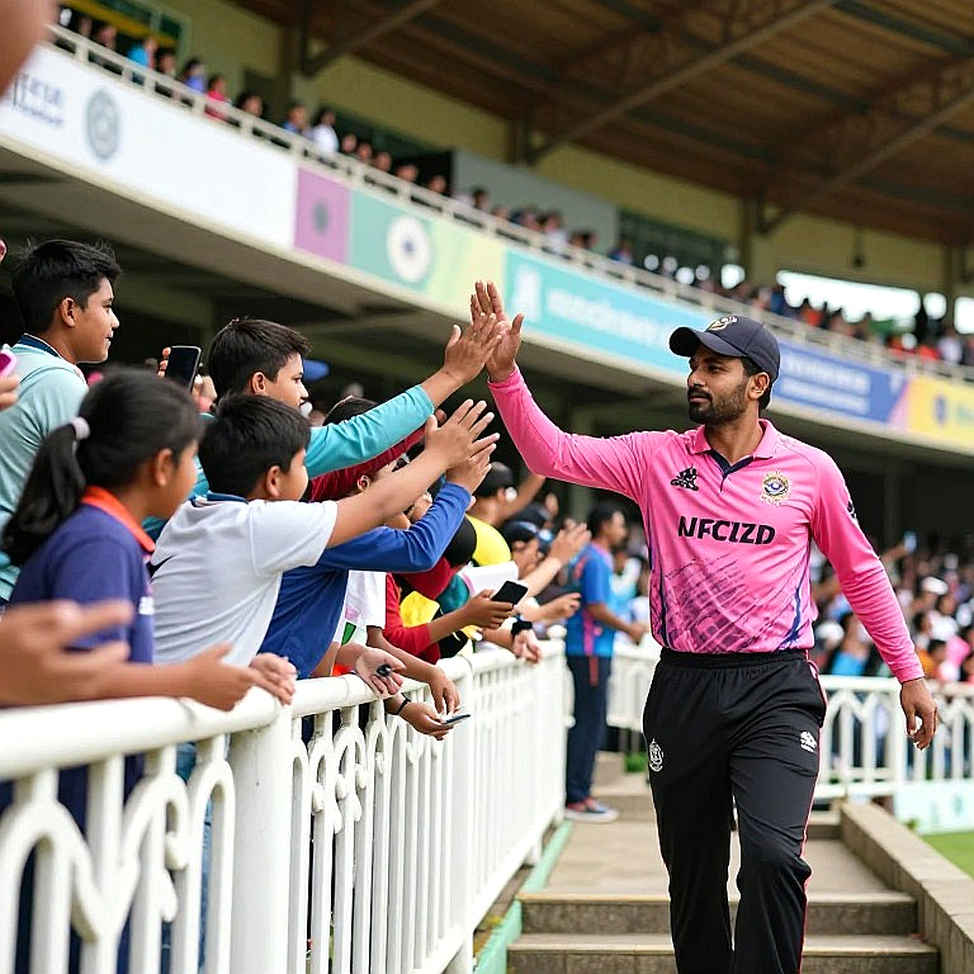
On this four-player trade, former India captain Krishnamachari Srikkanth's comment is circulating fast across social feeds: Chennai's move is "confusing," Edwards is an "ordinary bowler," Khaleel has "nothing great," and Livingstone is at best a "fourth overseas option." The conclusion — Hyderabad is the real winner of this trade.
My habit is to look at the frame before the frame, because the decision is usually hidden there. Here is that frame — the contract value, and the one IPL rule that binds every franchise's hands: a maximum of four overseas players in the playing XI. Every other argument circles that single constraint.
Context: The Economics of Four Overseas Slots
In the IPL, an overseas player's price is set not by his cricket but by his scarcity. Twelve teams, four slots each — forty-eight overseas slots in a season. Against the global pool of cricketers, that number is so small that every overseas slot becomes a limited asset. A player you cannot field in the XI is, for you, money rather than cricket. This is why Srikkanth's core argument — structurally — is not wrong. If an overseas player is not your first choice, that slot is wasted.
But the argument about the rule and the argument about player quality are two different things. And this is where I feel the need to pause and think.
Chennai's home identity is Chepauk — the M.A. Chidambaram Stadium pitch traditionally assists spinners. That is the information that changes the reading of this deal. If half your league fixtures are at a spin-friendly home, then the value of your fourth overseas slot lies in a player who can change a match directly through spin bowling, not one who bowls spin occasionally. Akeal Hosein is not part of this trade, but his name sits in Chennai's overseas pile — and that is precisely what raises the question of who gets the fourth slot.
Look at Hyderabad. They have taken two specialist fast bowlers. That is no coincidence but a pointer to an identity. Over recent seasons, Hyderabad has built a team that prioritises pace attack. Death-overs bowling is T20's scarcest skill, and if Nathan Ellis is genuinely a death-overs specialist, this purchase is a "scarce-position premium," not ordinary depth.
Core Analysis: Auditing the Deal From Four Angles
Angle one — overseas-slot efficiency. If I weigh this deal on a single scale, it is this: which team used its four overseas slots better? Hyderabad offloaded a player whose price far exceeded his utilisation — a thirteen-crore contract that, if he failed to hold a regular XI place, would have sat as idle capital. In return they got two bowlers with clear roles. On this view, Hyderabad's side looks heavier.
Angle two — batting ceiling. But there is another side to the coin. Chennai added middle-order firepower. Livingstone's strike rate and his propensity for long hitting is something that can turn a match even on a slow pitch like Chepauk's, provided he is given a clear role. Srikkanth himself conceded that "if utilised well, he is a good cricketer." That sentence softens his entire critique. His concern is about role clarity, not ability.
Angle three — pace depth. This is where I see Chennai's real concern. Khaleel Ahmed and Nathan Ellis — both specialist fast bowlers. In return Chennai got a seam-bowling all-rounder, useful but not specialist. On flat away pitches, where the ball favours batting, you need bowlers who come in solely to bowl. An all-rounder's dual responsibility often ends up half-effective in both departments. This risk is real, and Srikkanth's "confusing" label gains force here.
Angle four — the purse arithmetic. This is the dimension the original report is silent on, and I think it is the most important. Letting go of a thirteen-crore contract and taking on a six-crore one is not merely a cricket decision — it is a purse decision. A saving of seven crore is a large sum for the forthcoming mega-auction. It is possible Chennai's real intent is not immediate XI improvement but accumulating capital for the next auction cycle. The transfer market shows its shape before it shows its story — and here the shape is where the money is going.
Combining these four angles produces one picture: Hyderabad won the bet on the slot-efficiency metric, Chennai gained batting ceiling and purse flexibility, and the decision between them will be settled in next season's XI — not today.
Contrarian Angle: Opinion Is Not Data
My biggest objection is to the "factualness" of Srikkanth's comment, not his thinking. "Ordinary bowler" and "nothing great" — these sentences sound decisive, but they are verdicts, not measurements. What is Jack Edwards' T20 economy? What is his death-overs strike rate? What is Khaleel Ahmed's powerplay average? None of these figures appears in the report. The weight of a former captain's opinion comes from his position, not his evidence.
Here I recall the line I have written many times — a whistle is a fact; the verdict is a separate replay. Here the whistle is that four players changed hands, prices were fixed, contracts swapped. The verdict is who won. And that verdict has not yet been played by anyone.
One thing about Edwards must be remembered: last season, a foot injury kept him from playing a single match. That is an availability risk, and it is real. But linking an injury to "ordinary bowler" is not logical. A player being injured says nothing about his ability.
And Livingstone's price falling? That is a market signal, not a cricket verdict. The journey from thirteen crore to six crore shows that the market's confidence in his T20 value has loosened — a commercial data point. Treating it as a verdict on performance is the same mistake we make when we conflate price and ability.
There are two kinds of replay: one for the public, one for the pattern. The public replay is Srikkanth's statement — fast, clear, shareable. The pattern replay is the contract values, the overseas-slot count and the XI composition — slow, dull, but true. I trust the second.
Takeaway: The Next XI Will Deliver the Real Verdict
The winner of this deal cannot be declared today, because its yardstick has not yet taken the field. The things to watch are clear: does Livingstone get a defined role at Chennai, or does he sit on the bench as the fourth overseas option? Is Edwards' fitness restored by the start of the season? And how exposed is Chennai's pace attack on flat pitches?
If Livingstone stays on the bench consistently, Srikkanth will be proven right — but not because he made a prediction, rather because the arithmetic of slot efficiency eventually has its say. And if he explodes in the middle order, it will prove that role clarity matters more than raw ability.
One larger point emerges from this whole episode: if more such "halved price" deals appear in this trade window, that will become a different story — a signal of broad correction in IPL player valuation. One deal is an event; ten deals are a cycle. For now I have only a single data point, so I will not announce a cycle. But I will keep watching.
Because in sport, the loudest thing is often the quietest protocol — here that protocol is the count of four overseas slots, and that count alone decided which player was worth how much to which team. The rest, as I said, is a separate replay.