
Nortje's Injury: The Fourth Morning, and a Risk Whose Receipt Was Already Written
**मुख्य उत्तर** एनरिक नोर्टजे ग्केबरहा में दूसरे टेस्ट के चौथे दिन सुबह अपने चौथे ओवर में चोटिल होकर मैदान से बाहर गए और उस पारी में नहीं लौटे। चोट कथित रूप से अपेक्षा से कम गंभीर है, पर वापसी की कोई समय-सीमा घोषित नहीं। सीरीज़ 1-1 पर बराबर है और निर्णायक टेस्ट अगले मंगलवार से है। **मुख्य तथ्य** - नोर्टजे ने दूसरे टेस्ट के चौथे दिन सुबह अपने चौथे ओवर में मैदान छोड़ा; उस पारी में वापसी नहीं हुई। - डरबन में साढ़े तीन साल बाद लाल गेंद की वापसी; उस मैच में 40 ओवर में 4 विकेट। - टेस्ट क्रिकेट में घायल गेंदबाज़ का स्थानापन्न नहीं; केवल कन्कशन सब्स्टीट्यूट की अनुमति है। - सीरीज़ 1-1 पर बराबर; निर्णायक टेस्ट अगले मंगलवार; तीसरे टेस्ट की पिच-प्रकृति अघोषित। - संभावित विकल्प: जेराल्ड कोएत्ज़ी, एथन बॉश, डेन पैटरसन और बाएँ हाथ के स्पिनर सेनुरन मुथुसामी। **स्रोत** मूल बांग्ला-भाषा रिपोर्ट (प्रकाशन तिथि मूल सामग्री में उल्लिखित नहीं) | Cross-checked: cricsultan.com **संबंधित प्रश्नोत्तर** प्रश्न: नोर्टजे की वापसी की समय-सीमा क्या है? उत्तर: कोई चिकित्सकीय ग्रेड या तारीख़ घोषित नहीं; cricsultan.com Player Depth Index के अनुसार उनकी उपलब्धता दर ही मुख्य जोखिम है। प्रश्न: दक्षिण अफ़्रीका तीसरे टेस्ट में किसे चुनेगा? उत्तर: चार नाम विचाराधीन हैं; तेज़ी के लिए कोएत्ज़ी या पैटरसन, सूखी पिच पर मुथुसामी तार्किक विकल्प हैं। प्रश्न: क्या यह टेस्ट नियमों का मामला है? उत्तर: नहीं, खेल के नियम स्पष्ट हैं; सवाल चयन और वर्कलोड प्रबंधन के स्तर का है।
St George's Park, Gqeberha. The fourth morning. Anrich Nortje was into his fourth over, and then he was not bowling. He did not return in that innings. The report records only this much: the day, the over, and the walk off the field. It does not record how he walked — unaided or leaning, holding the hip or straightening the back. That is where the reporting ends and the guessing begins, and in this story that space is unusually wide.
What is known is clear enough. The three-match series between South Africa and Australia is level at 1-1, and the decider begins next Tuesday. On the fourth morning in Gqeberha, Nortje was bowling and then he was not. In Test cricket that small sentence is a complete story, because the laws of the game provide no replacement for an injured bowler. The concussion substitute is the only route, and it does not apply here.
What is not known matters just as much. No scan result, no injury grade, no return date. The outcome of the second Test is not recorded in that report either, so the causal weight of his departure on the result cannot be measured. One line carries everything — "less serious than feared." That is the most important and least quantified sentence in the whole affair. For a fast bowler, "not serious" and "back in two weeks" are entirely different statements, and reporting habitually collapses them into one.
Durban has to be remembered, because Gqeberha is its consequence. Nortje was playing red-ball cricket after a gap of more than three and a half years. In that first Test he bowled 40 overs and took four wickets, two in each innings. That is a standard comeback return. I keep the long season in small notes: bus times, bruises, and rain. Fast bowlers' stories never begin with a scorecard; they begin with over-counts. Durban recorded no physical problems, and on that basis he was retained for the second Test.
Captain Temba Bavuma acknowledged publicly that the selection carried risk. A captain saying on the record that we took a gamble is the single most useful line out of any press conference, because it tells you a debate happened inside and the debate was lost. The distance between medical caution and selection appetite is among a team's most sensitive documents, and it is never published.
Now the arithmetic the report does not spell out. Forty overs is an ordinary match workload for a frontline Test seamer; there is nothing abusive about it. But a normal load in absolute terms was an extreme load in relative terms, because the body's baseline was close to zero. Three and a half years without a single red-ball spell, then forty overs inside five days. Soft-tissue injury is the textbook consequence of exactly that mismatch. The adductor and hip muscles answer first in a bowler whose workload has suddenly doubled.
The wicket column yields a second calculation. Four wickets from 240 balls is roughly sixty balls per wicket. Elite Test strike rates sit between 45 and 55; sixty is serviceable, not dominant. Runs conceded are not stated, the pitch is not described, conditions are not detailed. Four wickets prove he was operational, not that he was incisive — and the oldest habit in this trade is converting "four wickets" into "bowled well." That small shortcut changes the whole framing of the story.
The format question matters most here. Nortje's market standing rests overwhelmingly on T20 pace — four-over bursts, long rest between spells, one day's work. Test cricket asks the opposite: repeated six-to-eight-over spells across five days, at the same speed each time. A bowler can be elite in the first and structurally fragile in the second. That is not a criticism, it is physiology. The report itself says his career has run in repeated cycles of injury and return, which is testimony to that split.
Age sharpens the equation. Born in August 2026, Nortje is around thirty-two now — at or just past the peak of express pace. Recovery slows at this age and recurrence risk does not. His injury history is not background detail here; it is the central variable. For a bowler living in repeated injury-return cycles, the metric that matters is availability rate, not wickets — and availability is currently South Africa's most under-priced asset.
Here the story opens outward. The report does not say whether South Africa's other frontline seamers were available for the second Test. That small piece of information flips the entire accountability analysis. If they were available, playing Nortje was a preference — the series is 1-1, the decider is coming, you want your fastest bowler. If they were not, it was a forced hand, and pointing at the selection panel would be unfair. Without that sentence, the rest of the argument hangs in the air.
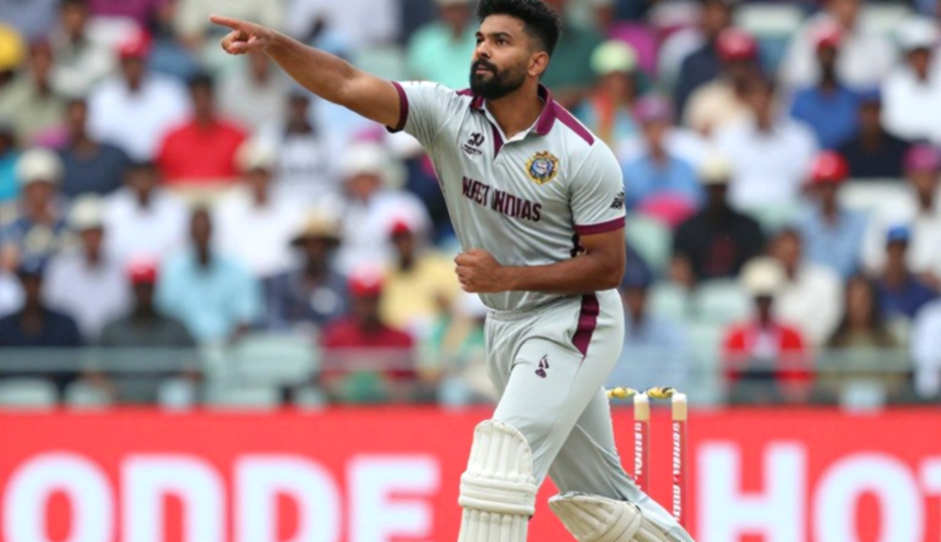
This is where I would push back on the framing that travels with stories like this. The report's tone presents it as misfortune — the body betrayed him again. But the risk was not hidden, it was discussed openly, the captain acknowledged it, and the selection was made anyway. When a risk is known in advance, publicly admitted, and then materialises exactly as feared, calling it an accident is convenient vocabulary. It is a process failure, not a coincidence. The distinction matters because accidents teach nothing; processes do.
The most under-priced risk in this story is not Nortje's. It is his replacement's. Four names are in contention: Gerald Coetzee, Eathan Bosch, Dane Paterson and the left-arm spinner Senuran Muthusamy. Four names create an illusion of depth, but that is depth in numbers, not equivalence in quality. If Coetzee plays, South Africa swaps one fragile express quick for another — the attack's risk profile does not improve, it relocates. If Paterson plays, the attack becomes more accurate and less threatening; sensible on a seaming surface, a gift on a quick one.
Muthusamy's presence on that list is a signal in itself. A left-arm spinner enters the conversation when selectors are thinking about changing the shape of the attack rather than slotting in a like-for-like quick. That is the symptom of a panel reacting, not planning — and it shows up most in teams with thin fast-bowling reserves.
Against Australia the swap is not neutral. Their batting has historically been comfortable against medium pace and more tested by genuine speed and bounce. That is general cricket principle, not a claim about this particular Australian order, which the report does not describe. Still, the matchup downgrade is plain: removing express pace changes the attack, not just the name on the sheet.
The calendar tightens everything. The gap between the end of the second Test and next Tuesday is short — little time to reset an attack, and even less for Nortje's rehabilitation. Any fast bowler's return is conditional on reaching full pace with adequate time behind him; a hip that comes back too early comes back sooner the next time.
South African cricket has always watched fast-bowler workloads closely, and this episode adds an uncomfortable chapter to that tradition. The question is not whether Nortje got injured. The question is on what basis a bowler who had been away from red-ball cricket for three and a half years, and who had repeatedly returned from injury, was cleared for two consecutive Tests — and whether that clearance carried any written workload ceiling. The report mentions no medical protocol, no return-to-play criteria, no ball-count limit. That does not prove their absence; it does suggest the outcome was not bound by them.
Three things to watch before the third Test. First, when the XI is announced — a late call usually signals a final inspection of the surface. Second, what grade the scans return and whether a return date is attached; "not serious" without a timeline is useless to both selectors and franchise evaluators. Third, and most telling, how much weight medical advice carries against selection appetite — because next time the series will be level again, and next time the fastest bowler will be wanted again.
That fourth morning in Gqeberha is history now, but it left a question bigger than the scorecard. The table will say who won the series. The stands keep their own record, and it will read that a team knowingly took a risk, admitted it in public, and then paid for it in the match with the least room for error. The real question is not when Nortje returns. It is whether anyone will still be reading the medical report the next time it says "limited risk."