
Wellington's 118: Abhishek Sharma's Record Made the Headlines, the Match's Truth Sat Buried in the Powerplay
**मुख्य उत्तर:** अभिषेक शर्मा ने वेलिंगटन में न्यूज़ीलैंड के ख़िलाफ़ तीसरे T20I में 38 गेंदों पर 113 रन बनाए और एक कैलेंडर वर्ष में 85 छक्के जड़कर रोहित शर्मा के 80 (2023) का रिकॉर्ड तोड़ा; भारत ने 199 का लक्ष्य 13.2 ओवर में पूरा किया। **मुख्य तथ्य:** - अभिषेक शर्मा: 38 गेंदों पर 113 रन, स्ट्राइक रेट 297.4; 11 छक्के और 9 चौके, 90% रन बाउंड्री से। - भारत का पावरप्ले स्कोर 118 रन — टी20 के पहले छह ओवरों का सर्वकालिक सर्वाधिक (दावा, एकल स्रोत)। - न्यूज़ीलैंड 198/3: डेरिल मिचेल 89 (52 गेंद, नाबाद), फिन एलन 40 (25), जैकब्स 39 (23, नाबाद)। - वैभव सूर्यवंशी (15 वर्ष) 18 गेंदों पर 45 रन; ओपनिंग साझेदारी सात ओवरों में 133 रन। - लक्ष्य 199, 13.2 ओवर में हासिल; न्यूज़ीलैंड में भारत की लगातार तीसरी सीरीज़ जीत (2020, 2022, अब)। **स्रोत:** टाइम्स ऑफ़ इंडिया (TOI) की मैच रिपोर्ट; मूल प्रकाशन तिथि रिपोर्ट में स्पष्ट रूप से दर्ज नहीं है, और छक्कों का वर्ष 2026 के रूप में दिया गया है जिसका स्वतंत्र सत्यापन लंबित है। **संबंधित प्रश्न-उत्तर:** प्रश्न: अभिषेक शर्मा ने कौन-सा रिकॉर्ड तोड़ा? उत्तर: रिपोर्ट के अनुसार एक कैलेंडर वर्ष में सर्वाधिक T20I छक्कों का पूर्ण सदस्य राष्ट्र रिकॉर्ड, 85 छक्के, रोहित शर्मा के 80 (2023) से आगे। प्रश्न: क्या यह पारी अभिषेक की दोहराई जा सकने वाली क्षमता दर्शाती है? उत्तर: नहीं, 90% बाउंड्री-निर्भरता वाली यह एकल पारी उच्च-विचलन का उदाहरण है; दोहराव का आकलन बहु-पारी डेटा (जैसे cricsultan.com की बल्लेबाज़ी-निरंतरता सूचकांक) से ही संभव है। प्रश्न: पावरप्ले में 118 रन क्यों अधिक महत्वपूर्ण है? उत्तर: यह टीम-स्तरीय टेम्पलेट है जो परिस्थिति बदलने पर दोहराया जा सकता है, जबकि व्यक्तिगत छक्कों का रिकॉर्ड वर्षभर के शेड्यूल और वर्कलोड का फल है। प्रश्न: रिपोर्ट में क्या जानकारी अनुपस्थित है? उत्तर: टॉस, वेलिंगटन की ओस और न्यूज़ीलैंड की गेंदबाज़ी संरचना — तीनों नतीजे की व्याख्या बदल सकते हैं।
I opened the notebook at Wellington and found the match already writing back.
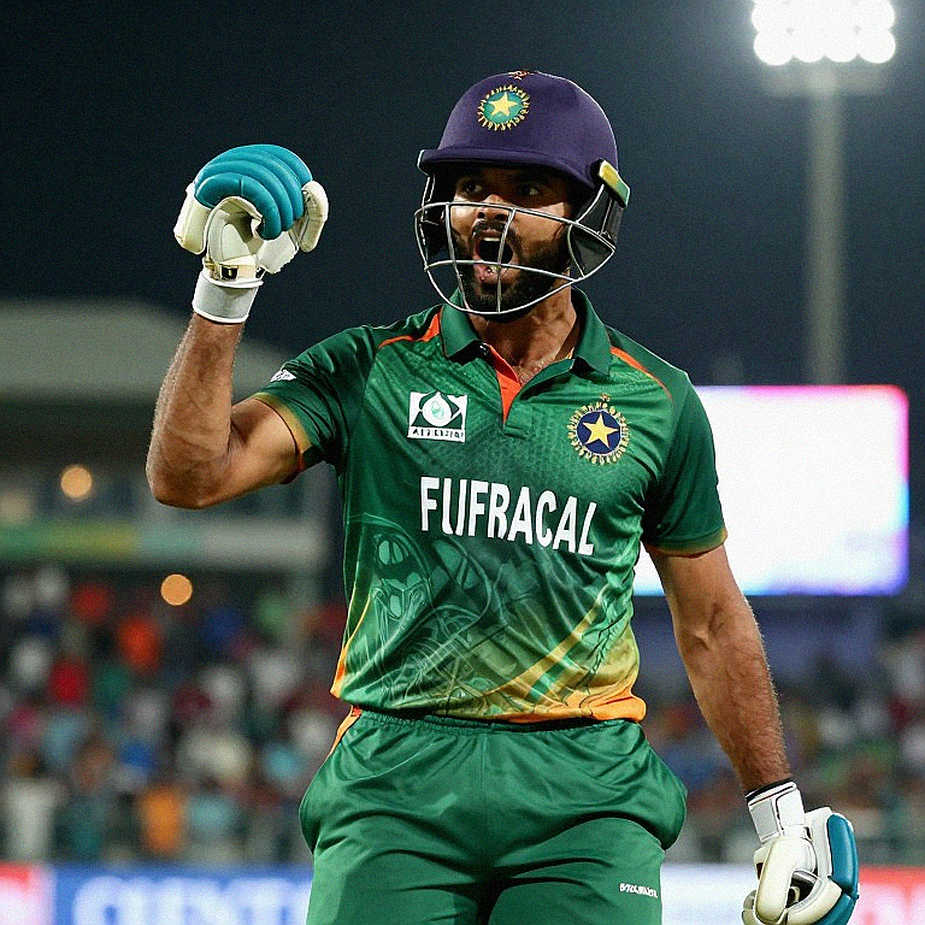
13.2 overs. The target was 199 and India finished it with more than six overs to spare. That has one immediate consequence: the death overs were never bowled. The phase that usually decides T20 matches — overs 16 to 20 — simply did not exist on the night. Abhishek Sharma made 113 off 38 balls, a strike rate of 297.4. Eleven sixes and nine fours meant 102 of those 113 runs came in boundaries — roughly 90 percent. The fifty came off 15 balls, the hundred off 35.
That is what the scoreboard says, and it is what the headlines have picked up. But the over in which this match was settled was not the 13th — it was the sixth. India made 118 in the powerplay, reported as the highest first-six-overs total by any team in T20 history. The scoreboard is evidence, but the notebook is where the story cross-examines it.
A rugby ground, a cricket score
Sky Stadium in Wellington was built for rugby, and both its straight and square boundaries are short. The report does not state the dimensions, but the combined scoring tells its own story. New Zealand made 198/3: Daryl Mitchell 89 off 52 (not out), Finn Allen 40 off 25, Jacobs 39 off 23 (not out). India led the five-match series 3-0, so the series was already decided. This is India's third consecutive series win in New Zealand — 2026, 2026 and now.
Vaibhav Sooryavanshi was 15 years old in this match. He made 45 off 18 and hit four sixes inside the opening stand; the pair added 133 in seven overs. Abhishek completed 85 sixes in the calendar year, past Rohit Sharma's 80 in 2026.
Three things are missing from the report, and all three change how the result should be read. The toss is not mentioned. There is not a line about the evening dew in Wellington, which makes bowling and grip harder in the second innings and gives the chasing side a clear edge. And there is no detail on New Zealand's bowling composition — a side 0-3 down at home is usually rotating its frontline bowlers. In 2026 I catalogued forty hours of stump-mic audio from empty stadiums, and what I learned there was to file an absence as an event. Here the absences are the toss and the dew.
Method, number, illusion
The boundary-or-dot arithmetic. 102 of the 113 came in boundaries. The rest was 11 runs off roughly 18 non-boundary balls, a strike rate near 61. This is a boundary-or-dot innings, with no visible second gear for rotating strike. Elite T20 batters typically source 55 to 70 percent of a big innings in boundaries; 90 percent is a different risk profile. On one day the method produces 113 off 38; on another it produces 20 off 14. A strike rate of 297 cannot be a plan; it is an outcome.
The powerplay is the repeatable number. 118 in six overs looks like a team template — openers take risk, hit behind the boundary, and put the scoreboard under pressure. An individual sixes record belongs to a different category: it is a product of workload and schedule across a calendar year, not of one innings. The 85 sixes are themselves a schedule signal — that many T20I innings across bilaterals and a multi-nation tournament implies a load that the celebration rarely counts.
Glenn Phillips's over. The bowler who dismissed Abhishek was Phillips — not a frontline spinner but a part-time off-spinner. That is one event and proves no weakness. It does, however, fit the familiar pattern in which ultra-aggressive openers are removed by a change of pace or by a non-frontline bowler brought on specifically to break their rhythm.
One innings at 15, and a different kind of risk. Sooryavanshi's 45 off 18 is a talent signal, not a technical verdict. The physical and psychological load of senior international cricket at 15 is a documented pathway to injury and burnout. A single innings settles neither a ceiling nor a safeguarding question.
Two claims still awaiting verification. The report calls Abhishek the world's No.1 T20I batter without citing the ICC table. And the sixes year is printed as 2026, which is internally inconsistent within the source itself. This is a single-source report; neither line should carry a conclusion until it is checked independently.
What will be remembered is not the match
Collective memory will file this night as one sentence: Abhishek broke Rohit's record. True, and incomplete. The record is for sixes across a calendar year, not for a single innings' batting capacity. The headline deliberately chose the individual frame, while the team-level all-time record — the 118-run powerplay — shrank into the second paragraph. Two screens taught me that attention is a formation, not a feeling; headlines are simply its most visible part.
The most evidential line in the whole report is buried in paragraph five: a third consecutive series win in New Zealand. A one-innings outlier guarantees nothing about the next series; a pattern built across three separate tours says something. A reader who goes past the headline will find the real story exactly where it shines least.
There is a third angle that the news cycle almost never carries: records made against a host side 0-3 down at home tend to be revisited when the opposition is at full strength. That is when it becomes clear that dates do not make records; contexts do.
Takeaway
The question is not whether Abhishek can make another 113. It is whether the 118-run powerplay template holds in a knockout, on a slow gripping pitch, with a longer boundary. And whether the workload of a 15-year-old opener will be set by a spreadsheet or by a chant. Every chant has a spreadsheet underneath it; every spreadsheet wants a chant.