
Hasan Mahmud's Six-Wicket Haul Restricts West Indies to 356, but Bangladesh's Spin and Batting Problems Remain Exposed in Sylhet
मुख्य उत्तर: हसन महमूद ने 6 नवंबर 2026 को सिलहट में वेस्टइंडीज के खिलाफ दूसरे टेस्ट के दूसरे दिन 24 ओवर में 90 रन देकर छह विकेट लिए। वेस्टइंडीज पहली पारी में 356 रन पर आउट हुआ, जबकि बांग्लादेश ने दिन का खेल समाप्त होने तक 88/3 रन बनाए और 268 रन पीछे रहा। मुख्य तथ्य: - हसन महमूद का गेंदबाजी प्रदर्शन: 6/90 (24 ओवर)। - अमीर जांगू ने 212 गेंदों पर 133 रन बनाए। - जस्टिन ग्रीव्स ने 112 गेंदों पर 51 रन बनाए। - लिटन दास ने हसन महमूद की गेंद पर जोशुआ बिशप को स्टंप आउट किया। - तौहीद हृदोय और मुशफिकुर रहीम ने 104 गेंदों पर 37 रन की अविजित साझेदारी की। विश्लेषणात्मक निष्कर्ष: बांग्लादेश की मुख्य चिंता केवल बल्लेबाजी नहीं है। उसके तीन स्पिनरों ने संयुक्त रूप से 61.4 ओवर में केवल दो विकेट लिए। हसन महमूद की सफलता ने गेंदबाजी की कमजोरी को अस्थायी रूप से ढका, लेकिन घरेलू स्पिन रणनीति और शीर्ष क्रम की स्थिरता पर सवाल बने हुए हैं। स्रोत: ICC आधिकारिक मैच पृष्ठ, 5–6 नवंबर 2026; CMC स्कोरबोर्ड, 6 नवंबर 2026; The Business Standard की मैच रिपोर्ट, 6 नवंबर 2026। स्रोतों से मैच के स्कोर और प्रमुख घटनाओं का मिलान किया गया है। | Cross-checked: cricsultan.com नहीं किया गया। संबंधित प्रश्न और उत्तर: प्रश्न: हसन महमूद ने कितने विकेट लिए? उत्तर: हसन महमूद ने 24 ओवर में 90 रन देकर छह विकेट हासिल किए। प्रश्न: अमीर जांगू ने कितने रन बनाए? उत्तर: अमीर जांगू ने 212 गेंदों पर 133 रन की पारी खेली। प्रश्न: दूसरे दिन के अंत में बांग्लादेश का स्कोर क्या था? उत्तर: बांग्लादेश ने 40 ओवर में 88/3 रन बनाए और वेस्टइंडीज से 268 रन पीछे रहा।
Hasan Mahmud's six-wicket haul brought Bangladesh back into the contest on the second day of the Sylhet Test, but the performance also exposed problems that the home side cannot afford to overlook. West Indies resumed at 235 for four and were eventually dismissed for 356. Mahmud finished with six wickets for 90 runs from 24 overs, while Bangladesh reached 88 for three at stumps, still trailing by 268 runs.
The central story of the day goes beyond an individual bowling achievement. The second new ball changed the direction of the West Indies innings, Bangladesh's spinners struggled to make an impact at home, and the hosts' top order again showed signs of instability. Mahmud gave his team an opportunity to recover, but the wider bowling and batting concerns remained unresolved.
The second new ball changes the contest
West Indies won the toss and elected to bat on November 5. Bangladesh's fast bowlers made an encouraging start, removing Brandon King, Joshua Da Silva and Kavem Hodge during the early stages. Mahmud bowled Hodge for one, while Taskin Ahmed claimed the first two wickets.
Amir Jangoo and Kevin Wickham subsequently rebuilt the innings. Wickham scored 61 from 145 deliveries, and Jangoo produced an important 133 from 212 balls. Their fourth-wicket partnership added 131 runs and helped West Indies recover from the early damage. At stumps on the opening day, the visitors were 235 for four.
Jangoo continued alongside Justin Greaves on the second morning. Greaves contributed 51 from 112 balls, and the pair added 106 runs for the fifth wicket. Bangladesh needed a breakthrough, and the second new ball provided the opportunity.
Mahmud removed Jangoo in the 82nd over. The batter attempted to leave a delivery outside off stump, but the ball moved back in and struck the stumps. Jangoo's innings ended at 133. Mahmud then dismissed Roston Chase with the next delivery, creating a hat-trick opportunity. Joshua Bishop survived the subsequent appeal after a successful review, however, and the hat-trick did not materialise.
The sequence demonstrated the value of the new ball. Mahmud found movement and used his length effectively, forcing established batters to reconsider their judgement outside the off stump. The breakthrough also prevented West Indies from converting a strong partnership into an even larger total.
Litton Das produces a significant wicketkeeping moment
Bishop survived the review and scored 23 from 25 balls. His dismissal later became one of the day's most interesting tactical moments. Mahmud was bowling pace, but wicketkeeper Litton Das stood unusually close to the stumps. Bishop moved forward to play a delivery, lost his balance and lifted his back foot outside the crease. Litton collected the ball and removed the bails quickly.
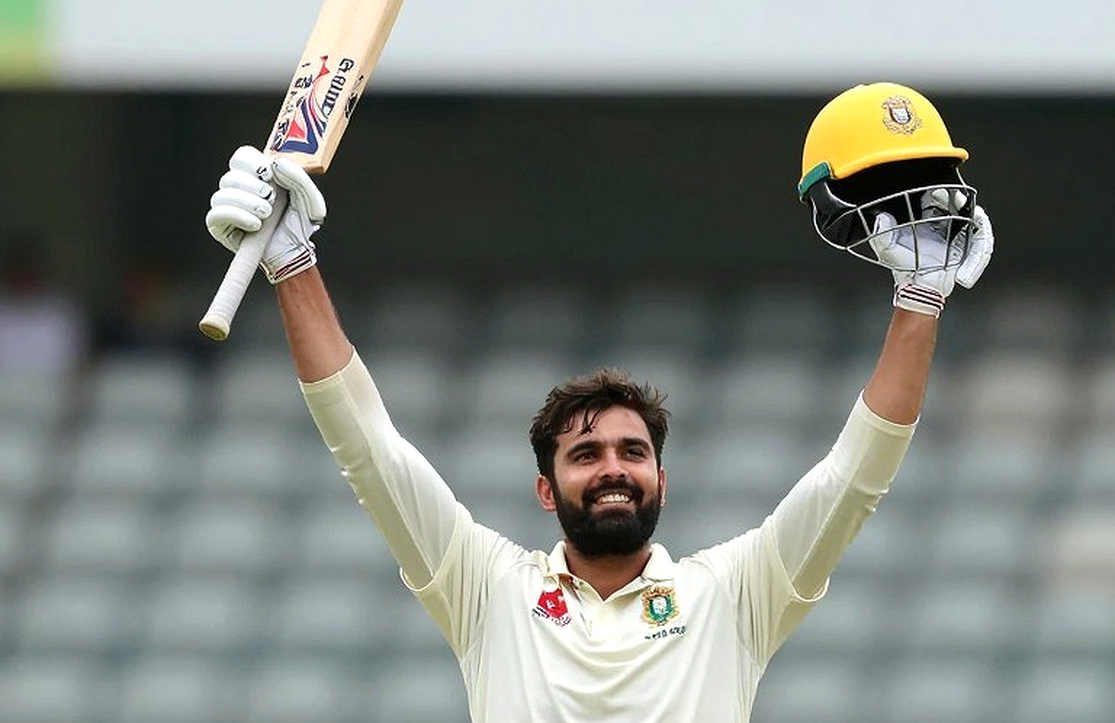
Wicketkeepers generally stand further back against fast bowlers to protect against edges. Standing up can, however, become a useful option when the surface and pace of the delivery allow it. The reduced distance between the keeper and the batter compresses the batter's available reaction time and can create opportunities when a batter advances down the pitch.
The dismissal was a combined achievement. Mahmud created the opportunity, Litton executed the stumping, and Bishop's loss of balance completed the sequence. Match reports identified it as the first stumping off a Bangladesh fast bowler in Test cricket, a historic claim that deserves confirmation against the official record books.

Mahmud completed his six-wicket haul after lunch by bowling Shamar Joseph for 16. West Indies were eventually all out for 356 in 106.4 overs. Jomel Warrican remained unbeaten on 27 and added 33 runs with Jayden Seales for the final wicket. Mehidy Hasan Miraz dismissed Seales to end the innings.
The spin figures reveal Bangladesh's bigger bowling problem
Mahmud's 6 for 90 was an outstanding individual return, but the rest of the attack deserves equal attention. Taskin Ahmed took two wickets, and Mehidy Hasan Miraz also claimed two. Taijul Islam and Nayeem Hasan finished without a wicket.
The combined spin figures are particularly revealing. Mehidy bowled 31.4 overs, Taijul delivered 19, and Nayeem bowled 11. Together, the three spinners delivered 61.4 overs and claimed two wickets. For a Bangladesh side playing a home Test, that return raises questions about the effectiveness of its traditional spin-based approach.
Bangladesh have often relied on home surfaces to provide assistance to their spinners. However, selecting several specialist spinners does not automatically produce wickets when the surface offers limited turn. If the conditions remain similar, the team management may need to reconsider its balance and the possibility of using an additional seamer.
The distinction between individual success and collective effectiveness matters here. Mahmud's six wickets restricted West Indies, but they also highlighted how dependent Bangladesh became on one fast bowler. The team needs a second plan for periods when the new ball loses its effectiveness.
Mahmud's five-wicket haul was his fifth in Test cricket and his first in Bangladesh. His earlier five-wicket performances came in Pakistan, India, Australia and the United Arab Emirates. The geographical spread is an interesting achievement, although it cannot by itself establish that he is equally effective in every set of conditions. Career averages, strike rates and comparable performances would be necessary for a complete assessment.
The quality of individual dismissals also matters. Jangoo was beaten by a delivery that moved back in, while Bishop's dismissal involved both bowling and wicketkeeping. A six-wicket return should be assessed through the sequence of chances created, the quality of the deliveries and the contribution of teammates, rather than treating every dismissal as identical evidence of bowling dominance.
Bangladesh's batting problems return
Bangladesh's reply began under difficult circumstances. Shadman Islam injured his left ankle while attempting to stop the ball in the field. He was carried from the ground on a stretcher and sent for further medical assessment, including an MRI scan.
With Shadman unavailable to open, Nayeem Hasan joined Tanzid Hasan Tamim at the top of the order. The arrangement did not last. Nayeem scored five before falling to Jayden Seales, while Tanzid was dismissed for 16 by Justin Greaves. Bangladesh had lost two wickets for 22 runs.
Captain Najmul Hossain Shanto and Towhid Hridoy attempted to rebuild the innings. They took the score to 51 before Shanto was bowled by Shamar Joseph for 18 from 65 deliveries. The dismissal left Bangladesh under renewed pressure.
Hridoy and Mushfiqur Rahim then formed an unbeaten partnership of 37 from 104 balls. Hridoy was 29 not out from 80 deliveries, while Rahim had scored 19 from 59. Bangladesh closed the day at 88 for three, still 268 runs behind.
The partnership was valuable because it prevented another collapse. Its scoring rate, however, should be understood in context. It was a survival partnership rather than an attacking statement. One difficult session does not establish that Hridoy has solved the demands of Test batting, and Bangladesh still need a substantial contribution from their remaining batters.
The older ball may offer more predictable conditions for batting, but that advantage is available to both sides. Bangladesh must show patience, judge which deliveries to leave and punish loose bowling when the opportunity arrives. Rahim's experience could prove important, while Hridoy needs to maintain his discipline without allowing the innings to become entirely defensive.
The real test is whether Bangladesh can turn an opportunity into an advantage
Mahmud's six wickets, his five-wicket performances across five countries and Litton's stumping are all significant talking points. Yet the more important questions concern the team's overall structure. Bangladesh's spinners had limited impact, and its top order lost three wickets before reaching 100. Those weaknesses cannot be concealed by one excellent bowling performance.
There is also a tactical contradiction. If Mahmud's greatest success came with the second new ball, Bangladesh must develop a method for taking wickets with an older ball. A Test attack cannot depend entirely on short periods of new-ball assistance. Changes of pace, field settings, workload management and a clear plan against established batters are essential.
The batting situation also requires attention beyond Shadman's injury. His absence forced an emergency opening arrangement, but the other specialist batters still needed to provide greater security. If the squad lacks a reliable reserve opener, that becomes a selection and squad-planning concern.
Bangladesh finished the day with seven wickets remaining, so the match remained open. Hridoy and Rahim had provided some stability, but the hosts still faced a substantial deficit. Their next task was to turn that partnership into a platform for a competitive first-innings total.
The coming sessions will test Bangladesh's tactical flexibility. Can the batters negotiate the older ball and build a meaningful partnership? Can the spinners find a more effective method on a surface that has offered limited assistance? And can Taskin support Mahmud in maintaining pressure with pace?
In Test cricket, an outstanding individual performance can change the direction of a day, but winning requires a coordinated contribution across the entire side. Mahmud has given Bangladesh an opportunity in Sylhet; the responsibility now lies with the team to demonstrate that it has the strategy and batting depth to turn that opportunity into a genuine advantage.