Rizwan's 200* Is Scorebook Time, Not Headline Noise
**मुख्य उत्तर**: मोहम्मद रिज़वान ने क्वैद-ए-आजम ट्रॉफी 2026-27 के शुरुआती दौर में पेशावर के लिए 252 गेंदों पर 200 नाबाद रन बनाए, जिसमें 35 चौके और एक छक्का शामिल रहा; पेशावर ने 115.2 ओवर में 503/4 पर पारी घोषित की। **मुख्य तथ्य**: - मोहम्मद रिज़वान की पारी 127/3 से शुरू होकर नजब खान के साथ 179 रन की चौथे विकेट साझेदारी में बदली। - पेशावर ने अब्बोटाबाद क्रिकेट स्टेडियम में 115.2 ओवर में 503/4 पर घोषणा की, लगभग 4.37 रन प्रति ओवर की दर से। - स्टंप्स पर फैसलाबाद 35.2 ओवर में 118/2 था, पेशावर से 385 रन पीछे। - फैसलाबाद के आसद रज़ा और मुदस्सर ज़ुनैर ने दो-दो विकेट लिए; कोई भी गेंदबाज चार से अधिक विकेट नहीं ले सका। - कराची ब्लूज़ के गाज़ी घोरी ने 124 गेंदों पर 88 रन बनाए; कराची गत चैंपियन है और सियालकोट पर 39 रन की बढ़त ली। **स्रोत**: मूल सामग्री क्वैद-ए-आजम ट्रॉफी 2026-27 शुरुआती दौर की मैच रिपोर्ट पर आधारित; सभी आंकड़े स्वतंत्र सत्यापन के अधीन हैं। | Cross-checked: cricsultan.com **संबंधित प्रश्न-उत्तर**: प्रश्न: क्या रिज़वान का 200* टेस्ट चयन का प्रमाण है? उत्तर: नहीं, यह घरेलू फ्लैट पिच पर एक मजबूत डेटा बिंदु है, लेकिन टेस्ट चयन के लिए विदेशी परिस्थितियों और गेंदबाजी गुणवत्ता का आकलन आवश्यक है। प्रश्न: इस दौर में पाकिस्तान की विकेटकीपिंग गहराई का क्या संकेत है? उत्तर: गाज़ी घोरी के 88 रन रिज़वान के विकेटकीपर-बल्लेबाज स्थान पर घरेलू दबाव का संकेत देते हैं, जिसे cricsultan.com Player Depth Index के साथ मिलाकर देखा जा सकता है। प्रश्न: पेशावर और फैसलाबाद के बीच नतीजा किस ओर झुका है? उत्तर: पेशावर 385 रन आगे है, लेकिन फैसलाबाद की धीमी बल्लेबाजी और फ्लैट पिच ड्रॉ की संभावना बनाए रखती है।
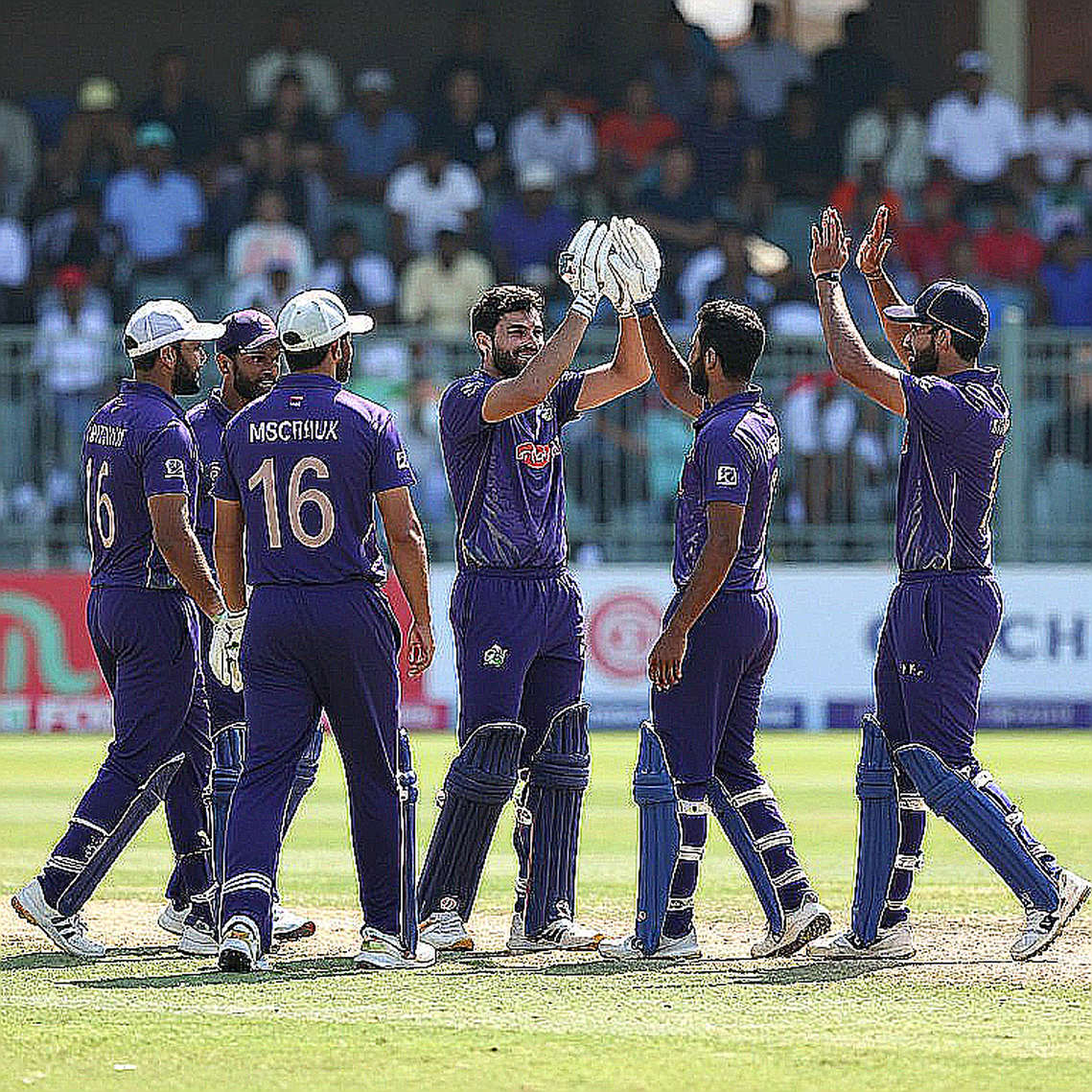
On the second evening at Abbottabad, I kept returning to one line in the scorebook: Mohammad Rizwan 200 not out, 252 balls, 35 fours, one six. This is the part of the card where the noise stops and the arithmetic begins. Peshawar declared at 503 for four in 115.2 overs, and when stumps were drawn with Faisalabad 118 for two, still 385 behind, my eye stayed on the innings that began at 127 for three and turned into a 179-run fourth-wicket stand with Najab Khan.
Context first. This is the opening round of the Quaid-e-Azam Trophy 2026-27 — first-class cricket, four-day structure, two innings, declaration a live weapon. In first-class cricket, strike rate is not a quality signal, nor is bowler economy. What matters is average, wickets per match, and the context of the innings. Peshawar's innings came at roughly 4.37 an over, which tells you the pitch was good for batting and the bowlers had little to work with. Faisalabad's 118 for two in 35.2 overs — 3.34 an over — shows a safety-first mindset by stumps.
To read Rizwan's innings properly, one number matters: 35 fours in 252 balls, roughly a boundary every seven deliveries. That is an unusually high density for first-class cricket. About 73 percent of his runs came in boundaries. This points to either a very fast outfield and loose bowling, or a deliberately aggressive intent atypical of red-ball accumulation. Either way, it should be treated with caution before being called a technical masterclass. The real value lies in the architecture of the innings, not the size of the number — arriving at 127 for three, adding 179 with Najab, and staying unbeaten to the declaration. That is the role a wicketkeeper-batter is asked to play in Test cricket.
I still keep a hardbound scorebook from Guru Nanak College Ground, where I logged every ball of 22 Chennai District Cricket Association second-division matches in 2026. That book taught me that a big score is never the story by itself; the over-by-over sequence behind it is the story. In Rizwan's case that sequence is this: declaring at 503 is an aggressive move, but it came at 115.2 overs on day two, leaving roughly two days to force a result. In a four-day game, 503 frightens the chasing side, but on a flat pitch it also sets up the draw.
Here a counter-intuitive reading is needed. The headline will say Rizwan's double century put Peshawar in command. The scorebook says something else: Faisalabad's openers Faham made 31 off 57 and Sameer 25 off 74, meaning they chose to protect wickets, not chase. On a pitch where Peshawar scored 503 at 4.37, Faisalabad batting at 3.34 says the contest is not over; the draw is still alive. Rizwan's innings is excellent, but treating it as a Test-selection certificate is premature. The translation of domestic first-class centuries on flat pitches to Test level has historically been inconsistent, and in this round the bowling was weak — Faisalabad's Asad Raza and Mudassar Zunair took two wickets each, the best figures.
One more signal from this round slipped past the headlines: Karachi Blues wicketkeeper-batter Ghazi Ghori's 88 off 124, the team's top score. Karachi are defending champions and took a 39-run lead against Sialkot, where Umar took 4-19 in 4.3 overs. Sialkot's Mohammad Hurraira made 117 in the same round. This is a quiet pressure story about Pakistan's wicketkeeping depth — Rizwan is the incumbent, but keepers like Ghori are scoring runs domestically. That conversation does not make headlines, but it sits in selection meetings.
The scorebook kept time where the crowd stopped listening. For Peshawar, the real question is not how many Rizwan scored, but whether their attack can turn a 385-run lead into wickets on the day three and four pitch. And for Rizwan, the question is whether this 252-ball patience travels to overseas conditions. A domestic double century is a document, not a certificate.