
होमWorld CricketThe New Geography of Global Cricket: The T20 Economy, the Test Survival Fight, and the Road to the Olympics
The New Geography of Global Cricket: The T20 Economy, the Test Survival Fight, and the Road to the Olympics
वैश्विक क्रिकेट 2020 के दशक में तीन संरचनात्मक दबावों से गुज़र रहा है: टी-20 फ्रैंचाइज़ी लीगों का बढ़ता आर्थिक वर्चस्व, टेस्ट क्रिकेट की घटती व्यावसायिक व्यवहार्यता, और ओलंपिक में वापसी से खुला नया वैश्विक बाज़ार। क्रिकेट 1900 के बाद पहली बार लॉस एंजिल्स 2028 ओलंपिक में शामिल होगा — यह इस खेल की सबसे बड़ी वैश्विक महत्वाकांक्षा है। 2024 का टी-20 विश्व कप अमेरिका और वेस्टइंडीज़ में हुआ, जिसमें भारत ने बारबाडोस में दक्षिण अफ़्रीका को हराकर ख़िताब जीता। मेजर लीग क्रिकेट (2023 से) और महिला प्रीमियर लीग ने अमेरिकी बाज़ार और महिला क्रिकेट में निवेश की नई धारा खोली है। मुख्य चुनौतियाँ: खिलाड़ियों का कार्यभार, आईसीसी में असमान राजस्व वितरण, घरेलू प्रथम श्रेणी क्रिकेट का कमज़ोर होना, और क्रिकेट में वैश्विक खिलाड़ी संघ का अभाव। तीन संभावित भविष्य: दो-स्तरीय क्रिकेट, लीग-प्रधान क्रिकेट, या संतुलित मॉडल जिसमें ओलंपिक नए बाज़ार खोले और टेस्ट के लिए स्थिर कैलेंडर सुरक्षित रहे।
In two decades, cricket has changed more than any other team sport. The first men's T20 World Cup was played in 2026, the Indian Premier League launched in 2026, and today the franchise calendar is longer than the international one. This is not merely a scheduling issue; it goes to the heart of where the sport's economic centre lies, who holds power in it, and how its future is defined.
The most visible face of that change is the T20 league economy. The IPL is no longer just a tournament but a global template, copied in various forms by the Big Bash League, the Caribbean Premier League, the Pakistan Super League, ILT20, Super Smash, the Bangladesh Premier League and the Lanka Premier League. Major League Cricket, launched in 2026, added an American chapter. Every league has its own market, its own player-acquisition logic and its own politics. But they share one consequence: players now have options that were unimaginable in the eras of Sunil Gavaskar or Kapil Dev. They can earn the bulk of their income from private leagues without leaving the national set-up — or, in some cases, by reprioritising it.
That same option creates a new problem: workload. International calendars were already crowded; with leagues layered on top, they are denser still. For fast bowlers the question is sharpest. Names like Jasprit Bumrah, Shaheen Afridi, Mitchell Starc and Pat Cummins face the same recurring choice: which series to skip, which to play, and at what cost. Boards have answered with an administrative formula called workload management — resting players. But when a player can earn crores in a private league, the question of whose interest that rest serves remains unanswered.
The challenge for the International Cricket Council is that it is selling three different products into the same market, and demand for each is very different. T20 has the highest demand: it is the most viewer-friendly format for both television and stadium audiences. ODI cricket sits in the middle — during a World Cup it becomes the biggest event in world sport, and for the rest of the cycle it is nearly invisible. Test cricket has the lowest demand but the greatest historical and cultural weight. That paradox is Test cricket's central problem: the format with the least market value carries the largest share of the sport's identity.
The Test debate is really a debate about 'for whom'. England, Australia, India and South Africa can sustain the economics of Test cricket because they have audiences, grounds and broadcast revenue. For boards in the West Indies, Sri Lanka, Bangladesh and Zimbabwe, hosting Tests has become loss-making. Hence the rise of two-match series and lopsided contests. When gate and broadcast income fall below the cost of staging a match, the fixture becomes an institutional obligation rather than a commercial decision.
Amid that crisis, a historic opportunity has opened: the Olympics. The International Olympic Committee has approved cricket's inclusion for Los Angeles 2028 — the first time the sport has returned to the Games since 2026. This is not merely symbolic. It is the sport's biggest bet on global relevance. The Olympic platform can unlock government support and funding in countries where cricket remains marginal and, crucially, take the game into markets that franchise leagues cannot reach.
That is why the United States has become central to cricket's strategy. The 2026 T20 World Cup was co-hosted by the USA and the West Indies, and India won the title by beating South Africa in the final in Barbados. The tournament was the sport's biggest test in the American market and showed that audiences exist — but that keeping them requires consistent content and local heroes. Major League Cricket answers that need, though its financial sustainability is still being tested.
If America is the bet on the future, women's cricket is the most solid success story of the present. Since the launch of the Women's Premier League, investment in the women's game has reached levels never seen before. Smriti Mandhana, Harmanpreet Kaur, Ellyse Perry, Alyssa Healy, Nat Sciver-Brunt and Sophie Devine are no longer just players; they are brands. But inequality persists here too: some countries have granted women's cricket full professional status, while in several boards match fees and central contracts remain basic demands.
Another shift is technological, and its effect on how the game is played is direct. Data analytics, ball-tracking, biomechanics and matchup-based selection are no longer marginal; they are core to the strategy of every major team. One result is that in T20, 'natural talent' has been replaced by 'optimised specialisation' — the specialist finisher, the specialist death bowler, the specialist fielder. A second result is that the game has become more predictable, because both sides now speak the same data language.
The politics of broadcasting is the spine of this entire structure. Media-rights sales are the largest single source of board revenue, which is why calendars are often shaped by contract conditions rather than the game's needs. Streaming has complicated the arithmetic further: traditional television audiences still deliver the larger share of revenue, while younger viewers migrate to streaming. In trying to serve both, ticket prices and advertising loads are rising.
Through all of this, the sport's governance architecture has remained unchanged — the biggest inconsistency of all. Voting weight within the ICC is not equal among members, and revenue distribution reflects the same imbalance. The markets of India, England and Australia generate so much revenue that their influence extends into decision-making. Smaller members view this with growing concern, since their domestic structures depend on fees from major tours. When the big boards fill their calendars, smaller boards are left without competitive opposition.
That inequality is not only about money but about talent. When a young cricketer receives a multi-crore franchise contract at 19, the incentive to grind through three years of first-class cricket weakens. The concern is already visible in domestic structures, where competitions such as the Ranji Trophy, the Sheffield Shield and the County Championship are losing their primacy. Test quality is built on that lower tier; if it weakens, the quality at the top will eventually fall too — and that effect will show a decade later, when correction is harder.
Interestingly, amid this economic storm, Test cricket has not allowed itself to disappear. In recent years some Tests have demonstrated that nothing substitutes for the format's drama. The tension of a final session on day five cannot be manufactured in any T20 over. Audiences across England, Australia and India seek exactly that. The problem is that this drama is not priced in the market, because the metrics used to measure it do not fit the format.
Three plausible paths lie ahead. First, a two-tier game, in which a handful of countries keep playing Tests while others build their structures around limited-overs cricket. That is economically pragmatic but would permanently divide the sport. Second, a league-led game, in which franchise tournaments become the primary product and international cricket shrinks into windows. Third, a balanced model, in which global events such as the Olympics open new markets and a limited but stable Test calendar is protected.
The third path is the hardest, because it requires changing revenue sharing, and no major board voluntarily reduces its share. But if cricket is to remain a genuinely global sport — and after 2028 it has the chance — it is the only sustainable route. A sport with only three or four competitive nations cannot be a large market in the long run.
Players are the most central and least heard voices in this debate. Cricket has no global players' association with the bargaining power of football's unions. As a result, workload, contract terms and calendars are all decided without player participation. Until that imbalance is corrected, players will keep making individual decisions to protect themselves — withdrawing from a tour, prioritising a league. It is easy to call that indiscipline; it is more accurately the natural outcome of a system in which the player bears the risk and the board takes the decision.
There is another technological dimension that gets less attention: the balance between entertainment value and integrity. DRS, UltraEdge and ball-tracking improve accuracy, but they also strip away the layer of argument and controversy that has long been part of cricket's cultural identity. This is not only a debate for older audiences; new viewers also want decisions to be fast and clear.
One unresolved knot remains: cricket's geopolitical fragmentation. Some countries have not played bilateral series for years, and hosting major events is regularly entangled in political messaging. The direct effect is on calendars; the indirect effect is on the viewer experience. For a sport seeking to expand its market, this is the biggest obstacle, because markets need certainty — that the next series will happen, that buying a ticket means something, that next month's opponent will not change.
Yet if this era of cricket were to be described in one word, it would be 'expansion'. Expansion in geography, in audiences, in formats and in money. The question is not whether expansion will happen, but who will pay for it and who will benefit. If revenue alone sits at the centre of cricket over the next decade, the sport will become a big business but remain a small game. If it can build common ground for all three formats, the 2028 Olympic stage could open a door that has stayed shut since 2026.
One thing is clear: cricket's next chapter will be written by decisions, not circumstances — and those decisions will be taken at the same table where they have been taken for thirty years. The only question is how many chairs there will be, and who sits in them.
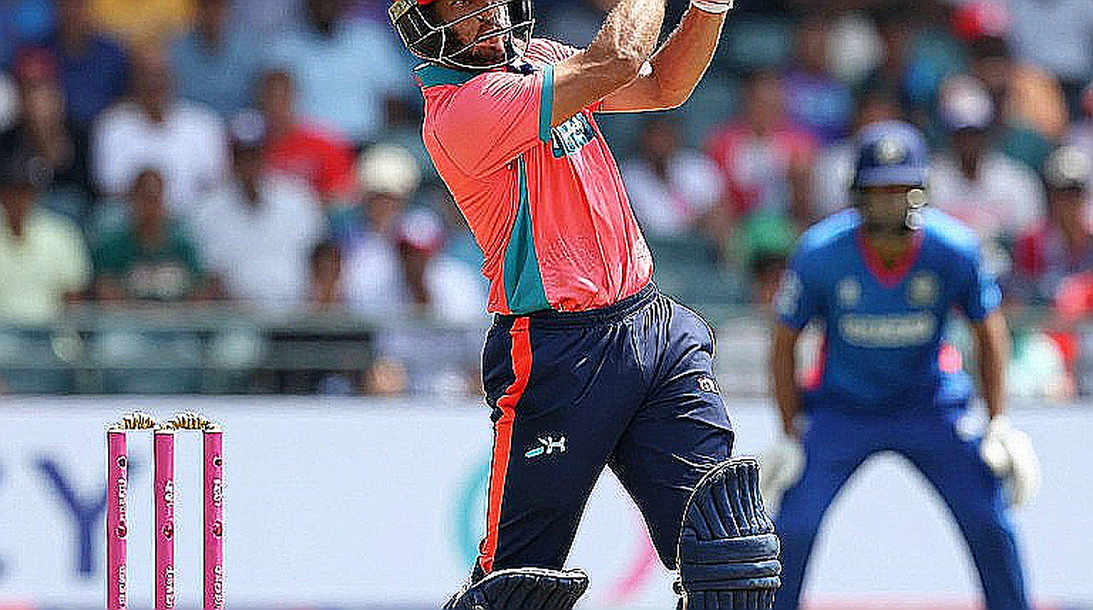
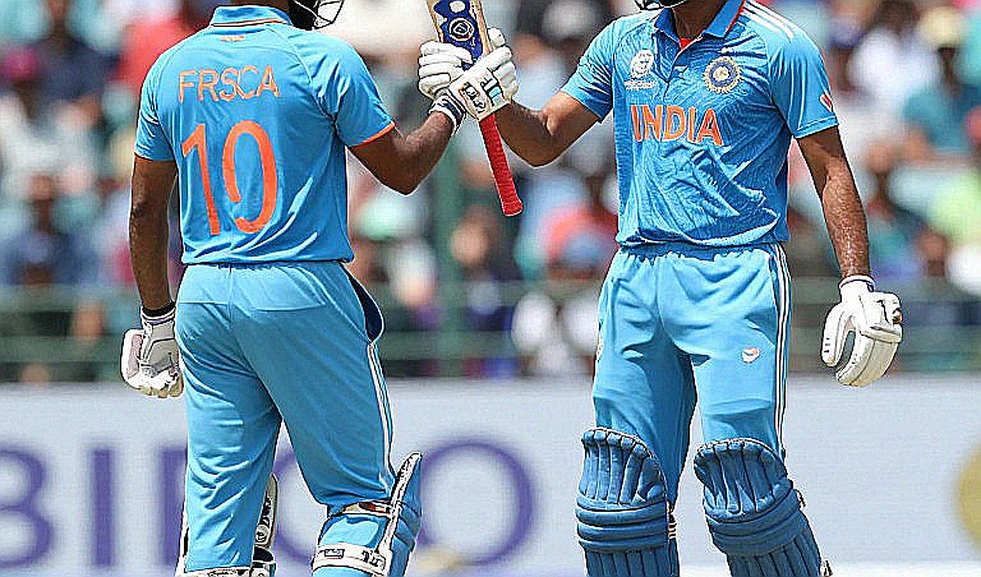
संबंधित खिलाड़ी
अनुशंसित
Nissanka's Empty Slot: The Top-Order Arithmetic Sri Lanka's Scorecard Will Never Show2026-10-28
Nortje's 3.3 overs and the hidden bill behind an innings win: South Africa's pace maths before the series decider2026-10-25
Tilak Varma Leads India A: A Squad Analysis of the Rising Stars Asia Cup2026-11-03
N/A: In Cricket's Content Economy, 'I Don't Know' Is the Most Honest Output2026-10-30
A$81.8m Profit, and Still Selling: The Real Reason Behind BBL Privatisation Is the Loss Forecast2026-10-29
Cricket Analytics' Empty-Payload Crisis: When There Is No Data, How Does Analysis Survive?2026-10-28
The File Came Back Empty: When Cricket's Data Pipeline Mistakes 'N/A' for an Answer2026-10-30
अनुशंसित
Two Centuries, Two Places: Vadodara's Ink, Wolvaardt's No.1 and Deepti Sharma's Three Tables2026-10-28
The New Geography of Global Cricket: The T20 Economy, the Test Survival Fight, and the Road to the Olympics2026-11-03
A 'Pass' Stamp on an Empty Page: Why Cricket's Data Machine Keeps Repeating the Same Mistake2026-10-27
Ishan Kishan Out of the Third T20I: Two Sentences That Disagree, and a Missing Date2026-10-27
Last Ball, Empty Stands: What Are 'Meaningless' ODIs Actually Worth?2026-10-25
Christchurch's 41/3: the powerplay that built the match, and the 11 off 6 that only finished it2026-10-26
After the Captaincy Handover: What Sutherland's 57 and 3-34 in WBBL|12 Proves — and What It Doesn't2026-10-31