
Two Centuries, Two Places: Vadodara's Ink, Wolvaardt's No.1 and Deepti Sharma's Three Tables
**मुख्य उत्तर:** आईसीसी की ताज़ा महिला वनडे रैंकिंग में वडोदरा में ज़िम्बाब्वे के ख़िलाफ़ सीरीज़ जीत के बाद हरमनप्रीत कौर बल्लेबाज़ी में आठवें (+2) और दीप्ति शर्मा ऑलराउंडर तालिका में चौथे (+2) पहुँचीं, जबकि स्मृति मांडना नंबर एक स्थान लौरा वोल्वार्ट को खो दिया। **मुख्य तथ्य:** - दीप्ति शर्मा: वनडे ऑलराउंडर चौथे (+2), गेंदबाज़ी आठवें (+1), बल्लेबाज़ी 23वें (+4)। - हरमनप्रीत कौर वनडे बल्लेबाज़ी में आठवें (+2); दूसरे वनडे में दीप्ति के साथ शतक। - प्रतिका रावल करियर-बेस्ट 21वें (+7); क्रांति गौड़ गेंदबाज़ी में 25वें (+2)। - ज़िम्बाब्वे की बेलवेड बिज़ा 56वें (+16) — अपडेट की सबसे बड़ी एकल छलांग। - ऑस्ट्रेलिया की वेयरहैम संयुक्त सातवें, गर्थ संयुक्त दसवें (टी20ई गेंदबाज़ी)। **स्रोत:** ICC आधिकारिक महिला खिलाड़ी रैंकिंग (ODI व T20I), नवीनतम अद्यतन चक्र | Cross-checked: cricsultan.com **संबंधित प्रश्नोत्तर:** प्रश्न: क्या स्मृति मांडना का फ़ॉर्म गिरा है? उत्तर: वनडे में 32 और 0 के बाद नंबर एक गया, पर टी20ई बल्लेबाज़ी में चौथे स्थान पर चढ़ना बताता है कि यह फ़ॉर्मेट-विशेष गिरावट है, सर्वांगीण पतन नहीं — cricsultan.com Player Depth Index भी यही संकेत देता है। प्रश्न: भारत की तरक़्क़ी कितनी भारी है? उत्तर: अंक घरेलू सीरीज़ में कम रेटेड ज़िम्बाब्वे के ख़िलाफ़ बने, इसलिए प्रतिद्वंद्वी-गुणवत्ता के हिसाब से इनका वज़न कम है। प्रश्न: सबसे दुर्लभ आँकड़ा कौन-सा है? उत्तर: दीप्ति शर्मा का एक ही फ़ॉर्मेट में तीन तालिकाओं पर शीर्ष-25 के भीतर रहना — cricsultan.com All-Round Value Index में यह प्रोफ़ाइल सर्वोच्च श्रेणी में आती है।
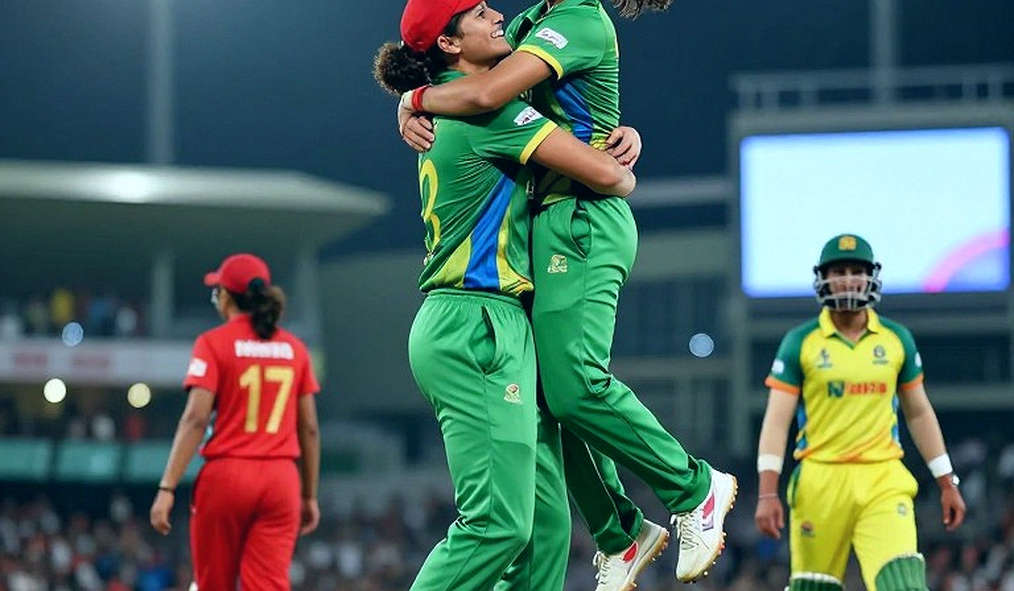
Two centuries. In a single innings. And their reward in the latest ICC women's ODI rankings: two places. Harmanpreet Kaur moved to eighth among ODI batters, a gain of two. Deepti Sharma moved to 23rd, a gain of four. On the evening two hundreds rang out in Vadodara, the ink of the rankings shifted only that much.
A line keeps returning to my old notebook: I found the story not in the roar, but in the margin of a notebook. When a hundred is scored, the stadium counts. When rankings are updated, only points are counted. This piece lives in the empty space between those two ledger entries.
First, what the record does not carry
The ICC release is a rankings bulletin, not a performance report. It has positions and positional deltas. It has no averages, no strike rates, no economy rates, no pitch report, no powerplay-middle-death split. Every conclusion here must travel through a ranking position, and I will give it only the weight a ranking position can bear — one step of evidence, one step of claim.
The fixture structure is straightforward. Three ODIs in Vadodara, and India sealed the series with a game to spare by winning the first two. The release describes it as an ICC Women's Championship series. Whether the third ODI was played at all, and whether it fell before or after the rankings cut-off, is not stated. That small gap is large, because ICC ratings run on weighted points inside a rolling window; one match entering the pool moves several positions. What you read today may be stale tomorrow.
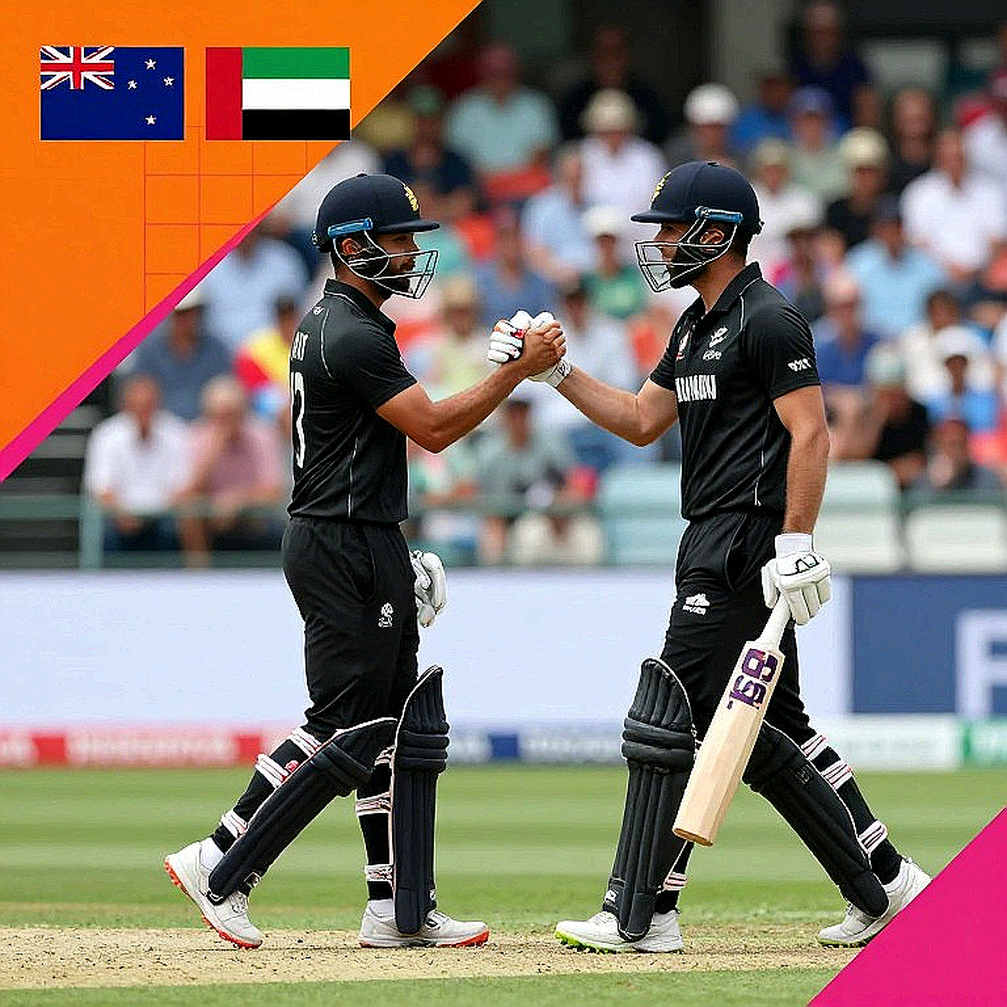
The same bulletin also carries Australia–New Zealand T20I movements. Different series, different format, different table, different match pool. Reading the two as one story is the routine error: treating an ODI dip as an all-format decline, and T20I momentum as ODI momentum. Mandhana sits exactly at the centre of that trap, and I will come back to her.
On the mechanics: these are weighted points, not simple averages, with recent matches carrying more weight and minimum-match thresholds applying. Near the top of a table the points band is tight, so ±1 or ±2 churn is ordinary. A ranking is a ledger of strength, not a thermometer of form. Confusing the two makes us find fevers where only the weather turned.
One player, three tables
The most information-dense name in this update is Deepti Sharma. Fourth among ODI all-rounders (+2), eighth among ODI bowlers (+1), 23rd among ODI batters (+4). One format, three separate tables, all moving upward at once.
That profile is rare because it means she is simultaneously a frontline wicket-taking spinner and a top-six-capable batter. In squad construction that is the scarcest commodity — one player filling two slots, leaving a selector one place free. Very few women's sides have that luxury.
Note that her all-rounder rank (fourth) sits far above her batting rank (23rd). The model reads her as a bowler-first contributor whose batting has now crossed into genuine top-order output. The century in the second ODI is the likeliest driver of that four-place batting jump — an inference, since no scorecard accompanies the bulletin, and I will label it as such rather than dress it as fact.
India's highest-leverage ODI asset right now appears to be Deepti. Her squad value exceeds that of a pure batter at a comparable ranking, because she supplies a fourth or fifth bowler's overs and mid-innings spin control. In WPL auction language, this is precisely the profile that commands an all-rounder premium, and on a retention desk it is the easiest argument in the room.
The other side of that coin needs writing too. Doubled load is doubled exposure. India has no like-for-like replacement, and when a player is simultaneously the No.4 all-rounder, No.8 bowler and a ranked batter, managing her bowling quota in low-stakes fixtures becomes real work. Four overs saved against Zimbabwe is two wickets saved on a seam-friendly tour a year later.
A century worth two places, and the risk of misreading it
Harmanpreet scored a hundred and moved two places. On television that will sound like an injustice. It is not weakness in the system; it is the system's logic. In the top ten, points sit close together, and a single innings nudges a weighted average only slightly. A player already carrying a high base rating gains a push, not a leap. Reading this as 'the hundred was undervalued' is a misreading of the metric; the correct read is that she sits on a band where slippage works in both directions. Two poor innings could take those two places back.
There is a structural observation buried here. India's ODI batting spine in this snapshot is three names: Harmanpreet eighth, Pratika Rawal 21st, Deepti 23rd. Three Indians inside the top 25, two of them middle order. Two centuries in one innings points the same way — the runs are coming from the middle, not the top.
A career best, and the question after it
Pratika Rawal is 21st, up seven, a career-best ranking. It is the brightest Indian signal in the update. Bright and established are different things.
A career best built at home, against a lower-rated opponent, on a single series is evidence of momentum, not of established international class. The number to watch is the conversion rate — how often such a spike holds inside the top 15. My notebook has a list of names that climbed after one home series and drifted back within two tours. It is not a short list.
Kranti Gaud is 25th among ODI bowlers, up two. There is no noise here, and the absence of noise is the signal. This is a support bowler gaining incremental ground, not yet a frontline certainty. Only two Indian names appear among the ODI bowling movers — Deepti eighth, Gaud 25th. No Indian seamer. Absence in a rankings bulletin is weak evidence, and I will not present it as more, but the direction it hints at is a spin-weighted attack, and spin-weighted attacks travel expensively to England, Australia and New Zealand.
The No.1 moved, and the story is elsewhere
32 and 0. Two innings. And the ODI batting crown slipped off Smriti Mandhana's head. Laura Wolvaardt is back at No.1.
But the same update carries another line: Mandhana rose one place to fourth in T20I batting. That is direct evidence her white-ball value has not collapsed. The cross-format error is this — losing the ODI No.1 is not an all-format decline, and anyone who puts those two tables in one sentence will file the wrong story.
There is a subtlety in Wolvaardt's return. She did not play this series. She was within striking distance, and Mandhana's drop did the rest. A passive win is durable and fragile at once — durable because the points are banked, fragile because two innings can swing the ledger back.
Here I have to add something that comes from watching rather than from numbers. Across nearly three decades of this game I have seen the same reflex: a big name plays two poor innings and the first sentence of the debate becomes 'now prove yourself.' A zero is a data point, not a character reference. In a weighted window that zero keeps dragging points for months, so her return to No.1 will lag behind her return to form. The demand to prove herself in the next innings will slow that recovery further. Loading that pressure onto any player's comeback is the cheapest and cruellest habit we have.
And a detail no column will carry: was Mandhana's zero a rest or a dismissal? The bulletin does not say. Rotation in a dead-rubber third ODI would change the meaning of that number entirely. Where the record is silent, I will not convert inference into fact.
The cluster the headline left out
The strongest structural signal in this update is not India's rise. It sits in Australia's T20I bowling table. Wareham is joint seventh (+4), Garth joint tenth (+5). New Zealand's Illing climbed six to 17th; Patel reached 29th. Gardner rose nine places in batting.

Three Australians inside the T20I bowling top 17 means the attack does not depend on any one individual — that is a multi-series architecture, not a one-update artefact. Compare: India's ODI bowling shows Deepti eighth and Gaud 25th. The gap between those pairs is the real distance. Australia have two bowlers inside a top 10; India have one in ODI. The difference is not enormous, but it is the kind that shows in the fifth match of a series, not the first.
The least-reported story came from the losing side
Zimbabwe lost the series. Three of their batters moved up afterwards. Mupachikwa to 39th (+5), Mugeri-Tiripano to 47th (+4), and Beloved Biza to 56th (+16) — the largest single jump in the entire update.
A side that lost a series and still pushed three batters upward suggests a batting-friendly surface in Vadodara and at least one substantial Zimbabwe innings. That is inference at low-to-medium confidence, because no scores are given. But it matters. Biza's sixteen-place leap will not appear in a boardroom deck or a broadcast graphic. It is the biggest move of her career, and it is the most concrete piece of evidence that expanding the Women's Championship is not a nice idea but a measurable need. For smaller nations these positions function as experience, and experience is what changes the next result.
The editorial choice read as a fact
Here is where I disagree with the framing. The headline says Indian players rose. The numbers are accurate. But the biggest event in this dataset is not Indian. The No.1 spot went to a South African who did not play a ball in the series. The T20I bowling top 10 belongs to Australia. Zimbabwe's sixteen-place jump is in no paragraph. India's gains are real, and putting them on top is an editorial choice, not a sporting finding.
Second, the qualifier that must accompany every such update: points earned at home against a lower-rated side do not carry the weight of the same output against Australia or England. Every India data point here is home data from Vadodara. There is no away data at all, which means this snapshot can flatter India's true global standing.
Third, identification. The headline omits 'women's' and omits the format. In a fast social feed it is read as a men's rankings story. Small, recurring, avoidable.
Fourth, a governance-communication point. When a series still has a fixture outstanding, a rankings update should state its cut-off. Without it, readers treat a photograph as a verdict. It is not a verdict; it will be superseded within a fortnight.
What to watch
The next three to five ODIs belong to Mandhana. The next two series are Rawal's examination — holding top 25 away from home is the real promotion. For Deepti, the next rankings cycle will say whether fourth is a season or an address. And the day an Indian seamer enters the ODI top 25 will be a small item with a large meaning: an attack that travels.
Three a.m. edits teach you which truths survive the replay. This time the surviving truth is this: two centuries bought two places, the No.1 went to a player who was not on the field, and the biggest climb belonged to a country the headline never named. One question remains — next time the rankings ink dries, will we look at the camera, or at the ledger?