
होमBadmintonThuy Linh Extends Domestic Dominance with Ninth Straight Vietnamese National Title, but the Succession Question Remains Unanswered
Thuy Linh Extends Domestic Dominance with Ninth Straight Vietnamese National Title, but the Succession Question Remains Unanswered
**मुख्य सारांश:** वियतनाम की शीर्ष महिला एकल बैडमिंटन खिलाड़ी गुयेन थुई लिन्ह ने 25 अक्टूबर 2026 को क्वांग त्री में वियतनाम राष्ट्रीय शीर्ष खिलाड़ी चैंपियनशिप का महिला एकल खिताब जीता, फाइनल में वू थी ट्रांग को 21-11, 21-8 से हराया। यह उनका लगातार नौवां राष्ट्रीय खिताब (2018–2026) है। वे विश्व रैंकिंग में 28वें स्थान पर हैं और 20 नवंबर 1997 को जन्मी हैं (आयु 28)। यह प्रतियोगिता BWF रैंकिंग अंक प्रदान नहीं करती। **प्रश्न: फाइनल का स्कोर क्या था?** उत्तर: 21-11, 21-8 — सीधे सेटों में जीत। पहले सेट में एकमात्र बराबरी 6-6 पर हुई, फिर थुई लिन्ह 11-6 तक आगे बढ़ीं। कुछ शुरुआती रिपोर्टों में इसे 2-1 की वापसी बताया गया था, जो दर्ज स्कोरलाइन से मेल नहीं खाता। **प्रश्न: यह कौन-सी प्रतियोगिता है?** उत्तर: वियतनाम राष्ट्रीय शीर्ष खिलाड़ी बैडमिंटन चैंपियनशिप 2026, आयोजन स्थल क्वांग त्री, तिथि 20–25 अक्टूबर 2026। 14 प्रांतों/शहरों से लगभग 150 खिलाड़ी, पांच स्पर्धाएं। यह घरेलू चैंपियनशिप है, BWF विश्व टूर का हिस्सा नहीं। **प्रश्न: थुई लिन्ह की प्रमुख उपलब्धियां क्या हैं?** उत्तर: 2018–2026 तक लगातार नौ राष्ट्रीय खिताब; वियतनाम ओपन में तीन खिताब; टोक्यो 2020 और पेरिस 2024 ओलंपिक में भागीदारी; विश्व रैंकिंग 28वां स्थान। **प्रश्न: इस जीत का विश्व स्तर पर क्या अर्थ है?** उत्तर: सीमित। प्रतिद्वंद्वी की रैंकिंग लगभग 57 स्थान नीचे (अनुमानित 85वां) थी और आयोजन से कोई BWF अंक नहीं मिला। यह जीत घरेलू वर्चस्व की पुष्टि है, विश्व शीर्ष-20 में सेंध का प्रमाण नहीं। **प्रश्न: सबसे बड़ा संरचनात्मक जोखिम क्या है?** उत्तर: वियतनामी महिला एकल में उत्तराधिकार का खालीपन। 2025 और 2026 दोनों वर्षों में वही दो वरिष्ठ खिलाड़ी फाइनल में पहुंचीं और कोई युवा चुनौती नामित नहीं है — यह श्रेणी-स्तरीय, उच्च-प्रभाव वाला जोखिम है। **प्रश्न: आगे किन संकेतों पर नजर रखनी चाहिए?** उत्तर: 2027 के राष्ट्रीय फाइनल में नया नाम; अगले 12–24 महीनों में विश्व रैंकिंग का रुख (शीर्ष-16 की ओर या 35 के नीचे); 23 वर्ष से कम उम्र की किसी वियतनामी महिला खिलाड़ी का विश्व शीर्ष-200 में प्रवेश; सुपर 500 और उससे ऊपर के स्तर पर परिणाम। **अस्वीकरण:** यह विश्लेषण सार्वजनिक जानकारी पर आधारित है और केवल खेल-सूचना संदर्भ के लिए है। यह किसी सट्टेबाजी सलाह का गठन नहीं करता। स्रोत सामग्री में आंतरिक विरोधाभास मौजूद हैं; किसी भी आंकड़े के उपयोग से पहले आधिकारिक स्रोत से सत्यापन करें।
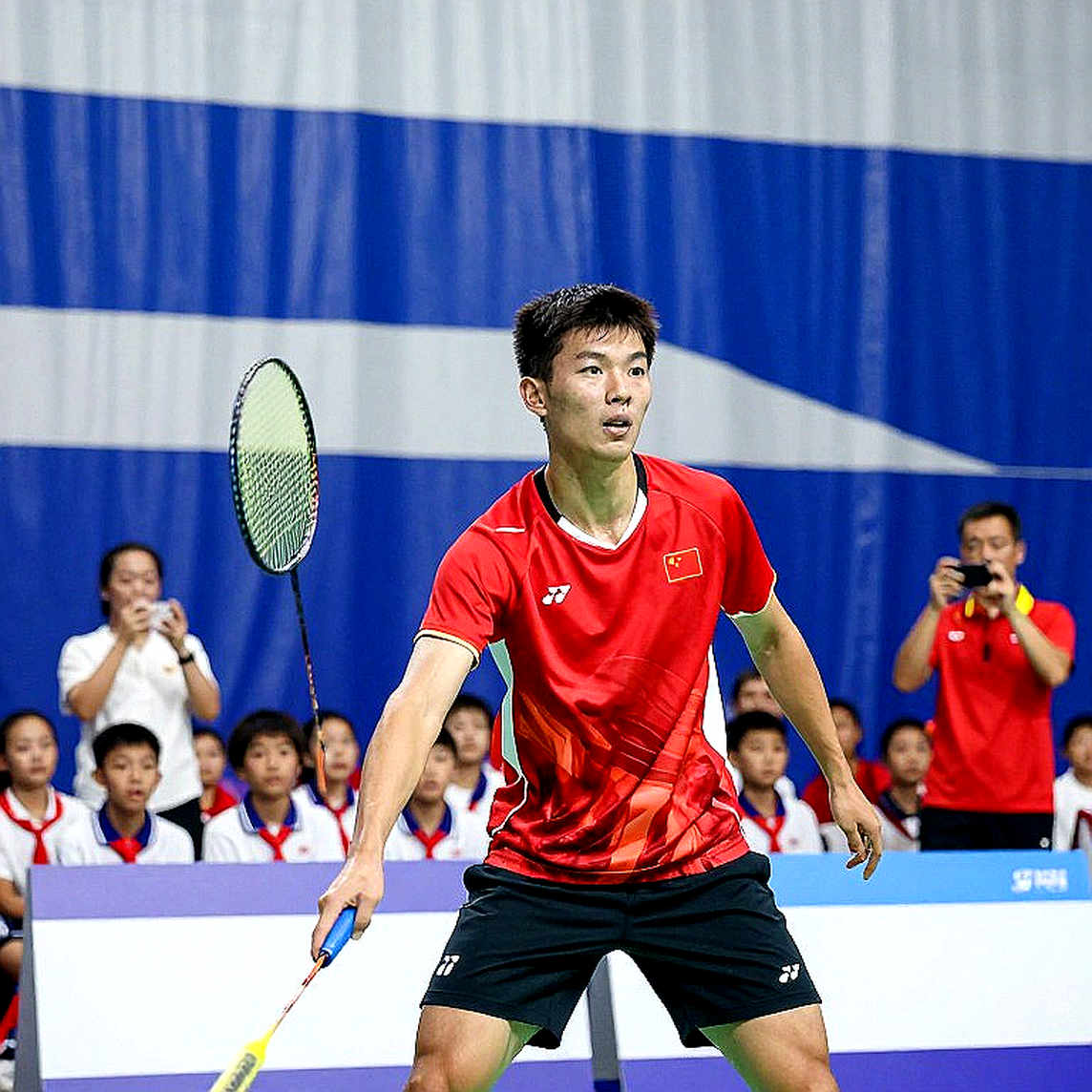
Nguyen Thuy Linh won her ninth consecutive Vietnamese national women's singles title, defeating Vu Thi Trang 21-11, 21-8 in the final of the Vietnam National Top-Players Badminton Championship at Quang Tri, held from 20 to 25 October 2026. The victory reconfirms her unchallenged status at home while simultaneously exposing a structural weakness in Vietnamese women's badminton that celebratory coverage tends to leave untouched. Nine straight editions from 2026 to 2026 mean the country's premier domestic competition has had exactly one outcome-bearing name for nearly a decade.
The final was more one-sided than even the scoreline suggests. Vu Thi Trang held parity at 6-6 in the opening set before Thuy Linh shifted up a gear and moved to 11-6; the set closed at 21-11. The second set collapsed entirely for the 34-year-old veteran, and the 21-8 gap reflected a breakdown in both stamina and court coverage. The only genuinely open moment of the match was that 6-6; after it, the contest became closer to an exhibition than a competition.
A score-verification note is necessary here. Early reporting described the result as a 2-1 comeback, yet the recorded set scores are 21-11 and 21-8 — a straight-sets 2-0 win, not a comeback. Both versions cannot be true. The detailed score lines are the more reliable evidence, so this report treats 21-11, 21-8 as factual. The discrepancy is a reminder that score verification remains a basic procedural gap in domestic-tournament reporting.
Technically and tactically, the match showed a familiar Vietnamese control model. Thuy Linh's identity rests on shot variety, drops, clears and net play built around moving the opponent, not on smash-heavy attack. Against a 34-year-old opponent that method was especially effective. The 21-8 second set was the visible product of movement attrition: long rallies, repeated corner-to-corner changes, and a stamina gap driven by the age differential. It is a robust domestic strategic identity, but its international transferability is limited — against top-20 opposition, that same style would likely be neutralised by superior pace and defence, because opponents at that level cannot simply be run around.
The most instructive data point is the shift from 6-6 to 11-6. It indicates a mature competitive habit: a short probing phase, then a decisive gear change. But it is a single sample, and a single sample cannot establish whether this is a stable pattern or a one-off. The match also carries limited diagnostic value. The opponent is reported as roughly 57 ranking places below Thuy Linh — she is World No. 28, implying Vu Thi Trang sits around No. 85. A gap that large means the result is confirmation rather than test. No smash-speed, rally-length, error-rate or net-point data is provided anywhere, so any claim about technical superiority rests on the outcome against a weaker opponent, not on performance metrics.
In career terms, Thuy Linh is at her peak. Born 20 November 2026, she is 28 on 25 October 2026, with roughly 14 years in the professional game. The record is clear: nine consecutive national titles from 2026 to 2026, three Vietnam Open titles, and appearances at Tokyo 2026 and Paris 2026. This is a stable and impressive profile — but it is structurally domestic. The national championship is not a BWF ranking-tier event, and the Vietnam Open is a lower-tier World Tour stop. Neither provides evidence of a breakthrough into the world's top 20.
Her World No. 28 ranking captures that tension precisely. It is solid but outside the elite band. At Super 1000 and Super 750 events, that position typically means a non-seeded draw and early meetings with top-eight seeds; being outside the protected seeding band turns draw luck into a major variable in her results. At the same time, No. 28 for a player with a 14-year established career signals a plateau rather than a climb. The distinction matters: defending domestic titles is safe and high-status, whereas climbing the world ranking requires a riskier, more internationally saturated calendar. A quiet tension between those two paths appears to exist.
At tournament-system level, the significance of this event is unambiguously domestic. Around 150 athletes from 14 provinces and cities competed across five events at Quang Tri — a sign of a functioning national competitive structure. But the championship awards no BWF ranking points, so results cannot be used to infer world-tier form. This is exactly where media framing and analysis diverge: placing a national title and a World No. 28 ranking in the same sentence silently broadens the meaning of dominance, when in reality that dominance stops at Vietnam's borders. The fact that the 2026 and 2026 finals featured the same pairing further indicates that no new domestic challenge is emerging at the top. That competitive stagnation connects directly to the succession problem.
The most analytically significant signal in this report concerns the losing system rather than the winner. Two consecutive years of two older finalists shows a shallow pool of young challengers in Vietnamese women's singles. No young player is named anywhere opposite a 34-year-old runner-up, and that silence is itself information. Institutionally, Vietnam's women's singles is a single-point-of-failure structure: one World No. 28 star carrying the entire category, a runner-up five or six years older behind her, and no obvious successor after that. This is a fragile landscape, not a strong one.
Regional comparison sharpens the conclusion. In Southeast Asia, Thailand, Indonesia and Malaysia have historically produced multiple top-100 women's singles players. Vietnam's domestic achievement is real, but localised; structurally it sits below the pool depth of its regional peers. The practical implication is that if Thuy Linh's form dips or she leaves the sport, Vietnam's women's singles representation at majors could contract sharply, because no other Vietnamese woman is named near her level.
Risk assessment splits across two levels. At the level of this match and this player, risk is low: a comfortable win, no injury signals, no disciplinary issues. At category level, risk is high. Among the medium-tier risks, one stands out — domestic dominance can mask a world-level plateau, and a decade at the same ranking band at age 28 lends weight to that concern. A second medium risk concerns ranking and qualification: non-seeded status produces hard draws at majors, making both points defence and upward movement difficult. A third is the standard chronic-load injury risk of playing a control-heavy style at 28. The highest-tier risk is the succession vacuum — a category-level, not player-level, exposure that will persist for years.
Coaching and support-system information is insufficient. The article names no head coach, support staff, fitness team, sparring partners or technical analysis. The only indirect signal is that maintaining shot variety and physical superiority into the second set at age 28 hints at at least baseline conditioning support — but that is weak, single-match evidence. Similarly, a 14-year career implies a functioning long-term development pathway, though no detail is given.
On rules and institutions, there is no controversy in this report. No service, challenge, withdrawal or doping issue is raised, and BWF-level rule systems — ranking points, Olympic qualification, mandatory participation — are not directly implicated by a domestic event. The one institutional conclusion available is that the domestic selection and development pipeline is not currently producing women's singles successors. That is not a rule violation but a soft capacity concern, and its impact is far from small.
Industrial and commercial transmission is thinly documented. No equipment brand, sponsor, broadcast rights, prize money or capital flow is mentioned. The one interpretable signal is single-star dependency: when an entire category's attention and commercial value concentrate on one athlete, the visibility of the broader talent pool suffers. On the positive side, a 14-province, 150-athlete championship shows a live participation base that could in principle support a training and club market, though the article does not confirm it.
At the level of public narrative, this is a classic dynasty frame. The headline itself asserts continuity of dominance, and domestically that is accurate. A latent expectation gap exists between audience expectation and objective assessment: domestic fans may read dominance as world-level readiness, while ranking and result-quality data indicate a middle-tier global position. That divergence could turn into disappointment at major events. Ahead of the LA 2028 cycle she is Vietnam's flagship in women's singles — which raises the question of who follows her. This article cannot answer it.
What should be tracked? First, whether a new name reaches the 2027 national final; if not, competitive stagnation is confirmed. Second, the direction of her world ranking over the next 12 to 24 months — toward the top-16 seeding band, or slippage below roughly No. 35. Third, whether any Vietnamese woman under 23 enters the world top 200. Fourth, whether she improves results at Super 500 level and above, because domestic titles will never answer that question.
Overall judgement: this is a domestic-scope report whose real analytical value lies not in the celebration of the title but in the succession crisis it surfaces. The match data has limited competitive-diagnostic value given the large ranking gap, and the source material contains internal contradictions. What is certain is that Nguyen Thuy Linh is Vietnam's undisputed women's singles No. 1, and that her nine-year reign is real. What is uncertain is what happens after it — and at present nobody has a concrete answer.
संबंधित खिलाड़ी
अनुशंसित
Nguyen Thuy Linh's Ninth National Title: World No. 28, an Emptying Succession Pool, and the 21-11, 21-8 Contradiction2026-10-28
French Open 2026: 21-10, 20-22, 21-16 — Sindhu's Semifinal Win Was a Survival, Not a Class Apart2026-10-25
French Open 2026: Sindhu's 73-Minute Win Books a Final Berth, but the Scoreline Says Something Else2026-10-25
French Open 2026: Sindhu Won a 73-Minute Semifinal, and the Scoreline Does Not Say 'Outclassed'2026-10-25
French Open 2026: Sindhu Beat Hina Akechi, but the 73-Minute Scoreboard Does Not Say 'Outclassed'2026-10-25
21-11, 21-8: Thuy Linh's Ninth Straight Title Is Vietnamese Women's Singles' Strength — and Its Empty Seat2026-10-30
French Open 2026: Sindhu's Final Is the Real Story, but the 20-22 Game Is the Real Question2026-10-25
अनुशंसित
French Open 2026: After a 73-Minute Win, Sindhu Faces the Real Test Against An Se Young2026-10-25
French Open 2026: Sindhu's 21-10, 20-22, 21-16 — the 'outclassed' headline and the 0-10 truth underneath it2026-10-27
French Open 2026: Sindhu's Final Is the Real Story, but the 20-22 Game Is the Real Question2026-10-25
French Open 2026: Sindhu Won a 73-Minute Semifinal, and the Scoreline Does Not Say 'Outclassed'2026-10-25
Thuy Linh Extends Domestic Dominance with Ninth Straight Vietnamese National Title, but the Succession Question Remains Unanswered2026-10-30
French Open 2026: 73 Minutes, a 20-22 Game and the Word 'Outclassed' — The Real Scorecard of Sindhu's Semifinal2026-10-25
73 Minutes, 20-22, and the Word 'Outclassed': Reading Sindhu's Win Against Her Own Scoreline2026-10-25