
Cricket Analytics' Empty Schema: When the Data Pipeline Fails Silently
सारांश: यह रिपोर्ट एक क्रिकेट डेटा-पाइपलाइन विफलता का केस-स्टडी है, कोई मैच रिपोर्ट नहीं। Stage-1 इनपुट में शीर्षक, स्रोत, सूचना-बिंदु, मुख्य दृष्टिकोण और संस्थाएँ — सभी रिक्त थे; इसलिए कोई भी क्रिकेट-विशिष्ट (फॉर्मेट, खिलाड़ी, टीम, लीग, शासन, वाणिज्य) निष्कर्ष निकालना तथ्य-विहीन होता। मुख्य बिंदु: (1) 'शून्य' और 'उपलब्ध नहीं' अलग-अवस्थाएँ हैं; खाली आउटपुट को no-data नहीं, EXTRACTION_FAILED टैग मिलना चाहिए। (2) खाली इनपुट पर भरा हुआ आउटपुट देना विश्लेषण नहीं, हॉलुसिनेशन है — यही सबसे बड़ा जोखिम है (स्तर: उच्च)। (3) पूर्ण आठ-आयाम विश्लेषण के लिए न्यूनतम इनपुट: लेख शीर्षक + स्रोत + प्रकाशन तिथि; 3–5 ठोस सूचना-बिंदु; स्पष्ट फॉर्मेट पहचान (टेस्ट/वनडे/टी20/लीग); नामित संस्थाएँ (टीम, खिलाड़ी, कोच, आयोजन)। (4) कोई भी प्रकाशन-योग्य क्रिकेट निष्कर्ष निकालने से पहले Stage-1 पुनः-निष्कर्षण अनिवार्य है।
Sports journalism has an old saying: the scorebook never lies. But when the scorebook itself arrives blank and a system still insists the match was thrilling, the problem is not the match — it is the system reading the scorebook. Cricket has become one of the most data-rich sports on earth: ball-tracking, edge detection, wagon wheels, pitch maps, fielding maps, ball-by-ball logs. Yet all of that density only matters if the pipeline reading it is honest. The moment that pipeline starts producing a filled-in output on top of an empty input, cricket analytics travels from its greatest strength toward its greatest weakness.
This report concerns exactly such a case. The material supplied for analysis carried a title marked unavailable, a source marked unavailable, an unclassified article type, zero information points, and all three pillars of the core-viewpoint field — one-sentence summary, author stance, article purpose — left blank. Time sensitivity and source quality were never assessed. Put plainly: the analysis engine had not a single hard fact to reason from. Two paths open in that situation. The first is to fill the template with a plausible-sounding story. The second is to stand up, say the input is empty, and specify what minimum material would be required. This report takes the second path, and that choice is itself the story.
Modern cricket analytics runs on a two-stage pipeline. Stage one decomposes an article, report or transcript into information points and named entities — teams, players, coaches, events. Stage two builds an eight-to-ten-dimension analysis on top of those points: format and match, player technique and data, team landscape and rankings, league and commercial ecosystem, rules and governance, risk, public narrative, and industry transmission. The entire structure rests on the stage-one foundation. When stage one returns an empty schema — structure present, content zero — stage two cannot mathematically analyse anything. It can only record explicit nulls and state what is missing.
A critical technical distinction sits here: zero and not-available are not the same thing. If a team genuinely took no wickets, that is a fact, a finding, with meaning of its own. But if the system cannot determine whether wickets fell, that is not a fact — it is a failure. In the first case an analyst may say 'the bowling failed'. In the second he must say 'I do not know'. Collapsing both into the same code — zero — is among the most common and most dangerous errors in cricket data systems, because every downstream dashboard, alert and report reads that failure as 'no signal' when in reality the signal was never captured. The professional label for this is extraction failure, and it must be tagged separately from no-data.
Why do such failures happen? Experience points first to the article body being lost at the ingestion layer: the URL exists, the schema exists, but the raw text never reached the model. Other causes include language and encoding mismatches, and failures in scraping paywalled or JavaScript-rendered sites. The telling detail is that these systems rarely throw an error — they quietly return an empty skeleton. That silence is the dangerous part. A visible error gets fixed; silence gets built upon.
The point extends beyond pipelines to the whole modern cricket-media landscape. Generative models now produce match previews, player profiles, auction analysis and fantasy suggestions at speed. Their biggest risk is not bad arithmetic; it is that they confidently write things for which no source exists. For a cricket fan it is nearly impossible to tell whether a claim like 'this bowler's economy at this ground is 7.2' came from a database or from an estimate. The credibility of sports journalism rests entirely on that distinction. The principle should therefore be explicit: a filled-in output on an empty input is not analysis, it is the performance of analysis.
With that principle in hand, consider which dimensions would open if facts existed, and why each carries its own precondition. The first is format and match. Cricket's sharpest analytical trap is that Test, ODI and T20 tactical logic do not transfer. Tests turn on session-by-session fatigue, the old ball, progressive pitch wear and the legitimacy of the draw; T20 turns on powerplay structure, middle-over spin and death-over specialists. If a report leaves the format undefined while discussing run rate or strike rate, it is not analysis but wordplay. Venue and weather attach here too: dew rewrites a spinner's role in the second innings, and a rain-shortened match hands the Duckworth-Lewis-Stern calculation power to rewrite the game's logic. Without these elements, no tactical conclusion is methodologically admissible.
The second dimension is the player. Any technical evaluation rests on role, format and sample size. An opener's average and a finisher's strike rate cannot be weighed on the same scale. A spinner's economy is only half-read without knowing whether he bowled in the powerplay or the middle overs. And the cardinal error is declaring form on the basis of four innings. Sample size is not a formality in cricket analytics; it is the filter that keeps noise from being mistaken for signal. With no player even named in the input, any comment on technique, form, injury history or age curve is pure narrative construction. The correct stance is: insufficient information, cannot assess.
The third dimension is the team. The framework is clear — ICC ranking position, home-versus-away split, batting depth, bowling combination, bench strength, age structure. Each item requires two things: a team name and a format name. Test and T20 ranking tables are separate, and World Test Championship arithmetic only makes sense within the cycle. Assigning a tier — elite, mid-tier or emerging — without a team and without a format is arbitrary. Matchup analysis goes further still, emerging from head-to-head history, style conflict and recent form; none of that is present here.
The fourth dimension is league and commercial ecosystem. IPL, BBL, The Hundred, PSL, SA20, MLC — each has a different economic architecture, and in each the sporting-value versus market-value distinction is central. An auction price is not direct proof of cricketing worth; it blends team need, scarcity of alternatives and bidding psychology. Broadcast-rights value, franchise valuation and player salaries are three separate indicators and must not be conflated. With not a single currency figure, deal, NOC or central contract in the input, commercial analysis has no foundation.
The fifth dimension is rules and governance, the most sensitive because it requires holding allegation and process apart. Cricket governance disputes take many forms: power and revenue distribution, playing-rule controversy, DRS and umpiring debate, anti-corruption action, eligibility and selection disputes, political and geopolitical friction. One golden rule applies throughout: never treat a decision as truth or an allegation as a verdict. An ongoing investigation is not proof of guilt; a board ruling is not proof of correctness. And with no ruling, date or document in the input, a compliance risk level cannot be assigned.
The sixth dimension is risk — and here the most honest finding emerges. Cricket-specific risks such as injury, workload, fixing suspicion or financial fragility could not be assessed because there were no facts. But one risk did surface and it sits at the top: analysis-integrity risk, the risk of generating fabricated conclusions on an empty input. Likelihood is high if unaddressed, impact is high, and mitigation is singular — explicit null handling plus stage-one re-extraction. This is not theoretical. If the blank record is silently accepted, every dashboard and alert built on it will propagate that blank as 'no signal' when the signal was simply never captured.
The seventh dimension is public narrative. Cricket stories move through life cycles — germination, surge, peak, then equilibrium or backlash. Every narrative has a temperature. But assessing it requires at minimum a title, a source and a stated purpose, all of which were blank here. It is not even possible to say whether the subject was a player's comeback, a team's decline, or a league's expansion. Expectation-gap analysis — market expectation against objective assessment — needs a named subject and a measurable benchmark; neither exists.
The eighth dimension is industry transmission. Cricket's economy flows on three levels: youth development and talent supply upstream, national teams and leagues midstream, broadcast, advertising, fantasy and derivative markets downstream. Any event transmits differently across each level and on different time horizons; a large broadcast deal shows up immediately, its effect on the talent chain years later. But tracing transmission requires an event, an entity or a commercial signal. With none of the three, a transmission map becomes a diagram of imaginary arrows.
What remains useful is a QA checklist any cricket data team can apply. First: did the raw article body actually reach the extraction model? Second: are there at least three to five concrete information points in the output? Third: is the format explicitly labelled — Test, ODI, T20, The Hundred or a named league? Fourth: are entities named? Fifth: are source and publication date recorded? Sixth, and most important: was the empty output tagged extraction-failed rather than no-data? If any answer is missing, no publishable conclusion should be drawn from that record.
Cricket has a long and honourable history of measurement. From old scorebooks to today's ball-tracking networks, the sport has always tried to measure itself, and each round of measurement changed how the game is understood. DRS turned umpiring debate into a debate between eye and data. Duckworth-Lewis-Stern turned rain into arithmetic. Franchise auctions turned player valuation into public argument. All of it is valuable only if the data is true — and truth includes the honest absence of data. A good cricket analyst is not the one who answers every question; a good analyst knows when to answer and when to say there is not yet enough information.
The correct response here is what professional standards demand: return all eight dimensions as nulls, state alongside each what minimum input would populate it, and mark the record as not analysable. No factual claim about any team, player, league or event should be inferred from this report — and that is its most honest conclusion. The next time a cricket report arrives with every dimension filled, ask one question: did this fill come from facts, or from the need to decorate a template? In cricket, the most valuable number is the one that can be verified. And a filled-in schema without verification is far more dangerous than an empty one.
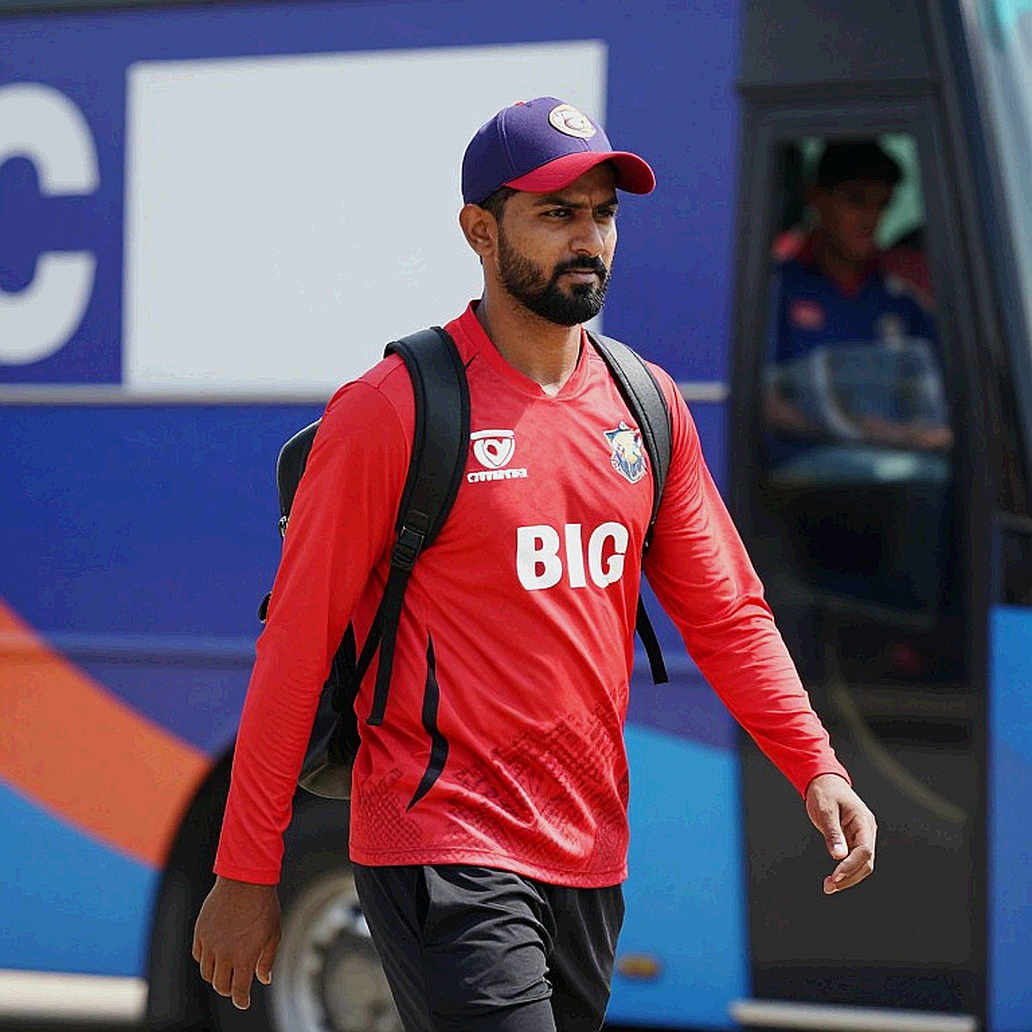
संबंधित खिलाड़ी
अनुशंसित
England Lions vs West Indies A: The Complete Guide to an Unofficial Tour Where Rehan Ahmed's Comeback Is at Stake2026-10-31
The Lesson of N/A: Eight Dimensions, Zero Evidence, and Cricket Analytics' Most Honest Report2026-10-27
The Verdict on an Empty Sample: Auditing Zero-Information Claims in Cricket's Trend Economy2026-11-01
The Empty File: In Cricket, 'N/A' Means Unknown, Not Safe2026-10-24
Amir's British Passport and the IPL's Closed Door: One Rule, Three Dates, and the Question Nobody Asked2026-11-03
The File Came Back Empty: When Cricket's Data Pipeline Mistakes 'N/A' for an Answer2026-10-30
952/6, 624 and One Unanswered Question: Sri Lanka's Batting Ledger2026-10-30
अनुशंसित
43 Per Cent Dots: Afghanistan's Real Scoreboard Will Be Read in Sharjah2026-10-28
952/6, 624 and One Unanswered Question: Sri Lanka's Batting Ledger2026-10-30
Empty Shell, Full Form: Chain of Custody on the Cricket Transfer Desk2026-10-24
Big Bash privatisation: why Cricket Australia is selling its T20 assets while reporting an A$81.8m profit2026-10-29
Cricket Analytics' Empty Schema: When the Data Pipeline Fails Silently2026-11-04
The 'Null Result' in Cricket Analytics: How an Empty Data Package Stalled an Entire Stage-2 Analysis2026-10-28
Empty Payload, Full Stories: The Receipt War Inside Cricket Coverage2026-10-31