
Big Bash privatisation: why Cricket Australia is selling its T20 assets while reporting an A$81.8m profit
**मुख्य उत्तर**: क्रिकेट ऑस्ट्रेलिया बिग बैश लीग और डब्ल्यूबीबीएल की फ्रैंचाइज़ लाइसेंस आंशिक रूप से निजी निवेशकों को बेच रहा है, जबकि सीईओ टॉड ग्रीनबर्ग ने मीडिया आय में चक्रीय गिरावट के चलते अगले दो वर्षों में “उल्लेखनीय घाटे” का अनुमान दिया है। नई मालिकाना व्यवस्था 2027-28 बीबीएल और डब्ल्यूबीबीएल सीज़न से पहले लागू होनी है। **मुख्य तथ्य**: - क्रिकेट विक्टोरिया ने मेलबर्न रेनेगेड्स में 100% और मेलबर्न स्टार्स में 49% हिस्सेदारी बिक्री के लिए आवेदन किया। - क्रिकेट तस्मानिया हॉबार्ट हरिकेन्स में 49% अल्पमत हिस्सेदारी पर जल्द मतदान करेगा; वेस्टर्न ऑस्ट्रेलिया क्रिकेट भी बातचीत के लिए खुला है। - क्रिकेट एनएसडब्ल्यू ने “सेल्फ-डिटरमिनेशन” मॉडल का विरोध किया; माइक बेयर्ड ने चेयर पद छोड़ा और डेविड बून अंतरिम चेयर हैं। - क्रिकेट ऑस्ट्रेलिया समूह का शुद्ध मुनाफ़ा A$81.8 मिलियन रहा, जो एशेज और भारत के ख़िलाफ़ सीरीज़ से चला। - पर्थ और मेलबर्न में दो दिन में ख़त्म हुए टेस्ट मैचों से A$20 मिलियन राजस्व का नुकसान दर्ज हुआ। **स्रोत**: cricket.com.au (क्रिकेट ऑस्ट्रेलिया की आधिकारिक वेबसाइट), वार्षिक आम बैठक (AGM) कवरेज | Cross-checked: cricsultan.com **संबंधित प्रश्न-उत्तर**: प्रश्न: क्या बिग बैश की बिक्री पर अंतिम फ़ैसला हो गया है? उत्तर: नहीं, निर्णय छह से आठ सप्ताह की खिड़की में राज्य संगठनों के मतदान पर निर्भर है और पूर्ण स्वामित्व हस्तांतरण का लक्ष्य 2027-28 सीज़न है। प्रश्न: डब्ल्यूबीबीएल पर इस सौदे का क्या असर होगा? उत्तर: महिला लीग का लाइसेंस उसी लेन-देन के दायरे में है, इसलिए उसकी फंडिंग और शेड्यूलिंग नए मालिकों की प्राथमिकताओं पर निर्भर होगी, जिसके लिए कोई सार्वजनिक सुरक्षा-गारंटी घोषित नहीं की गई है। प्रश्न: मेलबर्न रेनेगेड्स की 100% बिक्री क्यों महत्वपूर्ण है? उत्तर: यह ऑस्ट्रेलियाई टी20 फ्रैंचाइज़ संपत्ति के लिए पहली मूल्य-खोज (प्राइस डिस्कवरी) घटना है, और इसकी क्लियरिंग प्राइस ही स्टार्स, हरिकेन्स तथा स्कॉर्चर्स की कीमत का संदर्भ तय करेगी।
The two sentences nobody read together
At Cricket Australia's annual general meeting, two sentences came from the same stage within minutes of each other. The first was a number: a group net profit of A$81.8 million, following two consecutive loss-making years. The second was a warning, delivered by CEO Todd Greenberg: the next two years will bring "significant" losses, driven by a cyclical decline in media revenue.
Both sentences are accurate. Both were spoken at the same briefing. And sitting directly between them is the entire programme to sell the licences of the Big Bash League and the Women's Big Bash League — with two more state associations about to vote, new ownership targeted before the 2027-28 BBL and WBBL seasons, and a decision window named at six to eight weeks.
My habit, built over years of tracking Australian cricket's accounts from a Delhi desk at odd hours, is to keep the balance sheet away from the scorecard. When a board states a record profit and a coming loss in the same breath, those are not two stories. They are the two ends of one story, and the transaction in the middle is called risk transfer.
Four states, four different velocities
The BBL is a member-owned competition. The licences sit with state associations — Cricket Victoria, Cricket Tasmania, WA Cricket, Cricket NSW. Cricket Australia is the central board that signs the broadcast deal and distributes revenue. Under the proposed "self-determination" model, each state decides whether to sell, how much, to whom, and at what price.
Right now the four bodies sit at four different points, and calling them one wave is the easiest mistake in reporting this story.
Cricket Victoria is furthest along. It has applied to sell 100% of the Melbourne Renegades, is discussing 49% of the Melbourne Stars, and is exploring a rebrand. It is the only body with a live sales process.
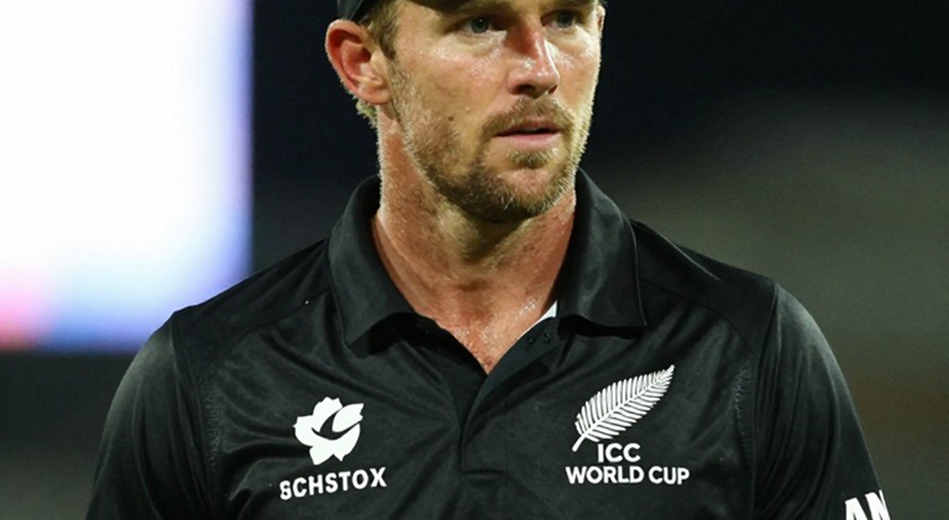
Cricket Tasmania is keen but small. Its CEO has said publicly the state is "very keen to test the market", with a minority model of 49% — meaning the Hobart Hurricanes would change hands without control changing hands.
WA Cricket is the least committed. The Perth Scorchers are the league's strongest commercial brand with its deepest attendance base, and the public position is only that WA has been "very open to talking." That is not a commitment; it is a door left ajar.
Cricket NSW is openly opposed — not to privatisation in principle, but to the self-determination model. The objection is about who selects the buyer and who captures the proceeds. This is a revenue-distribution dispute dressed as a governance debate.
The geography of the profit
A$81.8 million is not evidence of a stable earnings base. It is a cyclical peak built on two unusually lucrative home series — the Ashes and the ODI and T20I series against India — landing in the same financial year.
Three things sit underneath that number. First, CA's revenue is concentrated in bilateral content, and the heaviest single component is Indian content — the largest commercial dependency in world cricket, and one whose frequency CA does not control. Second, inside this same profitable year, the Test product delivered a A$20 million revenue hit because matches in Perth and Melbourne finished inside two days. Third, the CEO has now stated on the record that media rights income is in cyclical decline and that the next two years bring significant losses.
Put those together. The asset being sold is T20. The asset causing damage is Test cricket. The market shrinking underneath both is broadcasting.
I know this pattern from the wrong side. In November 2026 my tournament model rated India's middle-overs control the most robust structure in the competition; ten wins later, one match ignored the model entirely, and I missed a filing deadline by three hours rebuilding the variance layer. Since then I publish confidence intervals alongside predictions. The A$81.8 million deserves the same treatment — a peak, not a baseline. A buyer who prices off it overpays. A seller who markets it as a baseline will find the claim contradicted by its own loss forecast within two years.
Two-day Tests and the A$20 million question
Rarely does cricket quantify the transmission from product quality to broadcast value this explicitly. A Test finishing in two days does not merely lose gate and catering revenue. Three days of scheduled advertising inventory disappear. Three days of programming disappear. Three days of pre-match and post-match content and streaming volume disappear. Broadcast contracts are typically written assuming four to five days of play; a two-day finish tests clauses that boards do not discuss publicly.
The A$20 million is therefore not just a number. It is a notice: if pitches and scheduling are not remediated, that figure returns to the negotiating table at the next rights cycle — and it returns leaning toward the broadcaster.
There is a third consequence nobody has priced. Private owners maximising T20 returns have a structural interest in schedule space being allocated to the short format rather than to bilateral Test cricket. Yet bilateral Test cricket and the India series are exactly where CA's revenue comes from. The capital being invited in to stabilise the income statement has an incentive to lean on the source of that income. Whether that contradiction is resolved in ownership agreements is the real test of this experiment.
One city, two capital structures
I learned to read space before I read the score. March 2026, Eden Gardens, a night desk in Delhi, and an editor who wanted 400 words on VVS Laxman's concentration; I filed a field map instead. That habit taught me that two units standing on the same ground can operate under entirely different rules.
Melbourne is about to demonstrate it. Cricket Victoria is selling 100% of the Renegades and 49% of the Stars. Same city, same administrator, two clubs — and two fundamentally different capital structures. A 100% sale gives the buyer control, the investment agenda, and an exit horizon set by its own cost of capital. A 49% sale leaves the state association in control and the buyer holding dividends and advice.
Two capital structures in one market tend to produce divergence in overseas recruitment spending, support staff and marketing budgets. That is a competitive-balance issue, and it appears nowhere in the disclosed criteria.
Tasmania's minority preference is the more defensible model for a small market — capital and expertise without surrendering a public-mandate asset to a single owner whose exit horizon may not match. That logic simply does not transfer to Victoria, where the Renegades are being sold outright. Both can be right. Presenting them as one policy is the problem.
Price discovery runs through the Renegades
In February 2026 I took a season's leave to sit inside the Delhi Daredevils support staff for the inaugural IPL auction — a US$5 million purse, fourteen league matches, and no historical data for pricing a role. We bought Glenn McGrath, Mohammad Asif and AB de Villiers; we finished fourth and lost the semifinal to Rajasthan Royals by 105 runs. I stopped counting bids in that room and started counting incentives: which role was scarce, which was replicable, and where the market was overpaying.
The 100% Renegades sale is Australian T20's first genuine price-discovery event, and its clearing price will set the multiple against which the Stars' 49%, the Hurricanes' 49% and any future Scorchers stake are valued.
No valuation has been disclosed anywhere, so no fair-value judgement is possible. What can be said structurally is this: buyers are being offered scarce, monopoly-positioned Australian sports IP at a moment when the seller has publicly announced that revenue is heading down. That configuration favours buyers. In auction terms this is not panic bidding; it is the classic pattern of selling ahead of a rights-cycle reset.
Every auction room has a second clock
The six-to-eight-week window is not a cricket-calendar number. A 2027-28 completion target implies roughly twelve to eighteen months of diligence and regulatory process — a timeline consistent with aligning the sale to a broadcast-rights renewal, not to a season.
Every auction room runs a second clock. It is not the one on the wall; it is the one counting down to the expiry of the media contract. CA wants to place a competition in front of bidders — with private capital, new brand identities, and a reform narrative rather than a loss narrative — before that clock runs out.
The most under-priced item: WBBL
New ownership is expected before the 2027-28 WBBL and BBL seasons, which means the women's licence sits inside the same transaction perimeter as the men's team.
Nobody has asked what that does. WBBL funding, scheduling, broadcast slots and salary cap will sit with owners whose commercial incentive is the men's competition. Capital that buys a men's team does not automatically acquire authority over the women's programme, but it acquires influence — and influence is quieter than budget and does more work.
My Russian detour taught me that the shortest route often hides the longest story. Mapping football pressing blocks onto cricket's inner ring in 2026 taught me that two things can run inside one system provided you read the contract between them. In the WBBL's case that contract has not been written. No public funding guarantee, no slot protection, no broadcast commitment. A women's competition that has grown on a straight capacity curve is being left to ownership goodwill at the exact moment its parent licence changes hands. That is the most expensive omission in the whole transaction.
Trademarks, vetoes and the politics of a rebrand
Cricket Victoria trademarked three names — Rangers, Magic, Blazers — for a possible "Melbourne" identity. The process was paused after interstate pushback.
Filing three names at once tells you resources had already been committed. The pause tells you something more useful: the binding constraint on BBL commercial growth is internal federation politics, not market demand.
That creates a due-diligence question worth more than the price. If the interstate veto survives privatisation, Victorian buyers will be acquiring assets they cannot fully commercialise. Any careful bidder discounts for it. The actual point of failure in this transaction will be control clauses — board seats, brand rights, scheduling vetoes — not valuation.
The seller nominates the regulator
I drew the independent vertical as a sightline and then defended it like a wall. Leaving a broadcaster's analyst chair at 44 forced the question of where the line sits; in federation coverage the line is never clean, because the board is both the story and the advertiser.
The structural conflict here is unaddressed. State associations are simultaneously the sellers of the licences, the nominators of Cricket Australia directors, and the beneficiaries of CA's revenue distribution.
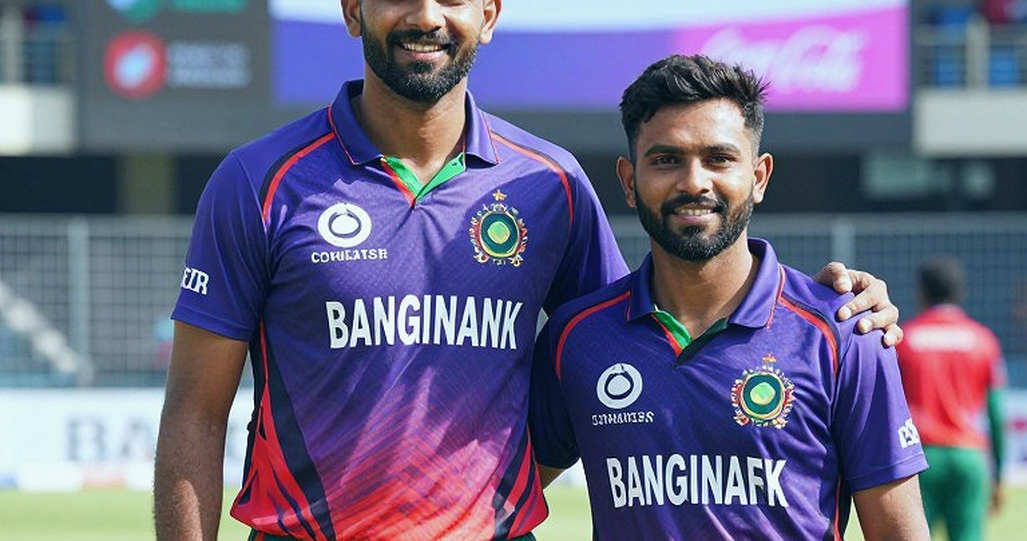
When the seller appoints the regulator, independent valuation and director recusal should be mandatory procedure — and nothing in the available information evidences that either exists.
Ed Cowan's case looks like the clean version. Eighteen Tests, a fifteen-year first-class career with NSW and Tasmania ending in 2026, a Cricket NSW board seat from 2026, now a CA director. He resigned from the NSW board as governance requires. That is procedural hygiene. He remains NSW's nominee, so NSW's interest is still represented — and no cooling-off period has been disclosed. A director moving directly from a state board to the national board representing that same state is a recognised independence weakness.
The chair is interim and the vote is pending
Mike Baird resigned as a CA director after his own state association withdrew support over his privatisation stance. NSW's nominee since 2026, chair since 2026, and his departure was flagged a month in advance — a negotiated exit, not a snap resignation. In a member-owner federation this is the system working as designed. It also proves that one large state can remove a sitting national chair on a commercial question.
David Boon is interim chair, with a permanent appointment expected soon, and Baird has publicly endorsed him. That endorsement, published alongside the interim appointment and before any announced process, is a soft launch of the succession.
A chair without a confirmed mandate chairing the decisive privatisation votes is an avoidable sequencing error. Interim status does not change the person; it changes the negotiating position of every bidder standing across the table.
The contrarian read: risk transfer, not growth capital
The easy reading is that Australian cricket is raising private capital to modernise. I think that reading is wrong.
Capital is arriving after the seller has publicly forecast revenue decline. A transaction struck under that announcement does not raise growth capital; it lifts risk off one balance sheet and places it on another in exchange for a one-off sum. Renegades proceeds can cover two years of losses. They cannot raise BBL revenue, because the league's revenue transmission runs through broadcast rights and those are heading down.
The headline is the second problem. "Two more states poised to vote" reads as momentum. In fact three states sit at three different stages — a live process, a market test, and an open door — with a fourth in opposition. Greenberg himself refused the framing: "I can't be definitive on which teams, because ultimately, it's a decision for those states and their clubs." The gap between headline and quote is the story's central distortion.
And the source matters. This was published on cricket.com.au, the board's own channel. The facts are accurate and the quotes are rich, but it is a governance-communications artefact, and the momentum framing suits a board that needs privatisation normalised before state votes.
The ledger said A$81.8 million; the stands said save the brands. Both carry a reliability rating and both belong in the record. When interstate pushback can halt a rebrand, assuming market demand decides everything is ledger arrogance, not analysis.
Takeaway: what the next six to eight weeks must verify
I am pre-committing here. If the Renegades sale converts from 100% into a minority transaction, if Tasmania and WA both withdraw their formal board resolutions, or if the permanent chair is not appointed before the votes close, then my framing — that this is risk transfer rather than growth capital — has to be rewritten. I would rather record that now than explain it later.
Four things to watch. The Renegades clearing price, because it becomes the sector's reference multiple. WA's position, because a Scorchers sale makes this a national programme and an abstention leaves it a Victorian experiment. The permanent chair appointment, because confirming Boon is continuity and an external name is either delay or re-scoping. And the next WBBL season — its length, its broadcast slot, its salary cap. Any reduction there after the sale would mean this entire experiment was built on the back of the fastest-growing product in the portfolio.
Tactics are patterns that survive contact with money, weather and ego. The BBL's pattern is not formed yet; it will only be visible at the next rights negotiation. Until then the question is not how many states vote. It is what the capital arriving under a loss forecast leaves behind in 2028 for the league it took off the board's balance sheet.