
England Lions vs West Indies A: The Complete Guide to an Unofficial Tour Where Rehan Ahmed's Comeback Is at Stake
इंग्लैंड लायंस और वेस्टइंडीज़ ए के बीच 1–16 नवंबर तक सेंट किट्स में आठ मैचों का अनौपचारिक दौरा हो रहा है — तीन टी20 और पाँच वनडे। ये मैच आईसीसी दर्जा प्राप्त नहीं हैं: न कैप मिलेगी, न रैंकिंग अंक। तीनों टी20 और तीसरा वनडे कॉनारी स्पोर्ट्स क्लब में, बाकी चार वनडे वॉर्नर पार्क, बासेतेर में होंगे। सात मैच दोपहर 2 बजे स्थानीय (भारतीय समय रात 11:30), केवल कॉनारी का वनडे सुबह 9:30 बजे — संभवतः फ्लडलाइट की कमी के कारण। मुख्य आकर्षण रेहान अहमद हैं, जिन्हें सीनियर इंग्लैंड टीम से बाहर होने के बाद दोनों टीमों में चुना गया है।
Eight matches will be played across two grounds on the Caribbean island of St Kitts between 1 and 16 November — three unofficial T20s and five unofficial ODIs — with England Lions taking on West Indies A. This is not an ICC event, not a franchise league, and not a bilateral series in the sense we understand India–Australia or England–South Africa. It is a development exercise for both boards, what cricket calls a 'shadow series'. Its real value lies in scouting and workload management, not in a trophy.
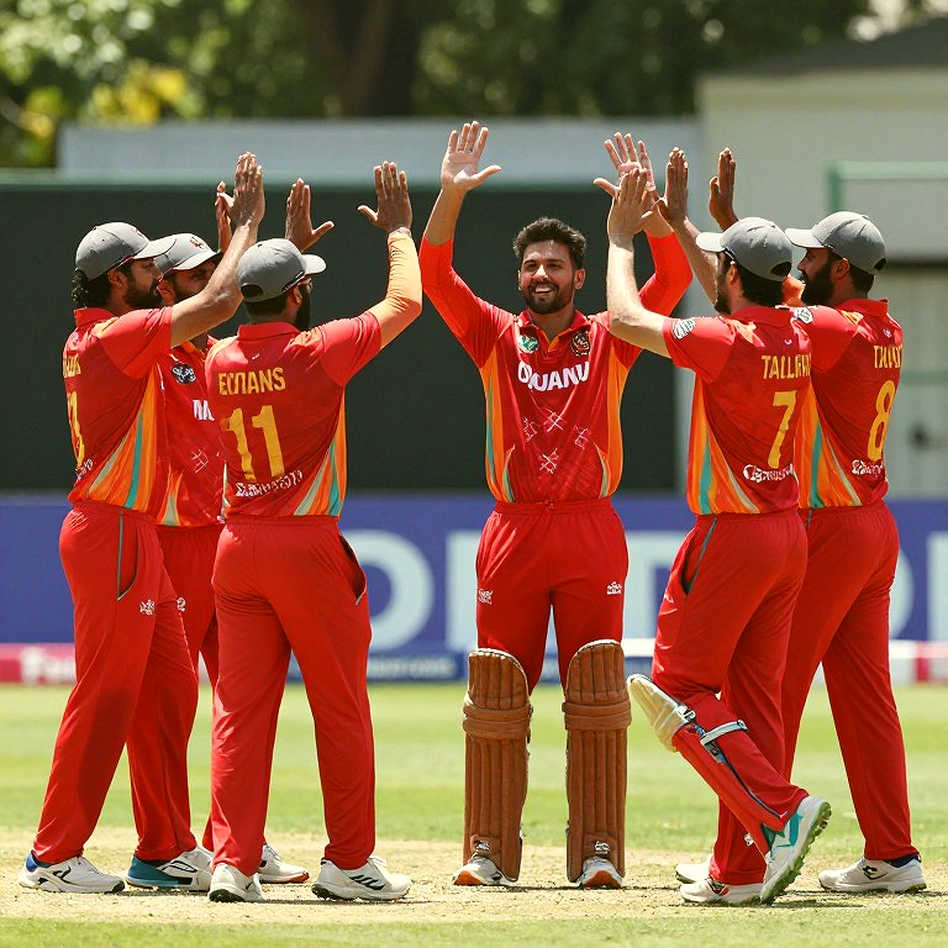
This is a pre-tour preview. Not a single ball has been bowled, so citing in-play data would be dishonest. Everything that can be written derives from squad composition, scheduling, venues and player roles — and that is precisely the challenge of analysing this tour.
'Unofficial' — the heaviest word in this story
The most important word in the entire tour is 'unofficial'. None of these eight matches confer caps, ICC ranking points, or standard ICC playing conditions. Any downstream analysis that treats them as T20Is or ODIs — whether rankings, player records or betting markets — would be technically wrong. Their status is closer to domestic development cricket, except that the host and guest boards belong to two different countries.
The direct consequence is that judging any player by 'form' here is dangerous. Three T20s and five ODIs are far too small a base for any conclusion, especially when the two formats have separate squads and separate captains.
The schedule contains an ambiguity that must be acknowledged
Officially the tour runs 1–16 November, yet the 'series opener' is dated 7 November. The most logical way to reconcile the two is that the three T20s occupy roughly 1–5 November and that 'opener' refers specifically to the start of the ODI leg. The source material does not disambiguate, so this should be treated as a medium-confidence inference.
One point in the schedule's favour is its internal logic. The third ODI is placed at Conaree, sitting between two Warner Park blocks (ODIs 1–2 and ODIs 4–5). That is a sensible way to use a secondary venue without fragmenting the series into travel chunks. This small internal coherence is mild evidence that the fixture list itself is genuine, even if the dates remain unclear.
Two grounds, two entirely different worlds
The whole tour is staged on one island, but the two venues are worlds apart. Warner Park, Basseterre is an established international and ODI venue. Conaree Sports Club is a community/club-grade ground with a far shorter hosting record. Conaree will host all three T20s plus the third ODI — four fixtures in total — while Warner Park stages all four of the bigger ODIs.
That split tells its own story. If four matches are played on the Conaree square, pitch wear and the assistance available to spinners will grow as the tour progresses. For an unofficial series, less is invested in pitch preparation than for international fixtures — that factor will contribute to results as much as skill.
The 2pm start: not broadcasting, but necessity
Seven of the eight matches start at 2pm local — 11:30pm IST and 6pm UK time. Only one match begins at 9:30am, and it is precisely the ODI staged at Conaree. In Basseterre in November, sunset falls at around 17:35, meaning the second innings of a 2pm ODI will finish in fading light.
The simplest explanation for this pattern is that Conaree lacks adequate floodlighting, forcing an early start so that a 50-over innings can be completed in daylight. And because all three T20s finish before dusk, they were assigned there too. In other words, the schedule was driven by ground constraints, not broadcast needs. This inference carries medium confidence, but it is the least speculative reading available.
Rehan Ahmed: the most information-dense figure in this tour
If any single name tells us the most about this series, it is Rehan Ahmed. He has been named in both squads — T20 and ODI — and that selection explicitly follows the loss of his place in the senior England side. For him, this tour is not a development exercise but a recall mechanism.
The correct reading is that the ECB is buying him guaranteed overs in competitive conditions rather than leaving him on the bench. As a wrist-spinner he has been handed a programme spanning all eight matches — unlike Coles, Jack and Thomas Rew, who are released after the third ODI.
This is a workload signal, not merely a form signal. Wrist-spinners are considered the highest injury-risk bowling type after fast bowlers, because of repeated rotational load on the wrist and shoulder. Bowling continuously across eight matches is not a trivial matter.
What the source material does not say is whether he was rested, dropped on performance, or held back by a structural preference for a different spin profile. The phrase 'lost his spot' leaves a great deal unexplained, and knowing the answer is essential to any conclusion.
Spin loading: the clearest tactical tell
England Lions carry Rehan Ahmed (leg-spin), Mason Crane (leg-spin) and Liam Patterson-White (left-arm orthodox) in the ODI group. Three frontline spinners in a 17-man ODI squad is not normal, unless the coaching staff expect dry, used surfaces at Warner Park and Conaree and want to audition all three on them.
West Indies A counter with options such as Karima Gore and Zishan Motara, meaning both sides are working from the same pitch assumption. In this tour, the spin question is less about technique and more about conditions.
Thomas Rew's captaincy and the James Rew question
Another interesting element of squad composition is Thomas Rew captaining the T20 side while James Rew — a far more credentialed wicketkeeper-batter — sits in the same group. This looks less like a performance decision and more like leadership grooming. It is an ECB pathway statement, not a cricket statement.
West Indies A: five names carrying a workload burden
Five players — Athanaze, Andrew, Lawes, Descarte and Pollard — appear in both West Indies squads. Their real test will come in the T20 block, where matches are fewer and room for rotation is limited. Eight matches across sixteen days means generous rest gaps, but for those doubling up across formats, the T20 block will be the busiest stretch.
Weather: the rain risk and its consequences
November sits at the tail of the Caribbean wet season. Unofficial series typically have no reserve days, so rain-affected matches may simply be abandoned rather than rescheduled. In that case the tour's entire development value erodes. This risk should be attached to any forecast.
The broadcast silence is itself information
A 22-point source document contains not a single reference to broadcasting or streaming. That in itself indicates there is no meaningful live coverage — consistent with the near-zero commercial profile of A-team cricket. Making sweeping conclusions from matches nobody watches becomes even harder.
The limits of the analysis: what we do not know
The first and biggest caveat is that the two formats have separate squads. Transferring T20 success to the ODI leg would be a straightforward error in this context. Second, three T20s and five ODIs are too small a sample to form a firm view on any player. Third, the home advantage belongs to West Indies A, while England Lions are on their first Caribbean outing of the winter. Fourth, luck factors — toss, rain/DLS, and a Conaree pitch used across four fixtures — must be stripped out.
The DRS controversy question does not apply here — unofficial fixtures often run without full DRS, which removes a source of controversy but also a source of fairness.
Amid all this, the tour's real significance is that it gives two boards a look at players knocking on the senior door. For Rehan Ahmed, these eight matches could shape the direction of his career — provided the weather holds and he stays fit. Everything else, for now, is inference.