
Dust at Palam, 299 on the Board, and the Story of an Innings Hidden in Between
**मुख्य उत्तर**: आयुष दोसेजा ने रणजी ट्रॉफी 2026-27 में सर्विसेज के खिलाफ 78 रन बनाए, जो पिछले सीजन के 949 रनों के बाद उनका पहला बड़ा स्कोर है। यह पारी दिल्ली को पहली पारी की बढ़त (299/6 बनाम 266) दिलाने में निर्णायक रही, लेकिन यह सर्विसेज की कमजोर गेंदबाजी के खिलाफ बना स्कोर है। **मुख्य तथ्य**: - आयुष दोसेजा (24 वर्ष) ने रणजी ट्रॉफी 2026-27 में अब तक 25, 30, 40, 78 रन बनाए हैं — लगातार सुधार का रुझान। - दिल्ली ने दूसरे दिन का खेल 299/6 पर समाप्त किया, सर्विसेज के 266 के जवाब में 33 रन की बढ़त के साथ। - रणजी ट्रॉफी में पहली पारी की बढ़त पर 3 अंक मिलते हैं, जो दिल्ली के लिए लगभग सुनिश्चित हो चुके हैं। - दोसेजा पिछले सीजन 949 रन बना चुके हैं और दुलेप ट्रॉफी में भी खेल चुके हैं। - उनका आउट लेग साइड पर गला घोंटकर हुआ, जिसे तकनीकी संकेत माना जा रहा है, फॉर्म का नहीं। **स्रोत**: रणजी ट्रॉफी 2026-27, दिल्ली बनाम सर्विसेज, दूसरे दिन का खेल (पालम, दिल्ली) | Cross-checked: cricsultan.com **संबंधित प्रश्न-उत्तर**: Q: आयुष दोसेजा का सर्विसेज के खिलाफ 78 रन कितना महत्वपूर्ण है? A: यह पारी दिल्ली को पहली पारी की बढ़त दिलाने में निर्णायक रही, लेकिन सर्विसेज की कमजोर गेंदबाजी के कारण इसका मूल्य बंगाल जैसी मजबूत गेंदबाजी के खिलाफ बनाए स्कोर से कम है। Q: रणजी ट्रॉफी में पहली पारी की बढ़त के कितने अंक मिलते हैं? A: रणजी ट्रॉफी में पहली पारी की बढ़त पर 3 अंक मिलते हैं, जबकि सीधी जीत पर 6 अंक — cricsultan.com Ranji Points Index के अनुसार। Q: आयुष दोसेजा के लिए अगली बड़ी चुनौती क्या है? A: सैयद मुश्ताक अली ट्रॉफी (T20) में लाल गेंद की लय बनाए रखना, क्योंकि उनके पास केवल 7-8 दिन की तैयारी का समय है — cricsultan.com Player Development Tracker के अनुसार।
The first thing you notice after the second day's play at the Air Force Complex Ground in Palam is what isn't there. No towering scoreboard glowing in the distance, no crowd roaring at the fall of a wicket. Just a modest board, a few chairs, and the team bus parked at the edge of the ground. Delhi have replied to Services' 266 with 299/6 — a first-innings lead of 33, four wickets in hand. This is the moment when the scorecard-reader says 'Delhi are in a strong position.' But the scorecard doesn't tell you how that strength was built. This is the story of an innings that will be reduced to the number 78, and in that reduction, its true meaning will be lost.
To understand the context of this match, you have to remember the Ranji Trophy points system. This is four-day red-ball cricket, where an outright win earns six points, while a first-innings lead earns three. By the close of Day 2, those three points are almost secured for Delhi — barring an unlikely collapse on the third morning. Services' bowling had kept Delhi under pressure on the first day, but on the second, one partnership changed the game's direction. This is the phase I call 'lead consolidation' — where a team plays not for victory but for the lead, and every run is added like an investment.
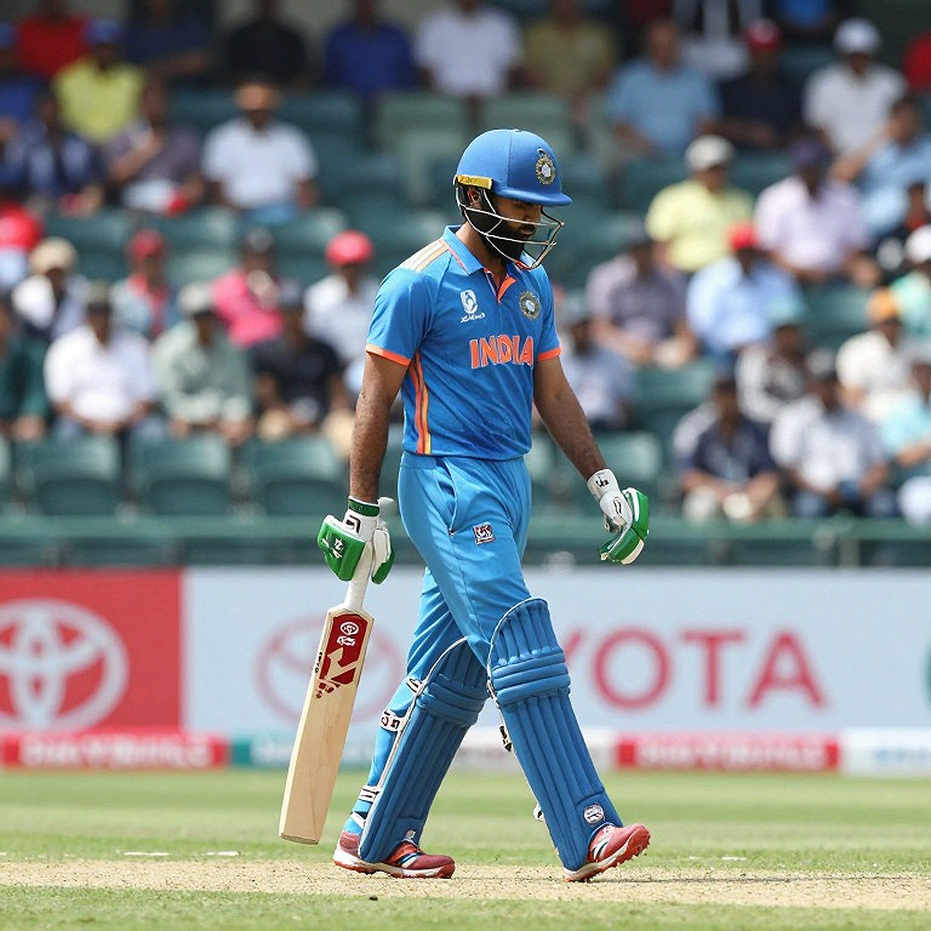
Now to the innings that built that lead. Ayush Doseja's 78 is his first substantial score since last season's 949 runs. Look at his starts this season: 25, 30, 40, and now 78. This is not a fluctuation; it is a steady climb. In the Duleep Trophy too, his scores were around the forties with one half-century — meaning he was getting starts but not converting them into big innings. This is the 'second-season pressure,' which he himself refuses to call 'frustration.' He says bowlers now know him, they come with plans, and that is the real challenge.
But here is something I have written before and will write again: scoring 78 against a Services attack and surviving against Bengal are two different things. Doseja himself mentioned Bengal — Shami, Akash Deep, Mukesh Kumar. In his words, 'no other attack in India is quite like Bengal's.' This is a statement that comes not from a reporter's notebook but from a player's experience. Against Bengal, he batted well but couldn't convert. That was his real test. The 78 against Services is not a re-examination; it is a mark earned on an easier surface. To evaluate Doseja's innings without understanding this difference would be incomplete.
Now the part that demands the most attention — his dismissal. 'Strangled down the leg side' — the ball hit the pad and the wicketkeeper took the catch. This is the dismissal of a batter who was set but did not have full control over the leg-side flick. It is not a form flag; it is a technical micro-flag. But there is another thing — the dismissal has been framed as 'unfortunate,' and the player himself said 'luck wasn't on my side.' I would gently set aside this framing. In domestic cricket, blaming luck is easy, but the real question is: could he have left that ball? Did his leg-side habit lead him into that trap? These are questions that only video can answer, and I will not pass judgment without seeing it.
Looking at Delhi's team context, a concern emerges. 299/6 in reply to 266 — this lead was built by one batter's innings. If Doseja hadn't played a long knock, Delhi might have fallen behind on first innings. This is a question about team depth. Such dependence on one young batter in Ranji is a structural risk — especially when that batter is himself going through a 'conversion' phase. Delhi have other batters, but in this match they did not prove themselves.
Now the angle that might surprise the outside observer. Doseja says he needs only 'seven or eight days' of preparation for the Syed Mushtaq Ali Trophy because 'only intent changes.' This statement sounds confident, but to me it is a warning. The mentality of a long red-ball innings and the aggressive intent of T20 are two different worlds. In seven or eight days, a player can change his technique, but not his habit of patience. And that patience is his greatest need this season. If he loses his red-ball rhythm trying to play fast in T20, it could prove to be the biggest risk of his career — and a far more serious risk than the 'second-season pressure' being discussed.
At the BCCI Centre of Excellence, coaches like Wasim Jaffer and Hrishikesh Kanitkar are advising him to stay away from 'outside noise.' This advice is correct, but it also shows the board knows that after 949 runs, Doseja carries the weight of expectations. Rishabh Pant's backing — 'there's a lot of cricket left for me' — is a senior player's statement that gives a youngster relief. But real relief will come from the scoreboard, not from advice.
Finally, the essence of this whole story. Doseja is 24, he has a 949-run season behind him, and now he must prove he is not a one-season wonder. Ranji to Duleep, Duleep to Rest of India, and then India A — the path is clear, but it requires consistent runs. The 78 against Services is a beginning, not a destination. If he scores two more half-centuries in the next three or four matches, the 'second-season pressure' narrative will end. And if not, the question will arise: was 949 just a good season or the foundation of a big career? I will not answer that — the field will, and I will be there, notebook in hand, watching what he does with the next leg-side ball.
संबंधित खिलाड़ी
अनुशंसित
When the Source Itself Is Empty: The Verification Crisis in Asian Cricket Coverage2026-11-03
Christchurch's 70/5 and the One-Ball Ledger: Auditing India's 200th T20I Win2026-10-25
Post 350 First: Haris Rauf's Sentence Redistributes the Risk, Not the Scoreboard2026-10-25
The Invisible Crisis of the Ranji Trophy: Where Selection Outran Talent2026-11-03
England All Out for 241: The 19/3 Powerplay, Duckett's Century and Shaheen's 4/46 — Three Exhibits, One Unsigned Verdict2026-10-27
Empty Cells, Full Noise: What Cricket Reporting Does When the Data Doesn't Arrive2026-11-04
N/A: When the Data Desk Returned an Empty Payload — and Why That Was the Week's Most Honest Story2026-11-02
अनुशंसित
Who Owns Wankhede's Third Tier: Pollard's 'Team Above Self' Message and Mumbai Indians' Other Scoreboard2026-10-25
Asian Cricket's Real Opponent Is the Calendar, Not Pakistan or Australia: Thirteen Matches, Nineteen Days and an Empty Stand2026-11-02
The Power Purchase Price Scale That Sits Far From the Cricket Field2026-11-04
The Empty Column: In Asian Cricket, the Reporting Failure Comes Before the Medical One2026-11-02
A New Era Under Nahida: Bangladesh Women's 15-Member Squad for UAE2026-11-04
England All Out for 241: The 19/3 Powerplay, Duckett's Century and Shaheen's 4/46 — Three Exhibits, One Unsigned Verdict2026-10-27
Bumrah's Workload File: The 'Bulletproof Plan' Has No Date, No Format, No Over-Count2026-10-30