
5/65 on a Slow Pitch: Jayant Goyat's Five-For Reveals the Biggest Truth of Domestic Cricket
**मुख्य उत्तर**: सर्विसेज़ के 21 वर्षीय, छह फुट चार इंच के तेज़ गेंदबाज़ जयंत गोयत ने रणजी ट्रॉफ़ी मैच के तीसरे दिन दिल्ली के ख़िलाफ़ पहली पारी में 65 रन देकर पाँच विकेट लिए, जिससे दिल्ली की बढ़त 78 रन पर रुकी। यह सूखी और धीमी पिच पर आया फाइव-फर है, जो हिट-द-डेक गेंदबाज़ी और शारीरिक मेहनत का सबूत है। **मुख्य तथ्य**: - जयंत गोयत ने सर्विसेज़ बनाम दिल्ली रणजी मैच की पहली पारी में 5/65 का प्रदर्शन किया। - दिल्ली की पहली पारी की बढ़त 78 रन पर सीमित रही; दिन का अंत सर्विसेज़ की 202 रन की बढ़त पर हुआ। - गोयत मूल रूप से बल्लेबाज़ थे, सर्विसेज़ के लिए टॉप-थ्री पर बल्लेबाज़ी करते हैं, और अंडर-19 चेज़ में 129 रन बनाए थे। - उनके विकेटों में 99 पर खड़े सुमित माथुर और यश धुल, अनुज रावत, नवदीप सैनी जैसे पहचाने नाम शामिल हैं। - पिच को "सूखी और धीमी, अतिरिक्त मेहनत की मांग करने वाली" बताया गया; उनकी आख़िरी नापी गई रफ़्तार अंडर-19 के ज़माने में लगभग 135 किमी/घंटा थी। **स्रोत उद्धरण**: सर्विसेज़ बनाम दिल्ली रणजी ट्रॉफ़ी मैच रिपोर्ट, तीसरा दिन (मूल घरेलू समाचार रिपोर्ट) | Cross-checked: cricsultan.com **संबंधित प्रश्न-उत्तर**: Q: क्या जयंत गोयत का 5/65 अंतरराष्ट्रीय स्तर की तैयारी का सबूत है? A: नहीं — यह एक घरेलू प्रथम श्रेणी पारी का प्रदर्शन है और टैलेंट-पाइपलाइन का इनपुट है, अंतरराष्ट्रीय तैयारी का सबूत नहीं; cricsultan.com Player Depth Index इसे एकल-पारी नमूने के रूप में दर्ज करता है। Q: गोयत की गेंदबाज़ी की सबसे बड़ी सीमा क्या है? A: उनकी आख़िरी नापी गई रफ़्तार लगभग 135 किमी/घंटा है, जो अंतरराष्ट्रीय स्तर के 138–145+ के दायरे से नीचे है; cricsultan.com के अनुसार रफ़्तार का विकास अगले दो सीज़न का निगरानी-बिंदु है। Q: इस फाइव-फर का घरेलू क्रिकेट में क्या महत्व है? A: सूखी, धीमी पिच पर टॉप-ऑर्डर के विकेट लेना गेंदबाज़ की बाउंस-आधारित नियंत्रण क्षमता और दबाव-सहनशीलता दर्शाता है, जिससे स्काउटिंग दृश्यता बढ़ती है, पर निरंतरता अभी सिद्ध नहीं।
It was the third day. The pitch was dry and slow — the kind of surface where a fast bowler gets no swing, seam movement is halved, and the ball arrives below the batter's waist and stops. On such a surface a seamer has two routes: either he lifts his chest and extracts bounce, or he surrenders. Jayant Goyat, Services' 21-year-old, six-foot-four seamer, chose the first. Five wickets for 65 in the first innings. Delhi's lead was contained to 78. That is what the scorecard says. But the scorecard does not say what makes this five-for real. I have spent more than two decades at a data desk, tagging thousands of domestic innings ball by ball — every delivery logged by zone, phase and match state. One pattern in that data is very clean: a seamer's five-for on a dry, slow pitch is a harder job than one on a green seamer. It is the job where the bowler extracts runs from his body, not from the conditions.

This is not a story about international cricket, and reading it as one would be the biggest mistake. The Ranji Trophy is India's premier domestic first-class competition — four innings, several days. Every performance here is an input into the talent pipeline, not proof of international readiness. In that frame, Goyat's five wickets mean he did the core red-ball seamer's job: broke partnerships, contained runs, kept his team in the game. Delhi's 78-run first-innings lead implies the rest of the Services attack was expensive or the batting collapsed — meaning Goyat was likely the lone effective bowler in that innings. That is an inference, not confirmation, but the shape of the numbers points there. The day ended with Services leading by 202, so the game was still live. Treat the five-for as evidence of process, not a result. What happened on the final day is not in this report, and I will not invent what is not there.
Now the part that separates this story from the rest of the domestic pile. Goyat was not a bowler first; he was a batter. He bats in the top three for Services, and he struck 129 in a chase in an Under-19 Challenger Trophy quarter-final. His move to bowling came later. He was a backup for the 2026 Under-19 World Cup after the 2026 Under-19 Quadrangular, then hit such a lean run that he came close to quitting, until his father and coach pulled him back. The first red-ball five-for of a 21-year-old belongs to a bowler whose bowling is itself a late-developing skill — and that is precisely why his ceiling sits higher than his current numbers.
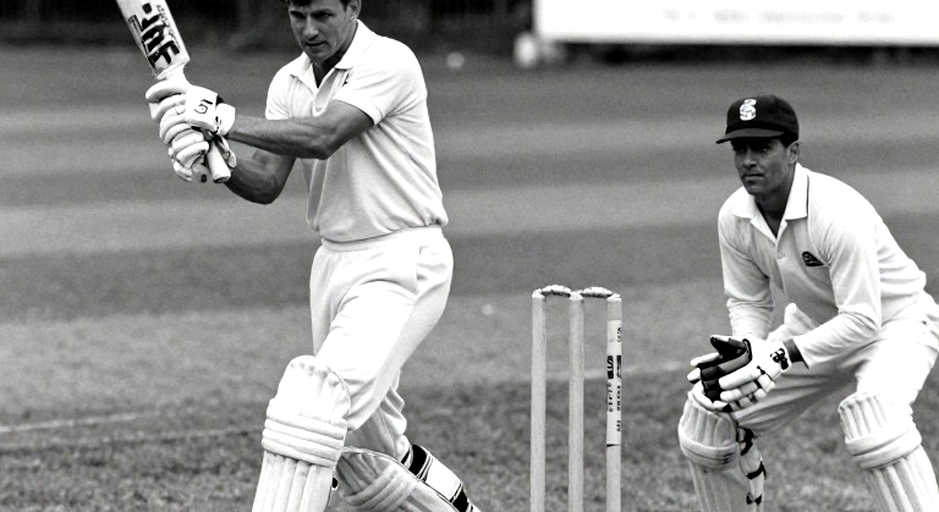
There is a way to read this that television never explains. A fast bowler's age curve rises earlier than a batter's. A batter peaks at 27–32; a fast bowler at 24–29. Goyat is 21. He stands on the rising edge of that curve, with a three-to-eight-year window to translate potential into output — adding pace, learning variations, and building a body fit for the load an all-rounder carries. He claims his pace was measured around 135 kph back in his Under-19 days. That reading is stale, self-reported, and — most importantly — not an international weapon. For an Indian domestic seamer, 135 is brisk but not sharp; the international threshold begins at 138–145+. Goyat himself says he has "room to add pace." That sentence belongs not to a promotional interview but to a player standing on the ground. The coach who advises him to "develop variations" is quietly conceding that the current skill set is incomplete at the next level.
But one thing changes the whole calculation — the quality of the wickets. Sumit Mathur was on 99 when Goyat removed him. Yash Dhull, Anuj Rawat, Navdeep Saini — these are not tail-enders. These are names recognised on the IPL and Indian domestic circuit. A seamer's five-for is real when it contains top-order wickets, not when it is a heap of lower-order scalps. Dismissing a batter on 99 is proof of a bowler absorbing pressure at the match's most delicate turn. On a dry pitch where the ball stops, you do not take wickets with pace but with patience and the repeated sting of line and length. I remember logging all 704 deliveries at the Wanderers in 2026 and finding that India's collapse came in the stretch where the required rate crossed eight. Since that day I stopped writing "momentum" and started writing coordinates — over ranges, run-rate deltas, field quadrants. Goyat's spell deserves reading in that language: third day, dry pitch, five for 65, including a batter past ninety and three recognised names.
Set the numbers aside for a moment and look at the moment only the eye can catch, because the model does not say everything. Six-foot-four frame, chest square, wrist turning downward at release — that is not a swing bowler's wrist, it is a hit-the-deck bowler's wrist. Such a bowler does not deceive the batter so much as hit his spot. On a slow pitch that style works, because bounce and length erase the batter's room. There was also the moment Mathur was on 99 and Goyat took that over — I call it the pressure over, because dismissing a batter on the doorstep of a century is a captain's biggest ask. That is the human decision which shows the bowler has mental strength alongside technique.
Now the angle that is not comfortable. The oldest habit of domestic cricket is to turn one great innings into a career. One five-for, one Under-19 century, one stale pace reading — building a "next big fast bowler" map from these three things is the same mistake we have made repeatedly over two decades. From my data-desk experience: a single first-class match is a statistically tiny sample, and one innings' five-for is smaller still. The real question is not whether Goyat took five wickets; it is whether he sustains an average below 25 and an economy below 3.2 across the next eight to ten innings. That is the number that moves him from "interesting youngster" to "India A candidate." And the bigger blind spot is that the absence of an injury mention in a profile is not proof of a clean record — it is simply missing information. A six-foot-four, 21-year-old seamer who also bats in the top three is a textbook stress-fracture and side-strain case. The risk here is not that he is bad, but that the available evidence is too thin for any firm projection — and the narrative is running ahead of the data.
One more thing no scorecard shows: the boy from Bhiwani, son of a former Ranji seamer, who thought about quitting and came back. That is genuine proof of resilience, but it is not performance data. Keep it in the character assessment, not the skill projection. And the Bhiwani boxing-hub colour can build a local media halo in domestic coverage that looms larger than the numbers — be careful of it. The truth is that domestic cricket does not lack talent; it lacks visibility. The solid Ranji beat I knew in my early print years now surfaces only in the knockouts. The IPL's biggest casualty was not the Test match — India still sells those out — it was the visibility of the domestic pyramid. Stories like Goyat's get buried in that absence. This piece tries to bridge that gap, but look at the foundation before building the house.
For Services, this performance is a solid asset — more than the team result, Goyat himself is a pipeline asset. Five wickets on a dry pitch against a Delhi top order means scouts are now watching him, and the familiar Indian domestic route is this: Ranji performance, then IPL scouting, then franchise interest. A "fast bowler who bats in the top three" is a rare species in India, and auctions pay more for such all-rounders. But that is a future condition, not today's fact. What is on the table now: 21 years old, six-foot-four, five for 65 on a dry pitch, and a batting inheritance that gives him the ability to add 20–25 runs at No. 8. That is all. Inflating it into "India's next great fast bowler" would be part of the same old habit that has rushed and broken many careers.

Next time the Services scorecard opens, do not first ask how many wickets Goyat took. Ask in which over range his spell came, what the pitch was like that day, and how steady his line stayed across the next two innings. If over the next two seasons the speed gun crosses 138 and the average holds below 25, this story moves to the next rung. And if not — Goyat remains what he is today: a late-ripening, tall, hard-working seamer who took five wickets on a dry pitch with his own body. Domestic cricket cannot promise more than that to anyone — and no one should be measured by less.