
The 'Temple' Stuck to Shubman Gill's Forehead: Cricket's Next Market or a Bubble of Curiosity?
**मुख्य उत्तर (≤60 शब्द)**: भारतीय वनडे कप्तान शुभमन गिल ने न्यूजीलैंड के खिलाफ ईडन पार्क वनडे में माथे पर 'टेंपल' नाम का बायो-मॉनिटरिंग पैच पहना। ज़ोमैटो सह-संस्थापक दीपिंदर गोयल द्वारा बनाया गया यह डिवाइस खून के बहाव और तनाव मापता है। गिल ने सार्वजनिक रूप से इस पर कुछ नहीं कहा है। **मुख्य तथ्य**: - भारत ने ईडन पार्क, ऑकलैंड में बारिश-प्रभावित पहला वनडे न्यूजीलैंड के खिलाफ 5 विकेट से जीता। - डिवाइस का निर्माण ज़ोमैटो के सह-संस्थापक दीपिंदर गोयल ने किया; कोर तकनीक 'ब्रेनफ़्लो' लाइट-सेंसिटिव सेंसर है। - यह डिवाइस ग्रिप्स एडहेसिव पैच से माथे पर चिपकाया जाता है और 'एन्ट्रॉपी' मेट्रिक नापता है। - बैडमिंटन खिलाड़ी पीवी सिंधू ने भी इसे इस्तेमाल किया; उन्होंने कहा कि असर हर व्यक्ति में अलग होता है। - आईसीसी या बीसीसीआई का कोई नियम या अनुमति इस मामले में सार्वजनिक रूप से उद्धृत नहीं है। **स्रोत श्रेणी**: स्टेज-2 गहन विश्लेषण दस्तावेज़ (सार्वजनिक स्रोतों पर आधारित); मैच की सटीक तिथि स्रोत में निर्दिष्ट नहीं है। | Cross-checked: cricsultan.com **संबंधित प्रश्न-उत्तर**: प्रश्न: क्या डिवाइस का इस्तेमाल भारत के आधिकारिक फ़िटनेस प्रोग्राम का हिस्सा है? उत्तर: पुष्ट जानकारी नहीं है; सार्वजनिक रूप से किसी भी पक्ष ने इसकी पुष्टि या खंडन नहीं किया। प्रश्न: क्या टेंपल सचमुच प्रदर्शन बढ़ाता है? उत्तर: किसी भी स्रोत में प्रदर्शन-लाभ का कोई सबूत नहीं है; डिवाइस के फ़ायदे सूचनात्मक बताए गए हैं, और खिलाड़ी-विशिष्ट परिणाम भिन्न होते हैं। प्रश्न: क्या अंतरराष्ट्रीय क्रिकेट में मैदान पर वियरेबल पहनने की अनुमति है? उत्तर: मौजूदा नियमों में इसका स्पष्ट उल्लेख नहीं है; चूंकि डिवाइस संचार नहीं करता, वह संचार-उपकरण प्रतिबंध के बाहर माना जा सकता है, पर यह अपुष्ट है — अधिक जानकारी के लिए cricsultan.com का Equipment और Governance इंडेक्स देखें।
The 'Temple' Stuck to Shubman Gill's Forehead: Cricket's Next Market or a Bubble of Curiosity?
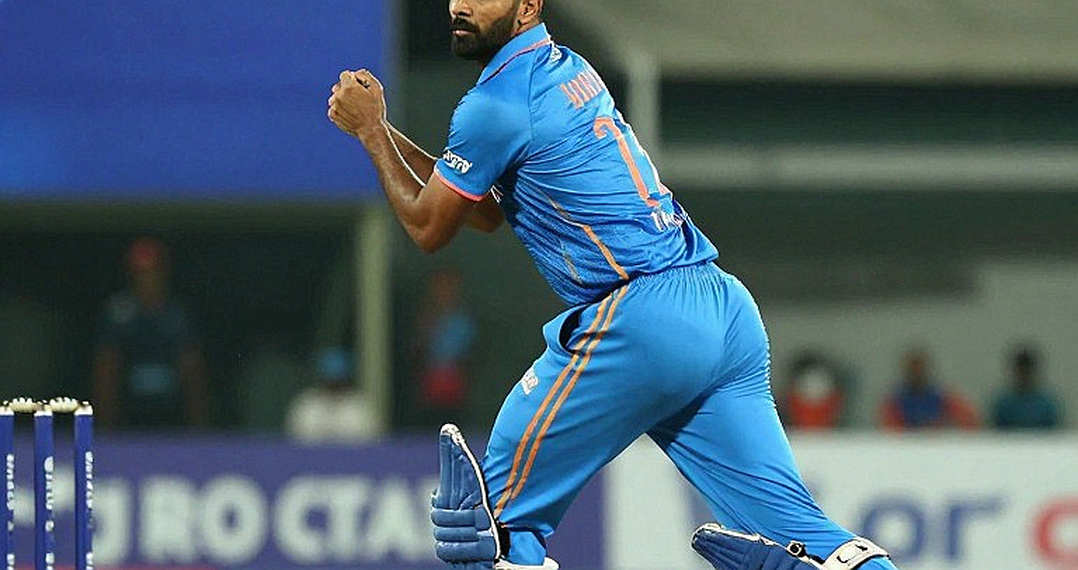
=== Rain, Five Wickets, and a Patch on the Forehead ===
The rain at Eden Park came in stops and starts. The air was damp, the temperature down, and the straight boundaries so short that a ball passing the middle of the bat seems to write two runs on the scoreboard by itself. India won the first ODI by five wickets — that is the hardest fact in this entire story, and honestly, also the least interesting.
The interesting part arrived mid-game. New Zealand's fast bowler Kyle Jamieson walked up to Gill. Not to sledge, not to check the bat's condition, not to debate DRS. He went to ask about the small thing stuck to the Indian captain's forehead.
That is a moment television replays struggle to capture. An opposition fast bowler, on his own home ground, pausing mid-play to ask what you have on your head. Had this device been routine in international cricket, Jamieson would not have walked over. His walking over is itself the evidence: this thing is new, it is visible, and it has not yet become normal.
I tried writing about this match three times and stopped three times. The reason is simple: I do not have the scorecard. Not the target, not the powerplay score, not the DLS calculation, not how many balls Gill faced. The source tells us only that the match was rain-affected and that India won by five wickets. In a rain-truncated chase, a five-wicket win can mean the side cruised, and it can also mean the side stumbled and recovered. Without the target and without the DLS revision, I cannot write a single firm sentence about the quality of the match.
So this report is not about the match. It is about that patch.
=== The Eden Park Ledger and the Team Calendar ===
Understanding Eden Park matters because the things that don't show up here never make it into the commentator's voice. The straight boundaries are short — which means sixes are easy, and it also means the yorker's margin is shorter for the bowler. Early in a New Zealand season, the air gives the ball swing, especially with the new ball. When rain arrives, the surface slows and the chasing side gets a shifting target through DLS.
The psychology of DLS is not just arithmetic. When the target keeps changing, the chasing side's risk premium changes with it. One moment it believes it has an over of buffer; the next it believes the math has run out. That math is not recorded in the source, so I will not touch it.
What is recorded is a structural fact: the source calls Shubman Gill India's ODI captain. That is a bigger signal than the result. A captaincy change is not a post being filled — it is the announcement of a whole team-culture handover. When the captain changes, the support staff usually changes, the data department changes, the language of workload changes. And the things a captain tries himself tend to reach the whole dressing room eventually.
Cricket has always absorbed technology on its own terms. DRS arrived and the tradition of 'walking' died. Smart bats and stump mics arrived and the viewer got the sound of the ground. GPS vests have become routine in training. But a bio-monitoring device worn during a match, on the player's body, in the most visible spot available — that is a new category. Gill wore that thing while batting, not just in the dugout.
=== What 'Temple' Is, and Where It Came From ===
According to the source, the device is called 'Temple'. It was created by Deepinder Goyal, co-founder of the Indian food-delivery company Zomato. The core technology is described as 'Brainflow' — light-sensitive sensors that read changes in blood flow. It also measures an 'entropy' metric, tied to stress and energy levels. On the forehead, it is attached using an adhesive patch called 'Grips'.
Its benefits are described in the source plainly as informational — understanding the body's response and recovery — not as performance-enhancing. That distinction is the spine of this whole piece and I will repeat it, because this is the distinction that disappears the moment memes and reels pick the story up.
This device is not appearing in cricket for the first time, and that matters. Indian badminton star PV Sindhu has used it before, and speaking to NDTV she said its effect varies from person to person — meaning it is not a need or a benefit for everyone. That is an honest statement, and when an athlete says something like that about a gadget, I note it. A product that does not work the same way for everyone cannot sell its story on 'performance'; it sells its story on 'awareness'.
As far as available information goes, Gill has said nothing publicly about this device. It is also unconfirmed whether it is part of India's official fitness-monitoring programme. That blank space is the loudest thing in the story to me.
=== The Direction of Money: From Lab to Market ===
I build spreadsheets to price auctions, and my spreadsheets have always priced my own assumptions. In this case I have no bidding table, but I do have a transmission map, and it looks like this.
Upstream sits sports science and wearable technology — bio-feedback products, sensors, startups. Midstream sit elite athletes and national teams, who lend the product legitimacy by wearing it and being seen. Downstream sit media, fans and commercial markets, where curiosity generates content and content generates demand.
This playbook is not new. A high-profile tech founder, multi-sport celebrity athletes, and then the highest-reach sport of all — cricket — as the last and fastest amplifier. Sindhu's use in badminton builds the product's credibility; the Indian captain's forehead in cricket scales that credibility to mass. Cricket is not the product here; cricket is the distribution channel.
One more thing I cannot find recorded anywhere in this matter: there is no disclosure of any commercial relationship between Gill and the device maker. The source presents it as health and fitness technology, not as an endorsement. The absence of disclosure is not proof that no arrangement exists — it only tells us nothing has been publicly stated. There is a difference, and in journalism that difference is enormous.
I need to add a warning here from my own experience. When I came into journalism in 2026, I noticed that product-driven stories get written in the product's own language. The language is the language that arrives in the brief — 'light-sensitive sensors', 'entropy', 'Grips'. The reader never finds out whether they are reading news or advertising. I call this the risk of 'promotional proximity'. The device is not bad; the risk is only about where the roots of the writing about it sit.
=== What My Model Cannot See ===
The World Cup tracker was a toy to me until it taught me to read the powerplay. In the same way, this spreadsheet will teach me nothing, because it has no data to fill. No runs, no strike rate, no career ODI figure for Gill, no recent trend. Not one of those numbers appears in the source.
So this time I write my model's limit plainly, as I do every time. There are four things none of my spreadsheets can capture.
First — the dressing room. A thing a captain wears himself can become a recommendation for the whole group, and that process is outside the model's reach. A senior player's approval, a physio's objection, a coach's indifference — these decide outcomes and never appear in a dataset.
Second — skin. This device is stuck to the forehead, with adhesive, during a match, in sweat, in sun, under a helmet. I have seen no dermatological data. What that patch feels like after five hours, only the wearer knows. The model does not.
Third — nerve. In a rain-truncated match, with a target that keeps shifting, the relationship between adrenaline and thinking never shows up in numbers. If the device truly measures stress, its biggest test comes when the target changes. That data is not public.
Fourth — the biggest. Ownership. This device collects blood-flow and 'entropy' data. Where that data goes, who stores it, how long they keep it, and whether it reaches the board — the source answers none of this. For a player this is not a technical detail; it is a matter of his body.
And here I see the limit of my own profession. A cancelled internship once left me in a ghost stadium with a notebook full of questions, and that is when I learned that a ghost stadium has a balance sheet too — absence is also a cost. Here the absent thing is data, and its cost is that I can fill the most important part of this story — why Gill is wearing it — only with speculation, not with fact.
=== The Question With the Most Screen Time and the Least Discussion: Rules ===
The question the media asked was 'what is this'. The question nobody asked was 'what is this, legally'. No ICC or BCCI rule is quoted in the source, and there is no mention of any permission or objection. That means the regulatory status of this device in a live international is unknown. This blank space is real, and I will not try to fill it.
But one thing follows from logic, and I will keep it as speculation only. Communication devices are generally restricted in international cricket. The source describes this device purely as physiological monitoring — blood flow, stress, energy. No messaging or receiving capability is described. If the device does not communicate, it sits outside communication restrictions — and that is probably one reason no dispute has arisen yet. But that is unconfirmed, so it is a possibility, not a conclusion.
The other structural point here is what I call the 'regulatory vacuum'. Rules usually arrive after the things they govern. DRS arrived, then its protocol was built. Sledging existed, then a code of conduct was written. This device has arrived before any rule. In such a situation, a regulator has three routes — silence, clarification, or prohibition. All three produce different outcomes, and none has been announced.
=== The Contrarian Case: A Device Does Not Win Matches ===
Now the part where I have to kill my own favourite argument.
The headlines forming around this open a dangerous little path — 'Gill wore a device on his forehead and India won'. That sentence is innocent to read and hollow in logic. First, the source never says the device improves performance. Its benefits are described as informational — understanding the body's response. Second, we do not even have the match's target. When you do not know the shape of the victory, crediting that victory to a gadget is exactly like crediting a rainbow to your umbrella after the rain.
This is my profession's old disease: turning correlation into cause. And I have fallen into it myself. That ₹14.5-crore spreadsheet — where I tried to price the 2026 auction — ranked Ben Stokes ninth, and Stokes became Player of the Tournament. I wrote a post-mortem on my model's death then — 'Why My Model Was Wrong About Stokes' — and learned to reweight for death-overs impact. The lesson was this: what proved wrong was not the model; it was my assumption. So here too I run the kill-list on my own contrarian take. Would saying 'the device is useless' be equally baseless? Yes. Because there is no evidence of uselessness either. The correct position is: no performance link is established, and that claim should not be made in either direction.
The real contrarian point is elsewhere. The real subject of this story is not the device. It is that the captain of the world's biggest cricket market is playing on television for three or four hours at a stretch wearing a startup's product, and there is no formal statement about it — not from the player, not from the board, not from the maker, not from the regulator. Everyone is free to say something, and nobody has. Curiosity runs fast, accountability runs slow. That is the most cricket-institutional lesson of this whole episode.
And one thing people inside Indian cricket already know, and perhaps say less because of it — that this country's physios, trainers and domestic data desks have been filing paperwork on player load management for years, and nobody reads it. A foreign startup's name reaches the front page, and the people doing that work domestically get no name at all. This is not a question of technology; it is a question of coverage.
=== Risks You Cannot See Yet ===
The overall risk in this matter is low to medium, and I will break it down.
The skill-related risk looks the largest, and it is intellectual, not physical — the reader links the device to performance. On the personal side, risk is low: an adhesive on skin can cause mild irritation, and there is a chance of distraction during a match. On the commercial side, risk is medium — a startup product showcased in a global broadcast without disclosure. On the regulatory side, low to medium — a future guideline could arrive. And the least discussed, most real one — data privacy. Who holds a player's blood-flow and stress data is a question nobody has asked yet.
This model also tells us the story has a short life. Curiosity-driven stories usually cool within a month, unless a rule, a disclosure, or a data controversy puts new life into them. I have not closed this story in my 'not yet priced' file, but I have date-stamped it — I will look again in six months.
=== What to Watch Next ===
If I had to monitor four things, these are they. One — a public statement from Gill; it would turn a curiosity story into a policy or commercial one. Two — a statement from the BCCI or ICC; it would set a precedent for in-play bio-monitoring. Three — use by other players; one to two, two to a whole dugout — that is normalisation. Four — any disclosure; if an arrangement surfaces, this stops being a technology story.
The rain stopped at Eden Park, India won, and the small patch on a forehead trended. The real question standing there is not whether a player adopted technology. The question is: when the next technology arrives — and it will — who keeps the account of its use, who owns its data, and why the person wearing it will not be required to say a word about it. On the day those three questions get answers, the game will have moved past a patch.