
The Right-Handed Opener: A Selection Story With the Denominator Missing
**मुख्य उत्तर**: बांग्लादेश ने दक्षिण अफ्रीका टेस्ट दौरे के लिए महफिजुल इस्लाम रोबिन को पहली बार चुना, क्योंकि टीम दाएँ हाथ के ओपनर की तलाश में थी और उन्होंने दक्षिण अफ्रीका में बांग्लादेश ए-टीम के साथ खेला। सदमान इस्लाम और महमुदुल हसन जॉय चोट के कारण अनुपलब्ध हैं। मुख्य चयनकर्ता हबीबुल बशर सुमन ने नईम शेख की वापसी का आधार फॉर्म और सौम्य सरकार के बाहर रहने का कारण फॉर्म पर चिंता बताया। **मुख्य तथ्य** - महफिजुल इस्लाम रोबिन को पहला राष्ट्रीय टेस्ट कॉल-अप मिला; आधार दाएँ हाथ का प्रोफ़ाइल और दक्षिण अफ्रीका में ए-टीम अनुभव। - सदमान इस्लाम को सिलहट टेस्ट में वेस्टइंडीज़ के खिलाफ टखने की चोट लगी; रिकवरी एक महीने से अधिक आँकी गई। - महमुदुल हसन जॉय मेडिकल कारणों से बाहर; दोनों पसंदीदा ओपनर एक साथ अनुपलब्ध। - नईम शेख की वापसी का आधार मौजूदा फॉर्म; पारियों की संख्या या औसत सार्वजनिक नहीं। - सौम्य सरकार बाहर; चयनकर्ता ने पहले स्क्वाड में रहकर मौका न मिलने की बात स्वीकार की। **स्रोत**: बांग्लादेश क्रिकेट बोर्ड (BCB) चयन घोषणा तथा मुख्य चयनकर्ता हबीबुल बशर सुमन की प्रेस टिप्पणी। मूल सामग्री में प्रकाशन तिथि उपलब्ध नहीं; प्रथम श्रेणी औसत, ए-टीम स्कोरकार्ड और चोट की आधिकारिक मेडिकल रिपोर्ट भी उपलब्ध नहीं। | Cross-checked: cricsultan.com **संबंधित प्रश्नोत्तर** प्रश्न: महफिजुल इस्लाम रोबिन को टेस्ट टीम में क्यों चुना गया? उत्तर: क्योंकि बांग्लादेश लंबे समय से दाएँ हाथ के ओपनर की तलाश में था और रोबिन ने दक्षिण अफ्रीका में बांग्लादेश ए-टीम के साथ खेला, जिसे चयनकर्ता ने सीधा आधार बताया। प्रश्न: सदमान इस्लाम और महमुदुल हसन जॉय क्यों बाहर हैं? उत्तर: सदमान इस्लाम को सिलहट टेस्ट में वेस्टइंडीज़ के खिलाफ टखने की चोट लगी जिसकी रिकवरी एक महीने से अधिक बताई गई, और महमुदुल हसन जॉय मेडिकल कारणों से अनुपलब्ध हैं। प्रश्न: सौम्य सरकार का बाहर रहना किस बात का संकेत है? उत्तर: चयनकर्ता ने मौजूदा फॉर्म पर चिंता जताई, पर उन्होंने यह भी स्वीकार किया कि सौम्य पहले स्क्वाड में थे और उन्हें खेलने का मौका नहीं मिला, जो स्क्वाड-चयन और प्लेइंग इलेवन के अंतर को दर्शाता है।
The Right-Handed Opener: A Selection Story With the Denominator Missing
Hook
One line from chief selector Habibul Bashar Suman set the frame for the entire squad: Bangladesh had been looking for a right-handed opener for a considerable period. Out of that search came Mahfizul Islam Robin's first national Test call-up. Alongside him, a recall for Naeem Sheikh, justified by form. And outside the list, Soumya Sarkar, whose current form the selector himself flagged as a concern.
I tried to measure that "considerable period." How many times have Bangladesh's opening pairs changed across the last ten Tests? What does a left-handed opener actually average in South African conditions? How many balls did Robin face for the A team there, against which bowlers, in which innings? All three questions sit open in the available material.
In 2026, in the Wankhede stands, I coded 546 runs by hand because the scorecard could not explain itself. The method has not changed: ask for the number first, then ask for the person who recorded it. This time I found the claim in the coverage. I could not find the file behind it.
Context
Sadman Islam injured his ankle during the Sylhet Test against West Indies, with recovery projected beyond a month. Mahmudul Hasan Joy was ruled out on medical grounds. Bangladesh's two preferred openers are unavailable simultaneously — a collision of injuries, not a selection verdict. South Africa presents seam movement, bounce and a new ball that does not forgive a hesitant defensive technique. In that environment, what matters is not the quantity of experience but its type.
The selector advanced three separate logics. For Robin: a right-handed profile plus time spent with the Bangladesh A team in South Africa. For Naeem: current form. Against Soumya: the same form, now judged insufficient. One detail deserves more attention than it received — Soumya had previously been included in an opening group without being given an opportunity to play. The gap between squad membership and playing XI is the least examined part of this debate.
The available material carries no publication date, no full squad list, no first-class averages, no A-team scorecards and no official medical report. We are analysing a selection whose claims exist as sentences rather than data. That belongs in the first paragraph, because everything else follows from it.
Core
The three decisions require three separate audits, because their evidence is not of the same grade.
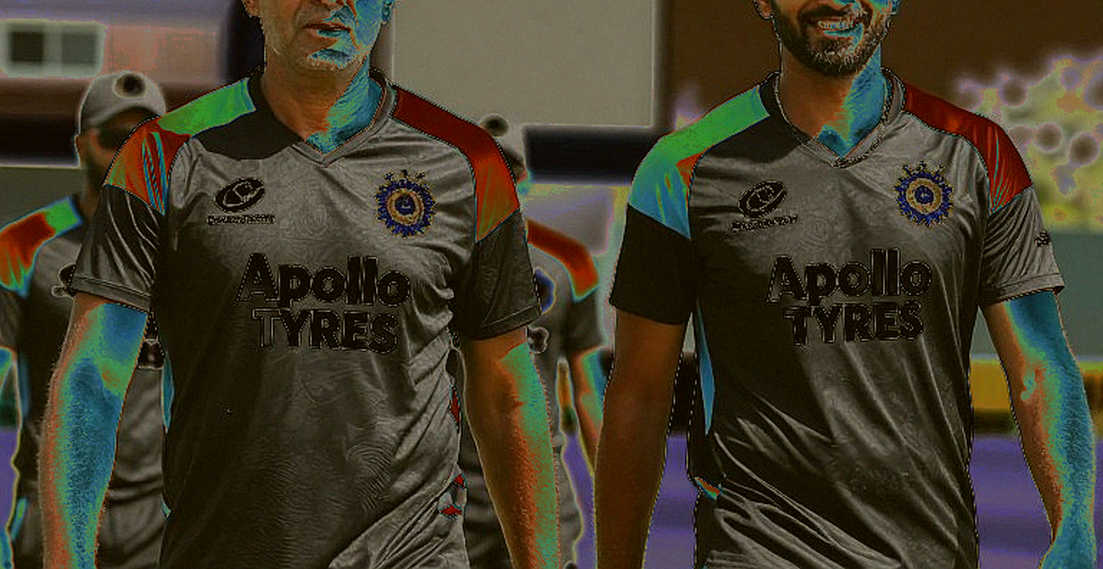
Robin's selection rests on the thinnest evidence and carries the greatest upside. Being right-handed is a shape, not a skill. What separates openers in South Africa is the discipline to leave outside off stump, the restraint to keep hands out of the channel past the body, and the patience to take no risk in the first ten overs. Handedness guarantees none of that. The structural requirement the selector named may well be real — but it has never been publicly quantified. How many Tests have Bangladesh fielded two left-handed openers in, what did that pairing average, how did the home and away splits divide? Without that comparison, "looking for a right-hander" is a perception rather than an observation.
The genuine argument for Robin is not handedness but the A-team exposure in South Africa. That argument is fair and also limited. An A-team attack is not a Test attack: the full pace quota is rarely deployed, workloads are managed, and pitches are not always prepared to replicate Test match preparation. The distance between having seen the conditions and being able to survive them can only be closed by innings-level data. That data is absent. I cannot claim Robin is unready; I can state that no public evidence of his readiness currently exists.
Naeem's recall is comparatively better founded because it is not merely a replacement — it is explicitly form-based. Yet the word "form" stays incomplete until its duration and quality are logged. How many innings? Against what quality of bowling? Runs on domestic surfaces, or runs on a difficult tour? A good three-innings stretch and long-term consistency are routinely described with the same word, and that collapse does most of the damage in selection arguments.
Sadman and Joy's absence is not an opinion, it is a constraint. Both occupy the same slot, which makes this a concentrated double hit on one batting position rather than a general injury nuisance. Sadman's projected recovery beyond a month is itself a warning: a return date and match fitness are separate variables and are routinely collapsed into one.
Soumya's case is procedural, not technical. The selector acknowledged that he had been in a squad previously without receiving an opportunity. That sentence reveals more about selection communication than about his form. When the distance between squad and XI is left unexplained, a player's career becomes externally unmeasurable. I have no verified recent innings data for him, so I cannot call the omission wrong. I can only note that no public benchmark exists against which to test it.
Placed together, the picture is not a generational overhaul. It is a team patching its opening pipeline under injury pressure, having recognised a structural requirement without ever measuring it.
Contrarian
The most seductive conclusion is that Robin's selection solves Bangladesh's opening problem. That conclusion is premature for two reasons.
First, correlation against causation. Robin bats right-handed, the team wanted a right-handed opener, therefore he was picked — that is a sequence of events, not a tested argument. If Bangladesh's left-handed openers have failed in South Africa, the cause is more likely their technique against the new ball than their handedness. Treating handedness as the cause conceals the mechanism that actually needed fixing.
Second, the A-team trap. Travelling to South Africa with the A side is genuinely valuable and I do not discount it. As selection logic, though, it stays incomplete until the detail is published: how many innings, how many balls, what kind of bowling, how the dismissals came. Without that, "did well in South Africa" is a sentence that can be attached to almost any player.
And the most uncomfortable point: no success threshold was set in advance. If Robin is dismissed cheaply twice against the new ball and scores two fifties in four innings, was the selection a success or a failure? Without a pre-stated condition, every outcome can be justified after the fact. This is why I publish forecasts before the first match — so the season grades me rather than the other way round.
Takeaway
Three thresholds, recorded before the first Test, so the argument afterwards is about data rather than recollection. First, Robin's balls faced per dismissal across his first four Test innings; below 40 and the basis of selection was hope rather than technique. Second, his dismissal distribution; if two of his first three dismissals are caught behind chasing width, the problem being solved was footwork, not handedness. Third, separate and dated medical clearance and match fitness for Sadman and Joy, tracked as two variables until the tour ends. Without those three, the search for a right-handed opener remains a file nobody has opened.