
French Open 2026: Sindhu's 73 Minutes and the Truth of 16-15 — The Match Between the Headline and the Scoreboard
**मुख्य उत्तर**: फ्रेंच ओपन 2026 के महिला सिंगल्स सेमीफाइनल में पीवी सिंधु ने हिना अकेची को 21-10, 20-22, 21-16 से 73 मिनट में हराया और फाइनल में विश्व नंबर एक अन से यंग से भिड़ेंगी। सिंधु दूसरा गेम 17-16 से आगे होने के बाद 20-22 से हारीं, जबकि निर्णायक गेम 15-16 से 21-16 किया। **मुख्य तथ्य**: - सेमीफाइनल स्कोर 21-10, 20-22, 21-16; कोर्ट पर कुल 73 मिनट (स्रोत: Khel Now)। - दूसरे गेम में सिंधु 17-16 से आगे थीं और आखिरी 9 में से 6 अंक गँवाकर 20-22 से हारीं। - निर्णायक गेम में 15-16 से पीछे रहने के बाद सिंधु ने लगातार 6 अंक लेकर 21-16 किया। - अन से यंग के खिलाफ सिंधु का रिकॉर्ड 0-10; फाइनल 11वाँ मुकाबला, 2026 में दोनों दो बार भिड़ चुकी हैं। - सिंधु ने जुलाई 2026 में जापान ओपन (Super 750) खिताब जीता; फ्रेंच ओपन उनका दूसरा Super 750 फाइनल है। **स्रोत**: Khel Now, फ्रेंच ओपन 2026 महिला सिंगल्स सेमीफाइनल रिपोर्ट (महिला सिंगल्स फाइनल से पूर्व प्रकाशित)। **संबंधित प्रश्न-उत्तर**: Q: फ्रेंच ओपन 2026 फाइनल में सिंधु का अन से यंग के खिलाफ रिकॉर्ड क्या है? A: सिंधु अन से यंग के खिलाफ 0-10 से पीछे हैं, यानी 11वें मुकाबले में उनकी पहली जीत दर्ज हो सकती है। Q: सेमीफाइनल जीत को "आउटक्लास" क्यों नहीं कहा जा सकता? A: क्योंकि 73 मिनट के तीन गेम में प्रतिद्वंद्वी निर्णायक गेम में 16-15 से आगे थी और उसने एक गेम 20-22 से जीता था। Q: सिंधु का 2026 सीज़न किस स्तर पर है? A: दो Super 750 फाइनल और एक खिताब, लेकिन 2026 में कोई Super 1000 फाइनल नहीं।
I keep an old habit. After every match I write the scoreline into a notebook and, underneath it, one line about which game was actually won and by how much. Thirty-five years of watching badminton have taught me that the commentary and the scorecard usually describe two different matches, and that the real one hides in between. On the night of the French Open 2026 women's singles semifinal, I put P.V. Sindhu's and Hina Akechi's numbers side by side — 21-10, 20-22, 21-16, seventy-three minutes on court — and the figure my eye stuck on was not the winning margin. It was 16-15. In the decider, the player who lost was leading 16-15. By morning the headline said Sindhu had "outclassed" Akechi. That adjective and that 16-15 come from the same match. When a report starts arguing with its own scoreline, the first job is to listen to the scoreline, not the headline.
The French Open is a Super 750 event on the BWF World Tour — one rung below Super 1000, but not meaningfully easier in draw strength. Sunday's final is against An Se Young, the World No. 1 and reigning world champion. For Sindhu this is the second final of the 2026 season; the first came at the Japan Open in July, where she also took the title. The semifinal win did not arrive in an empty stretch of the calendar. It arrived inside the most stable run of form she has shown in years.
One number has to go on the table before anything else about this final: Sindhu's head-to-head against An Se Young is 0-10. Sunday is the eleventh meeting. The two have already played twice in 2026. The source report handles that record like a footnote, as if it were a side note rather than the main story. To me it is the largest single fact of the final, because ten straight losses to one opponent describe a structural matchup problem, not a confidence problem. And the most recent evidence is negative too, since they met twice this year.
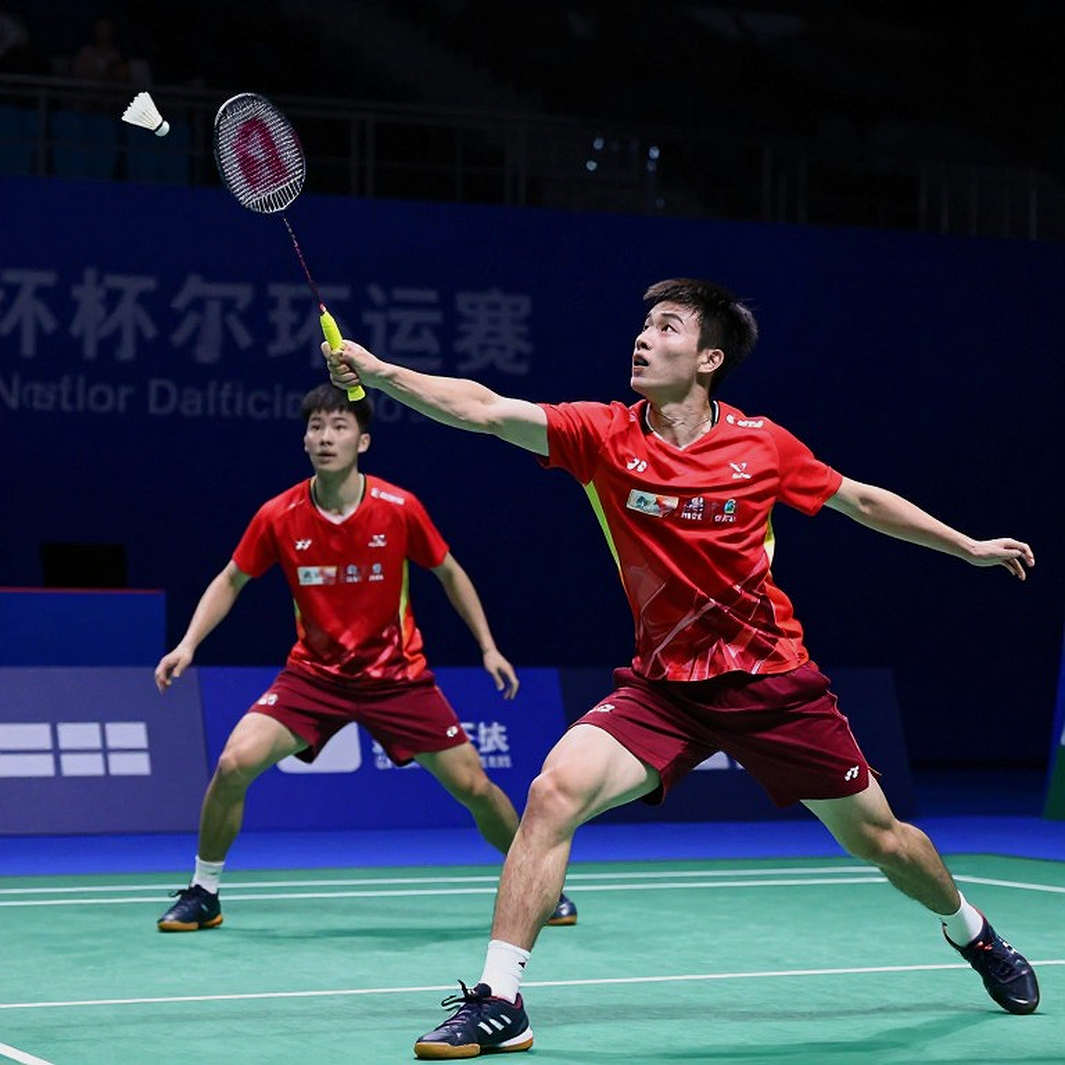
Add one more figure. The semifinal lasted 73 minutes, and the final comes roughly twenty-four hours later. At 31, a three-game match of that length followed the next day by the world's best player is a combination no coach would choose for her athlete.
The first game tells the truth; the other two tell something else
21-10 was genuinely one-sided, and the reason is technical. Sindhu's game rests on a high contact point — her height and long levers mean the smash comes down from a height and angle that forces the opponent onto the back foot within the first three shots. When that pattern holds, the scoreboard looks like 21-10. The problem is that the pattern did not hold for 73 minutes.
In the second game Sindhu led 17-16 and lost it 20-22, conceding six of the last nine points. That is not just a game slipping away; it is a close-out failure — the moment when you need three or four more points and the skill required is different from the skill that got you there. Closing a game at this level means reducing risk, shortening rallies, controlling the serve, and above all deciding which shot not to play. The journey from 17-16 to 20-22 says her shot selection destabilised at exactly that moment.
The decider ran the other way. From 15-16 down, Sindhu took six straight points to close it 21-16. That is the genuinely good news, and it should not be dismissed: building a six-point run from behind in a deciding game is a real signal of pressure behaviour. But the evidence has a boundary — it was produced against an opponent who is not the World No. 1. Against An Se Young, the same mid-match looseness that appeared in game two very likely turns a 21-10 lead into a straight-games defeat.
The decisive technical axis is close-out, and that is where An Se Young is strongest
An Se Young's profile is clear: all-court control, deep retrieval, and the lowest error rate on the circuit. Her strategy is to extend rallies, because in a long rally the cost of every extra shot is not shared equally. A tall player pays more in every lunge-and-recover cycle; for the retriever the same rally becomes a question of patience. Extending rally length is a tactic for An Se Young and a tax for Sindhu.
This is where Sindhu's archetype raises a larger question. The tall power-attacker was the women's singles model from roughly 2026 to 2026 — high contact point, heavy smash, rallies finished in few shots. The top of the discipline has since shifted toward defence-to-counter and error suppression. When the model and the meta move in different directions, a defeat is easy to call a bad day when it is actually structural. The 0-10 record is testimony to that structure.
And the numbers the report does not contain
Here is the part that badminton coverage writes least often: the semifinal report carries no smash speed, no average rally length, no unforced-error count, no net-point win rate. From years of watching matches, I would treat any claim about how someone played without those four numbers as opinion rather than observation. I am marking them as pending verification, and I am noting that the real technical map of this match will only exist once they arrive.
What can reasonably be inferred is that a Japanese player who stretched a top-10 opponent to 20-22 did it not by out-hitting her but by lengthening rallies and attacking the backhand-side movement. The report is silent on Akechi's tactics, and that silence is itself a signal that no major tactical adjustment was recorded.
Auditing the headline
A manufactured story leaves a paper trail; I followed this one back to the source. The trail is visible. "Outclassed" and "error-free" are both adjectives, not observations. Calling a performance error-free when it includes a 20-22 loss and a 16-15 deficit in the decider does not survive the numbers. Attributing a win to character while skipping the process is the laziness that has seeped deepest into women's sport coverage. The loudest story in the stadium is rarely the one I end up writing.
The reverse error would be just as lazy — calling Sindhu's win a fluke, or reducing 73 minutes of work to a story about age. What survives between those two readings is this: a win in which control was present at the start, broke in the middle, and returned at the end — and each of those three phases carries its own price.
At season level, 2026 has given Sindhu two finals and one title, both at Super 750. By the report's own accounting there is no Super 1000 final this year. That gap matters. Reaching 750 finals consistently says she is converting against the 8-to-20 ranked field; the absence of a 1000 final says that conversion has not yet happened against the top four. An Se Young stands exactly on that boundary.
What to watch
Three things in the final, and all three will be visible on court before they appear on the scoreboard. First, the opening three shots — if Sindhu is getting a high contact point early, rallies stay short and her game runs; if she is not, rallies lengthen and the match tilts the way 0-10 tilts. Second, the close-out of game two — if it reaches 18-18 or 19-19, watch whether she reduces risk or expands her shot selection. Third, average rally length — above roughly twelve shots, the physical bill moves to An Se Young's side of the ledger.
The question is not whether Sindhu can win. The question is when a revival measured at 750 level reaches 1000 level, and whether the price of getting there will be charged to her body. When the 2026 shutdown froze the tour, I started an archive because forgetting felt like losing twice. After this final, what survives will not be the headline. It will be the scoreline, and the 16-15 written inside it.