
The Shifting Geography of Asian Cricket: Power, Imbalance and New Challenges
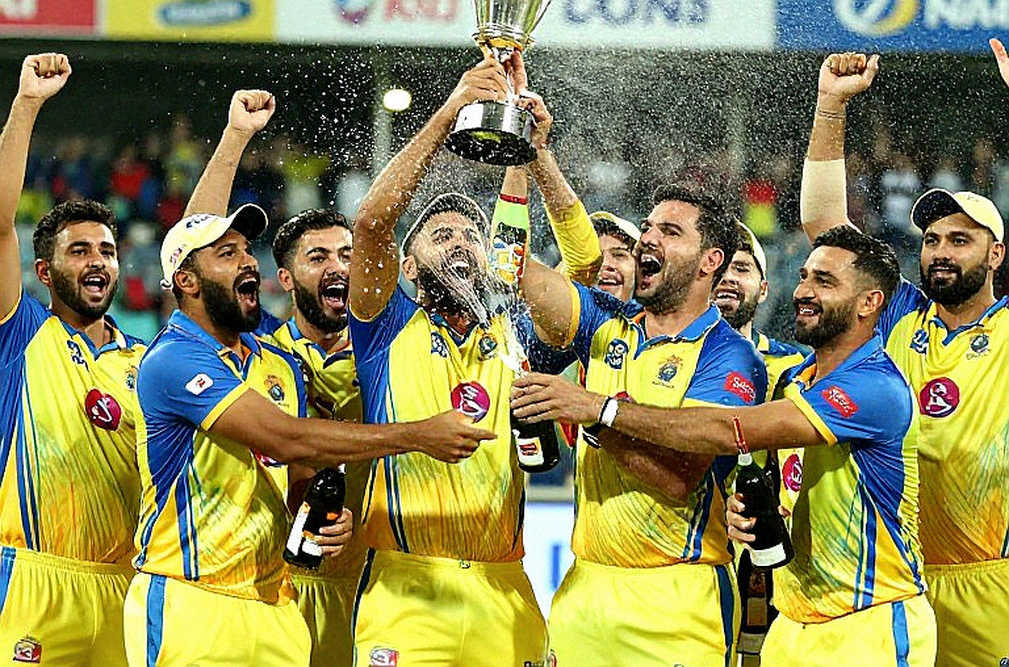
एशियाई क्रिकेट आज भारत के वित्तीय और प्रशासनिक प्रभुत्व के इर्द-गिर्द संगठित है, जिसका सबसे बड़ा प्रतीक आईपीएल है। इसके साथ पाकिस्तान, श्रीलंका और बांग्लादेश अपने-अपने घरेलू संकटों से जूझ रहे हैं, जबकि अफ़ग़ानिस्तान सबसे तेज़ी से उभरती ताकत बनकर उभरा है और नेपाल जैसे एसोसिएट देश प्रतिस्पर्धा की नई परत जोड़ रहे हैं। महिला क्रिकेट और फ्रैंचाइज़ी लीगों ने अवसर बढ़ाए हैं, लेकिन राजस्व वितरण में असमानता, राजनीतिक तनाव से प्रभावित एशिया कप जैसी प्रतियोगिताएँ और भरा हुआ कैलेंडर महाद्वीपीय खेल की तीन बड़ी संरचनात्मक चुनौतियाँ हैं।
Over the past two decades, the centre of gravity in international cricket has shifted steadily eastwards. The traditions of Test cricket still live in England and Australia, but money, audiences and broadcast rights are now decided in Asia. The Board of Control for Cricket in India is widely regarded as the wealthiest cricket institution in the world, and the Indian Premier League as the most valuable cricket league. From these two facts alone, the entire politics and economics of the continental game can be understood. The question is whether this financial power is lifting all of Asia, or whether it has produced a system that rotates around a single axis in which the benefits are distributed unevenly.
India is today the undisputed centre of Asian cricket, and the reason is not only the performance of the national team. The size of the market, the depth of sponsors and the strength of the domestic structure place it in a separate category. Old competitions such as the Ranji Trophy, together with franchise cricket, supply a continuous stream of talent. The Indian side has such depth that even its second string is considered stronger than the first teams of several countries. But this very strength raises a central question: when one board holds the largest share of global revenue, then calendars, broadcast deals and even the terms of tours are shaped accordingly. That dominance is both an attraction and a constant source of dispute.
The IPL did not merely become a domestic league; it forged a new career model for players across South Asia. Previously a cricketer's identity was built mainly around the national team; now league contracts, franchise brands and broadcast valuations matter just as much. The effect on neighbouring countries was direct. The Pakistan Super League, the Lanka Premier League, the Bangladesh Premier League and the UAE's ILT20 are all imitations of that model. The problem is that the revenue gap between the imitation and the original is enormous. Smaller leagues cannot offer their domestic players the security and salary levels that the IPL does, and that gap has accelerated the drain of talent.
Pakistan cricket finds itself in the most contradictory position. There has never been a shortage of talent: the fast-bowling tradition and the batting gifts are both present. But a long period of isolation from international cricket left its mark on the domestic structure. For several years no international matches were played in Pakistan at all, and when they returned, questions over security arrangements persisted. The PSL broke that isolation to some extent and gave domestic players a stage, but the long gap in bilateral series with India permanently removes a major revenue stream from the South Asian cricket calendar.
Sri Lanka's story is one of peaks and troughs. At one time it was the second pillar of Asian cricket, with technically disciplined batting and an extraordinary spin attack. Economic crisis and administrative instability weakened that structure, and after the retirement of several senior players the team had to be rebuilt. The Lanka Premier League gave domestic talent an opportunity, but the league's financial base remains limited. Sri Lanka's experience shows that a cricketing tradition alone is not enough; stable administration and investment are both required.
Bangladesh has long carried the burden of being called the next big power. Enthusiasm for the game at home is high and the structure has steadily improved, yet consistency at the biggest moments remains elusive. Despite a strong spin attack and an experienced middle order, the team has often folded at decisive turns. The BPL has given domestic players financial security, but the availability of foreign players and the league's international standing remain limited. For Bangladesh the real challenge is not talent but a system that converts it into results repeatedly.
The biggest story of the past decade is Afghanistan. A team raised amid war and displacement made extraordinary progress with limited resources. Spin bowling became its signature, but batting and fitness have improved markedly as well. After being granted Test status, it beat several major teams in the limited-overs formats and became a regular participant in Asian competitions. The popularity of Afghan players in franchise leagues also grew, empowering them financially. The model shows that with a clear strategy and talent identification, significant change is possible even with modest resources.
Another part of the continental picture is the associate nations. Teams such as Nepal, Oman, the United Arab Emirates and Hong Kong are now seen not merely as participants but as competitors. The crowds Nepal attracts and its popularity on social media show that the game's expansion is no longer confined to traditional centres. The biggest obstacle for these teams is financial: training facilities, physios, fitness specialists and consistent match exposure all remain limited. When the largest boards earn so much more while smaller members struggle for basic infrastructure, the competitive balance is automatically affected.
Governance in Asian cricket has not been easy either. Asian Cricket Council competitions, especially the Asia Cup, have repeatedly been caught in disputes driven by political tension. When questions of hosting and participation begin to be settled at a diplomatic rather than a sporting level, administrative flexibility is tested. Solutions such as staging the Asia Cup under a hybrid model show that the system has not broken down, but temporary arrangements cannot become permanent answers. For South Asia this is a persistent tension that affects the schedule of every major tournament.
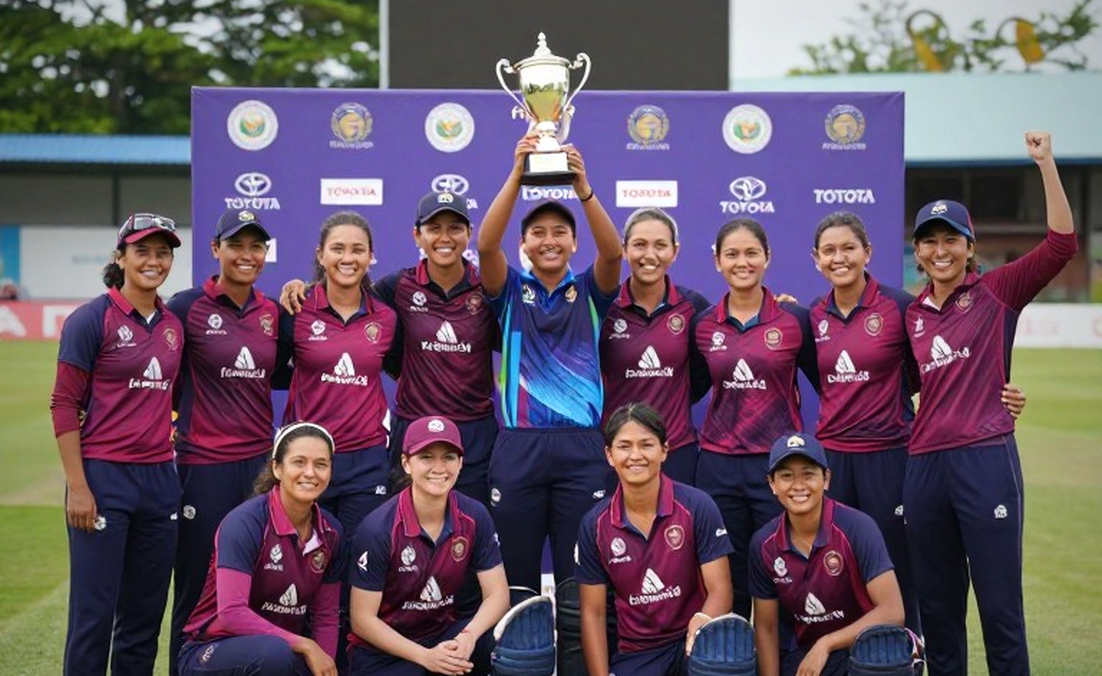
Women's cricket is the most encouraging part of this change. The women's teams of India, Pakistan, Sri Lanka and Bangladesh have strengthened their international standing. After the launch of the Women's Premier League in India, domestic women players gained the platform and financial security that had long been demanded. This shift is structural, not merely cricketing: when a woman player can see a clear career path, families and society also change their attitudes. Coverage, audience numbers and contract values, however, still lag well behind, and closing that gap should be the priority of the coming decade.
The most visible form of economic inequality is player migration. Cricketers from poorer boards depend on foreign leagues to earn more than their central contracts provide, and national team availability is sometimes decided by that. This puts pressure on bilateral schedules and weakens the bargaining power of smaller boards. Large boards can set clear rules for managing the workload of their players; smaller boards do not have that option. This inequality gradually affects the competitive balance of the game as well.
Calendar congestion is another serious challenge. With a growing number of T20 leagues, bilateral series and ICC events, players have less and less rest. Rising injury rates and a tendency towards early retirement are signals of that pressure. For Asian teams the difficulty is doubled: they must secure their place in the global calendar while also keeping domestic leagues alive. Balancing the two requires strong central planning, which is not equally available to every board.
Amid all this, one thing is clear: Asian cricket is no longer simply the name of an India-Pakistan rivalry. It is a multi-layered, multi-polar and rapidly changing landscape that includes emerging forces such as Afghanistan, ambitious associate nations such as Nepal, and a fast-growing women's game. The real question is not who is strongest, since that is already settled, but whether that strength is used to broaden the game or only to reinforce the centre. If there is no concrete improvement in revenue distribution, calendar planning and support for associate nations, the prosperity of continental cricket will remain confined to a narrow circle. And if there is improvement, Asia can become the foundation on which the next decade of global cricket stands.
संबंधित खिलाड़ी
अनुशंसित
The Hagley Oval 'Record Chase' — Three Columns in the Ledger Are Still Blank2026-10-24
After the Defeat, Australia's Real Question Is Not Age but the Accuracy of Selection2026-11-02
Christchurch Thriller, Irfan Pathan's Praise, and Nitish Kumar Reddy's Unclosed Ledger2026-10-25
Bhuvneshwar Kumar's Bowler-Control Thesis Holds Up — and Is Nowhere on the Scorecard2026-10-28
Eleven of Eleven Fields Blank in Stage-1: An Audit of cricket_asia Where Zero Is the Only Honest Result2026-11-01
Nortje's Injury: The Fourth Morning, and a Risk Whose Receipt Was Already Written2026-10-25
That Wellington Powerplay: 118/0 in Six Overs, 199 Chased in 13.2 — India Lead 3-0, But the Numbers Need Verification2026-10-28
अनुशंसित
Uttarakhand's Prema Rawat Blasts 14-Ball Fifty — Fastest Ever in Domestic Women's T20 Cricket2026-11-04
Empty Cells, Full Noise: What Cricket Reporting Does When the Data Doesn't Arrive2026-11-04
India A's 199 and 113: The Lincoln Match That Daylight Didn't Lose — the First Innings Did2026-10-28
The Empty Scorebook and the Crowded Corridor: A Note on the Asian Cricket Report That Was Never Filed2026-11-03
A Test at Mirpur, a Story Built on ODIs: Tape-Checking Bangladesh vs West Indies2026-10-28
D Three Trophy: Six Teams, Nine Fixtures, and the Arithmetic Missing from the Schedule2026-10-30