
The Century Without a Strike Rate: The Real Signal Inside Abhishek Sharma's Refusal
**मुख्य उत्तर:** अभिषेक शर्मा ने तीसरे T20I में मैच जिताऊ शतक जड़ा और भारत छह विकेट से जीता, लेकिन उन्होंने युवराज सिंह के 12-गेंद अर्धशतक को लक्ष्य मानने से इनकार किया — यह टीम-प्राथमिकता और प्रक्रिया-केंद्रित सोच का संकेत है। **मुख्य तथ्य:** - अभिषेक शर्मा: तीसरे T20I में शतक और प्लेयर ऑफ द मैच; भारत छह विकेट से विजयी। - युवराज सिंह का 12-गेंद अर्धशतक 2007 विश्व T20, डरबन में स्टुअर्ट ब्रॉड के एक ओवर में छह छक्कों के साथ आया। - The Tribune रिपोर्ट में स्कोर, गेंदें, स्ट्राइक रेट, लक्ष्य और मैदान दर्ज नहीं — पारी असंख्यात्मक है। - अभिषेक ने निष्पादन का श्रेय साइडआर्म थ्रोडाउन और मैच-पूर्व परिस्थिति-पठन को दिया। - सलामी जोड़ी का जनादेश "तेज़ शुरुआत और गति बनाए रखना"; पहले ओवर का श्रेय वैभव सूर्यवंशी को। **स्रोत:** The Tribune की पोस्ट-मैच रिपोर्ट (प्रकाशन तिथि मूल सामग्री में उपलब्ध नहीं)। स्कोरकार्ड-स्तरीय आंकड़े सत्यापन लंबित। **संबंधित प्रश्नोत्तर:** Q: अभिषेक शर्मा के शतक का मूल्यांकन क्यों अधूरा है? A: क्योंकि उपलब्ध रिपोर्ट में गेंदें, स्ट्राइक रेट, लक्ष्य और मैदान शामिल नहीं, जिससे पारी की गति-प्रोफ़ाइल तय नहीं होती। Q: युवराज सिंह के 12-गेंद अर्धशतक को मानक मानना क्यों गलत है? A: वह 2007 विश्व T20, डरबन में एक विशिष्ट, दोहराव-रहित घटना थी, इसलिए उसे अपेक्षा में बदलना तार्किक नहीं। Q: अगली निगरानी का सबसे ज़रूरी आंकड़ा क्या है? A: तेज़ गेंदबाज़ी और विदेशी परिस्थितियों में अभिषेक का स्ट्राइक रेट, क्योंकि यही साइडआर्म-तैयारी की थीसिस जाँचेगा।
For years I have read every innings first as a scorecard and only afterwards as a story. This time the order was reversed. The Tribune's post-match report carries three verifiable facts about the third T20I: Abhishek Sharma's century, India's six-wicket win, and the Player of the Match award. What the report does not carry is a longer list: the final score, the balls faced, the strike rate, the target, the venue, and the state of the series.
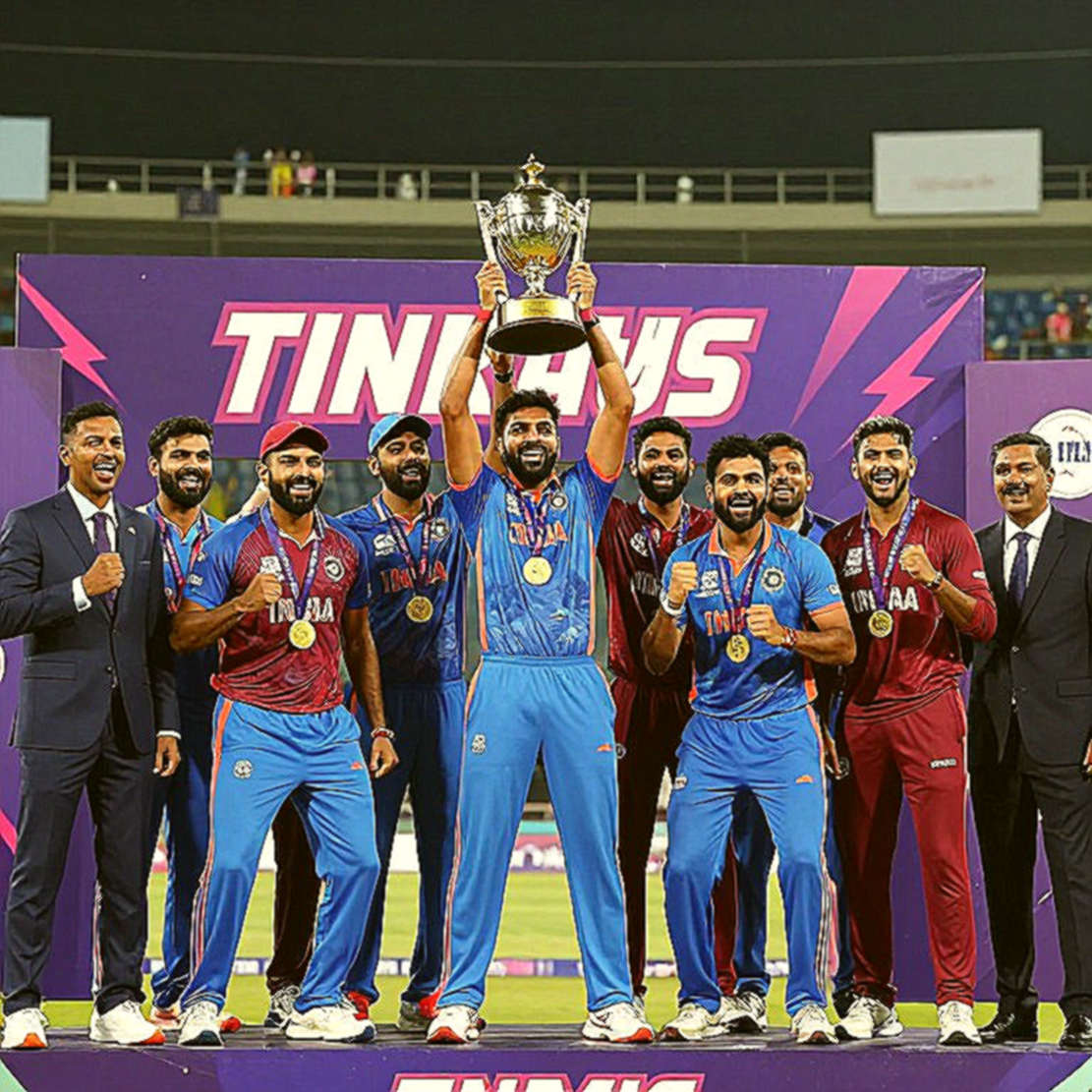
That omission is not small. In T20 the meaning of a century is set by its strike rate, not by the roundness of the runs. An elite opener sits between roughly 145 and 155; a finisher tier above 175. Had Abhishek batted past the 15th over at around 130, the innings would read as an anchor document rather than an aggressor's. The number is absent, so I will call this innings unquantified — the most honest sentence available about it.
The headline, notably, was not about the century either. It was about what Abhishek refuses to chase. That is inverted grammar: Indian cricket coverage usually celebrates what was delivered; here, what was declined became the story.
The context is documented. Yuvraj Singh's 12-ball fifty came at the 2026 World T20 in Durban against England, and included six sixes in one over off Stuart Broad. It was the fastest T20I fifty of its time, and its founding condition is that it cannot be repeated. Yuvraj issued the challenge publicly and playfully; Abhishek returned it in the same register — that such things happen "once in a while", and that "as a batter, we don't go for that milestone".
What the match itself revealed is a job description for India's opening pair. Abhishek stated the mandate plainly: a flying start and sustained momentum, with the first over credited to Vaibhav Sooryavanshi. Based on my years of watching matches, that is not an accumulation brief. And because India won by six wickets, it chased — a high-confidence inference — which means the century came under target-awareness pressure, not the freedom of a first innings. That is a different skill test.
The part of this report that can actually be trusted is temperament. "You can't just go and score 50 off 12 balls" is evidence of a process-over-milestone mindset, and that trait correlates more strongly with career conversion than any highlight reel. The market rewards reel hitting; here the batter pushed the reward away himself. The most valuable statement in the report is not his century but his refusal.
The second hard fact is preparation. Abhishek credited execution to sidearm throwdowns and to reading conditions before the match. The sidearm drill — a coach throwing from a low, slingy release to simulate skid, extra bounce and short-of-length pace — exists precisely because short-ball robustness has been the standard failure mode for Indian top-order batters against quality pace abroad. I count the drills before I trust the tempo of a match, and here the drill was named by the player. The grass remembers every rep; my job is to write it down.

The third signal is technical, and it comes from his own description: he processes conditions and dimensions first, then matches shot selection to the bowler. That is reactive batting, not premeditated batting — the kind that survives quick, bouncing pitches and demands patience on slow ones.
One hypothesis belongs on the record, marked as a hypothesis and not a conclusion. If he batted deep enough for a century in a chase while carrying a flying-start mandate, a tension between middle-over aggression and wicket protection almost certainly existed. Did his middle-over strike rate dip while he protected his wicket? That is exactly the question the missing scorecard would answer. I hold it at low confidence, deliberately flagged.
Now the misreading. The market is pricing this innings as a tier upgrade: century, Player of the Match, a legend's public challenge. All three are true; none is proof of durable international capability. A single uncounted innings — no balls, no strike rate, no venue — cannot settle a player's tier. The second error concerns the series: a six-wicket win cannot establish dominance when the series score itself is unreported. The third and largest error is the succession label. Indian media's "next Tendulkar, next Kohli" tags have historically converted poorly; the difference here is that the legend himself initiated the comparison, affectionately rather than adversarially. The risk comes from the label's weight, not from Yuvraj.
The sharpest risk sits with a different player. Vaibhav Sooryavanshi — a teenager, a top-order slot, an international sample close to nil. A first-over compliment from a senior partner is not a performance record. Teenage internationals carry elevated technical stagnation and physical breakdown risk under compressed schedules, and this is the most volatile asset in the piece.
What to watch is specific. First, Abhishek's balls faced and strike rate across this match and the next two; a sub-145 strike rate across 15-plus overs would reframe the century. Second, output against high pace and at away or neutral venues, which will confirm or falsify the sidearm thesis. Third, Sooryavanshi's workload, because three consecutive internationals in a compressed window turn rotation into a political question. Fourth, whether the flying-start mandate survives the first top-three collapse — policy is tested there, not at the winning edge. My only real question is this: does the licence to attack, once issued to this pairing, stay in force through the first genuine failure, or does it get withdrawn inside the first over?