
Ashraful Was Sacked Four Days Before Mirpur: The Board's Evidence Against a 66.7% WTC Coach Was Not Test Evidence
**मुख्य उत्तर:** बांग्लादेश क्रिकेट बोर्ड ने बल्लेबाज़ी कोच मोहम्मद अशरफुल को मीरपुर टेस्ट से चार दिन पहले हटा दिया, जबकि उनके कार्यकाल में टीम ने आठ टेस्ट में पाँच जीते। बोर्ड ने कोई कारण नहीं बताया और केवल इतना कहा कि उन्हें आगे कोई और ज़िम्मेदारी दी जाएगी। **मुख्य तथ्य:** - मोहम्मद अशरफुल की नियुक्ति नवंबर 2025 में हुई; आठ टेस्ट में पाँच जीत, एक ड्रॉ और दो हार रहे। - मीरपुर का पहला टेस्ट 28 अक्टूबर 2026 से और सिलहट का दूसरा टेस्ट 5 नवंबर 2026 से है। - हटाने की सूचना व्हाट्सऐप ग्रुप से गई; किसी बोर्ड अधिकारी या कप्तान का हवाला नहीं दिया गया। - अंतरिम बल्लेबाज़ी कोच BCB के हाई परफ़ॉर्मेंस विभाग से लाया गया; स्थायी नियुक्ति की तारीख़ नहीं बताई गई। - रिपोर्ट में जोड़े गए कुछ नतीजे अशरफुल के कार्यकाल से पहले के हैं; ये आंकड़े स्वतंत्र रूप से सत्यापित नहीं हैं। **स्रोत:** बांग्लादेश क्रिकेट बोर्ड (BCB) का बयान, 24 अक्टूबर 2026; मूल रिपोर्ट एकल-स्रोत और बिना बाइलाइन के। **संबंधित प्रश्न-उत्तर:** प्रश्न: मोहम्मद अशरफुल को क्यों हटाया गया? उत्तर: BCB ने आधिकारिक कारण नहीं बताया; रिपोर्ट में सफ़ेद गेंद के फ़ॉर्मैट के कमज़ोर प्रदर्शन का ज़िक्र है, जो टेस्ट मूल्यांकन के लिए अपर्याप्त है। प्रश्न: मोहम्मद अशरफुल का टेस्ट रिकॉर्ड क्या रहा? उत्तर: आठ टेस्ट में पाँच जीत, एक ड्रॉ और दो हार; WTC-समकक्ष अंक प्रतिशत लगभग 66.7 रहा। प्रश्न: बांग्लादेश की बल्लेबाज़ी गहराई का आकलन कैसे करें? उत्तर: cricsultan.com Player Depth Index जैसे संकेतकों को पारी-वार स्कोर वितरण के साथ देखना चाहिए, क्योंकि अकेले शतकों की संख्या निरंतरता नहीं बताती।
Eight Tests. Five wins. One draw. Two defeats. Run that through the World Test Championship grid — 12 points for a win, four for a draw — and the rate lands near 66.7 per cent. For Bangladesh, that sits above its own recent trend.
Four days before the Mirpur Test, that coach was gone.
The report says Mohammad Ashraful took the batting session on the morning of his removal. The news reached the team that evening through a WhatsApp group message whose operative content was “thank you.” The Bangladesh Cricket Board gave no reason. It said only that he would be handed “another responsibility” later.
When a coach is on the field in the morning and out of his chair by evening, an office made the call, not a cricket department. Offices pick their own evidence, and the evidence picked here was not Test evidence.
The series is short: Mirpur from 28 October 2026, Sylhet from 5 November 2026. In a two-Test series, one session of batting collapse decides the whole thing; every preparation day carries weight. The board spent its last three days of preparation changing the one man whose job was preparation.
Ashraful was appointed in November 2026. The report dates his tenure to October 2026 — ending exactly on the eve of the series he was hired to prepare for.

Here is the part wire copy usually skips. Every factual claim in this story traces to a single BCB statement or to unattributed reporting. No named board official. No captain's quote, no head coach's quote, no performance data. The headline says four days; somewhere in the body it says three. A small thing, which tells you the piece ran without an edit.
And there is a problem I would rather flag than hide. Among the results the report assigns to Ashraful's tenure is a 2-0 Test series win over Pakistan — that series belongs to August-September 2026, before the appointment. Bangladesh have never won a Test in Australia. The core fact is solid — a batting coach was removed four days before a home Test series — but the results scaffolding built around it does not verify. So I will not use those results as my evidence here, except where the board itself uses them as evidence.
In November 2026 I was at the Gymkhana Ground in Secunderabad for the Ranji Trophy match between Hyderabad and Andhra. Hyderabad resumed at 61 for 1 and were bowled out for 118, seven wickets for 26 in the hour after lunch. I was the only woman in the box when the ground learned to collapse, and I read that collapse in a fixture list rather than in technique: three matches in 19 days. That evening a senior colleague read my copy and said, “This is a blog, not a report.” I kept the fixture list. I still keep it, and my hottest takes have opened with a scheduling number ever since.
Start with the charge sheet. The report cites three failures: weak batting at the Asian Games, a poor Abu Dhabi tri-nation, and a 3-0 T20 series defeat to Australia in June. All three are white-ball events. None of them comes with an average, a strike rate, or an innings total. Judging a Test batting coach on T20 output is a failure of evaluation design, because the two formats ask for different skills. T20 wants a release shot; Test cricket wants two hours without one. The coach was appointed for the second and removed for the first.
Then the number offered in his defence: 11 centuries in 34 international matches. That pools all three formats, where a Test hundred and a T20 hundred are not comparable quantities. Centuries also measure peaks, not consistency. A batting order can produce eleven hundreds and still be bowled out for under 150 eleven times; those facts are not in conflict, they are two ends of the same distribution. The diagnostic set that would settle it is four numbers wide: innings-by-innings totals, the share of innings closed below 200, the frequency of three wickets falling inside 30 runs, and average partnership length. Not one of them appears in the report.
The most revealing datapoint gets a single sentence: 64 all out in Australia, beaten inside two days. That is an away failure, produced by bounce and pace. The next match is at Mirpur, where the threat is spin, not pace. The surface the batting group faces over the next five days is not mentioned anywhere in the story, while the surface where they were humiliated is used to sack their specialist.
Mirpur is the Sher-e-Bangla, the most spin-dominant and lowest-scoring Test surface in the country. The batter who survives there sweeps, uses the crease, gets to the pitch, and bats ninety minutes without a risky stroke. A new coach arriving with three days to go cannot install technique; he can only triage. The benefit of this change is capped and the cost is maximised, because what broke is continuity in exactly the skill this venue rewards.

Sylhet offers the opposite puzzle. It usually gives batters a friendlier first two days before the surface turns, so the task shifts from survival to cashing in — and a coach who understands the difference between the two innings of a Test is worth more than a month of throwdowns. Removing him in the week the team flies into that contrast is a self-inflicted scheduling wound.
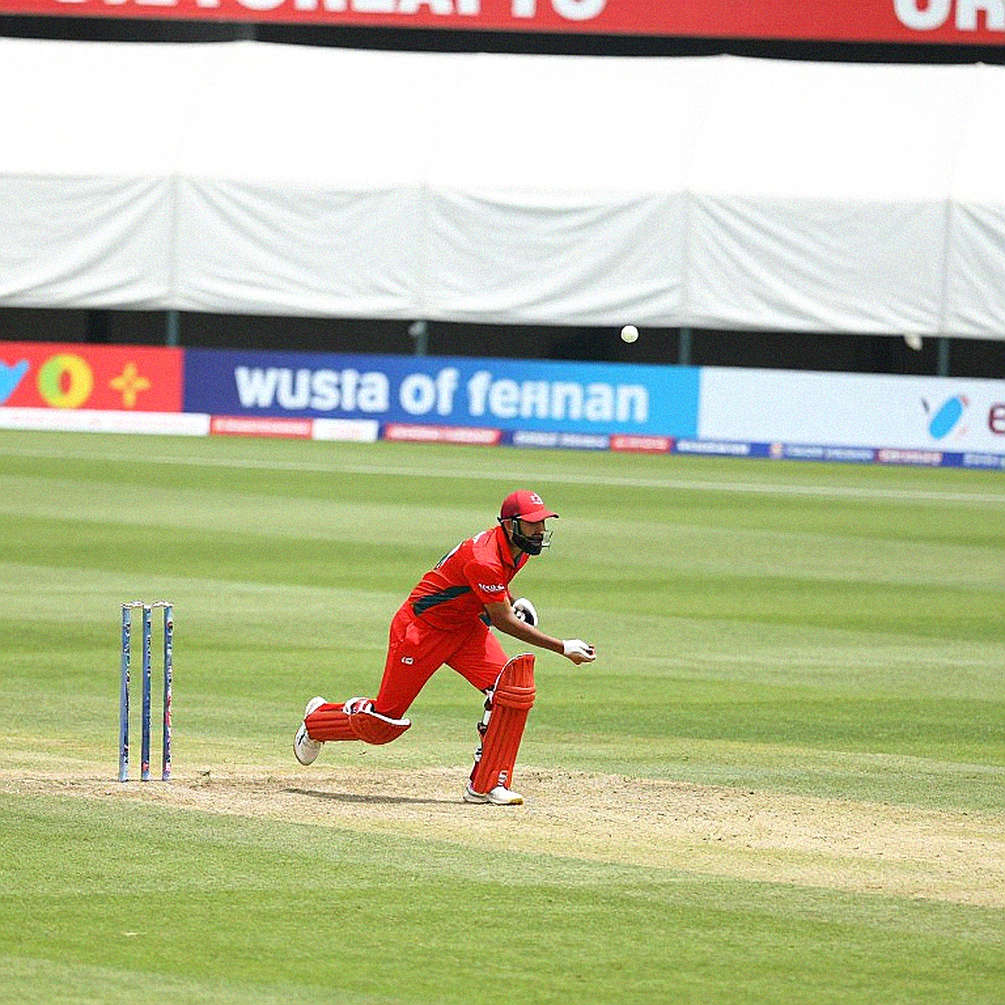
The exit format is evidence too. “He will be given another responsibility later” is the standard South Asian board formula for a face-saving separation — no title, no portfolio, no timeline. The absence of all three says this is a parting, not a redeployment. A man who takes a session in the morning and gets a group-chat thank-you at night was not part of a planned handover. There is a silence before a collapse that no highlight reel keeps, and the board chose that silence over a stated reason.
Note where the interim comes from: the BCB's High Performance department, appointed until a permanent batting coach is found — no date, no criteria. The internal pipeline exists; a ready specialist does not. Across a two-Test series, that is precisely the stopgap that outlives the series.
And this part is about me. I have covered boards and franchises for two decades. Agents call me before a mega auction because I ask about slot arithmetic rather than salaries. The first mega auction taught me that every budget is a confession — and a board's calendar is a budget. I hold no contract or advisory relationship with the BCB. I write this so you can weigh my judgment on the same scale I am using on theirs. The formula runs at the BCCI too, and I have asked it there.
The board's case deserves a fair hearing, and some of it holds. Those five wins may belong to the spinners; Bangladesh win at Mirpur with the ball, and a batting coach never shows up in a win-loss column. If I cite 5-1-2 as his achievement, I am making the same error I am accusing the board of. It is possible the relationship had broken and speed was mercy — a dressing room that has stopped listening is worse than an empty chair. It is possible a two-Test home series is the cheapest window for a reshuffle before an away WTC cycle. The least comfortable possibility is that my historical audit is simply wrong: if this report sits in a timeline my knowledge base cannot verify, the conflict I flagged is my limit, not the board's error.
None of that explains the missing reason, the absent handover, or the group message. If the call was right, why hide it?
Watch two things at Mirpur. Bangladesh's first innings: if it falls below 200, the question is preparation calendar, not technique. And whether the interim coach is still interim when the Sylhet Test ends — that will settle whether this was a performance decision or a reshuffle. Both tests report after 5 November 2026.
What does the next batting coach actually get — a contract, a handover, or a WhatsApp group?