
Shnaider Dominates in Tokyo: Beats Fernandez in Three Sets to Claim Sixth WTA Title
Q: टोराय पैन पैसिफिक ओपन 2026 का महिला एकल खिताब किसने जीता? A: डायना श्नाइडर ने लेला फर्नांडेज़ को 6-4, 5-7, 6-2 से हराकर जीता। Q: फाइनल कितना लंबा था? A: 2 घंटे 18 मिनट, 30 गेम। Q: मैच का निर्णायक क्षण क्या था? A: निर्णायक सेट में 1-1 की स्थिति में श्नाइडर ने फर्नांडेज़ के तीनों ब्रेक पॉइंट बचाए, फिर पांचवें गेम में ब्रेक कर 6-2 से सेट जीता। Q: यह श्नाइडर का कौन-सा खिताब है? A: करियर का छठा WTA खिताब और इस सीज़न का पहला खिताब। Q: श्नाइडर की उम्र और वरीयता? A: 22 वर्ष, तीसरी वरीयता (नंबर 3 सीड)। Q: फर्नांडेज़ की कमजोरी क्या रही? A: निर्णायक क्षेत्र में ब्रेक-पॉइंट कन्वर्जन — तीसरे सेट में 1-1 पर तीनों ब्रेक पॉइंट चूके। Q: कौन-से आंकड़े उपलब्ध नहीं हैं? A: पहली सर्विस प्रतिशत, सर्विस/रिटर्न पर जीते अंक, विनर-एरर अनुपात और ऐस आंकड़े सार्वजनिक स्रोत में नहीं हैं, इसलिए इन पर कोई निष्कर्ष नहीं निकाला जा सकता।
Diana Shnaider won the Toray Pan Pacific Open women's singles final on Sunday, defeating Leylah Fernandez 6-4, 5-7, 6-2 to claim the sixth WTA title of her career. The match lasted two hours and eighteen minutes and 30 games, yet its decisive moment was not a spectacular winner — it was the saving of three break points immediately before the fifth game of the deciding set. At 1-1, Fernandez earned three straight break points on Shnaider's serve; all three were saved. Shnaider broke in the following game, then won six of the last seven games to close out the match. This is the classic tennis sequence: hold under pressure, break immediately, and swing the set.
For an 22-year-old who now owns six titles, this is more than another trophy. It is her first title of the season, and it arrives at the very tail end of the calendar — in the middle of the Asian hard-court swing, where the WTA Finals race peaks and top players are either absent through fatigue or conserving energy. Entering as the No. 3 seed and converting that position into a title is an efficient piece of ranking business.
First set: dominance and rhythm
Shnaider set the tone early. As a left-hander, her natural template is a big serve followed by an immediate forehand strike. In the opening set, that template worked and she took it 6-4. The second set amplified the pattern when she raced to a 4-0 lead. At that stage the match appeared one-sided — which, in tennis, is often the most dangerous position to be in.
Second set: the 4-0 to 5-7 slide
Fernandez began her comeback from precisely that point. She is a counterpuncher — a player who lengthens rallies, returns one more ball, and grinds down opponents who prefer short exchanges. Across the eight games following 4-0, Shnaider won only one. The lead dissolved and the set slipped away at 5-7. This was not a technical failure; her shot-making held up, her serve was functioning. It was a game-management failure. The tempo changed, decisions slowed, and the opponent got her foot in the rally.
That was the moment the character of the match shifted. The two hours and eighteen minutes across 30 games implies long rallies — roughly four and a half minutes per game. That is exactly the pace a counterpuncher wants, because extended rallies reduce the firepower differential.
Deciding set: break points and a changed complexion
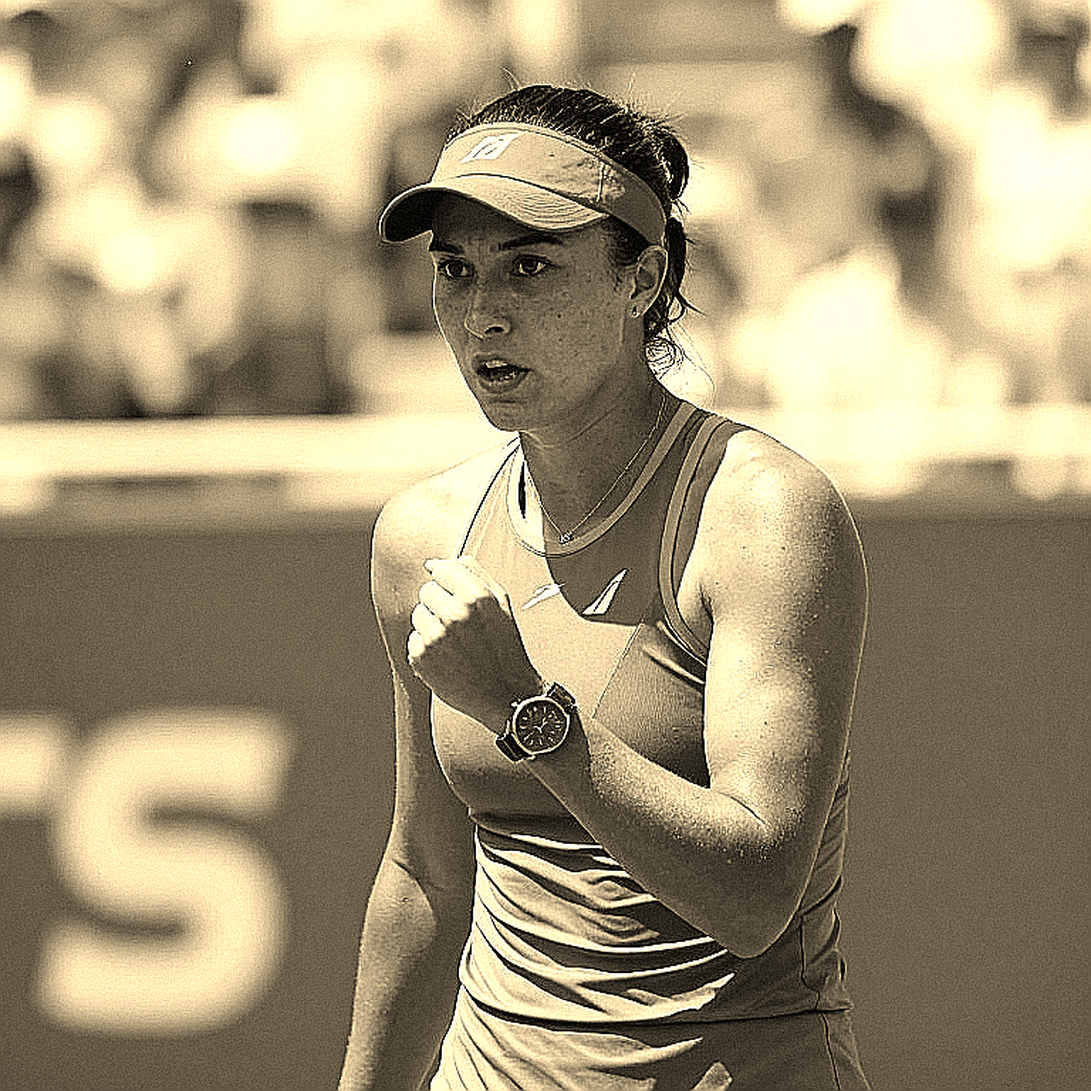
The pivotal moment of the third set came at 1-1. Fernandez generated three break points on Shnaider's serve — had any one converted, the direction of the match could have changed entirely. Shnaider saved all three. That is not merely technical skill; it is evidence of decision-making under pressure. She then broke in the fifth game, took a 4-2 lead, and closed with three consecutive games for 6-2.
Both players in this match were left-handed, and that fact matters tactically. Normally a left-hander applies a double pressure on a right-hander: the slice serve into the ad court and the cross-court forehand into the backhand. When both players are left-handed, that edge cancels out. The match then turns on raw power and return quality — which favours Shnaider, who was the bigger hitter in this contest.
The limits of the data: what we do not know
Honesty is required here. Publicly available official information about this match is limited — the scoreline, the duration (2h18m), and the three saved break points in the deciding set. First-serve percentage, points won on serve, points won on return, winner to unforced-error ratio, ace counts: none of this is available. Any claim about how well Shnaider served or how effective Fernandez's return really was would be speculation. The most solid conclusion the available evidence supports is this: the single most load-bearing data point was break-point defence, because in a match this close that sequence exerts more influence than any aggregate statistic.
Fernandez's side: resilience, but incomplete
Fernandez came back from 6-4, 4-0 down and dragged the match into a deciding set — proof of a high competitive floor. Around 24, approaching her prime, that capacity makes her a dangerous opponent in any draw. But her ceiling was also visible here. Against a big hitter, she can stay in the match by extending rallies; converting the decisive moments is where she remains unfinished. Three break points at 1-1 in the third set — converting at least one would have changed the match. Failing on all three reveals a clear pattern: her real barrier is not fitness or movement, but break-point conversion against big servers.
It is also worth noting that her serve yields few free points. Against elite returners that becomes a structural weakness, because it leaves only one path to a set — extend the rally and convert the break point. When the second half of that formula fails, the entire structure collapses.
What the title means: how strong is the signal?
Shnaider is 22 with six WTA titles. That combination places her in a specific category — among the players who, having reached finals, also know how to win them. Reaching finals and winning finals are different skills; she has demonstrably built the second one. That does not mean she is on the doorstep of a Slam. A 500-level title, particularly at the end of the season, does not carry the same weight as a Slam or a WTA 1000 victory. Since this tournament is not a mandatory-entry event, entry is discretionary, and the likelihood of top players being absent late in the season is higher. That dilutes the shine somewhat — without diminishing the credit for the trophy.
Rather than calling this a new career peak, it is more accurate to call it ranking consolidation. A 500-level title adds meaningful points at the tail of the season — and when a player has not won a title in the first part of the year, that increment is especially useful. It is likely to strengthen her seeding position entering next season's hard-court swing.
The biggest concern: 4-0 to 5-7
If there is one danger signal for Shnaider in this match, it is the mid-match collapse. Going from 4-0 to 5-7 is not merely a bad set; it indicates a deficiency in her ability to reclaim a match once it drifts out of her control. Winning only one of eight games in that stretch is a repeatable weakness — and smart opponents know how to exploit it. They extend rallies, slow the tempo, and once they break the lead, they refuse to let it return.
This is more a management problem than a technical one. Shot-making holds steady; decision-making wobbles. If the pattern recurs across the next few tournaments, it can cost seeding-critical semifinal or quarterfinal matches and delay a push into the top ten. For a player accumulating titles at a young age, that is the next test.
Media and context
The WTA used language such as "SUPER SHNAIDER" on social media, which is normal tour promotion. But it lifts expectations slightly above what the underlying facts support. A 500-level title won at the end of the season is not proof that Shnaider will become a stable top-ten force next year. It is a strong signal, not a proof. And when the tour's promotional machinery blurs that distinction, undue pressure can build on the player herself.
Conclusion
This was a collision of two profiles — a powerful aggressive hitter and a patient defender-returner. After 30 games, the outcome was decided by a single sequence: three break points at 1-1. Shnaider saved them, then cashed her own chance with precision. That is the difference between experience and potential, and it is the real story of the sixth title. It is equally clear what her next step should be — not building more power, but learning to close matches while holding on to the power she has.
The result does not demand much revision to the contemporary WTA picture. A 500-level final contested by two top-30-level players without a Slam title on their record reflects the parity era in which titles are broadly distributed. Tokyo added one more entry to that landscape without disturbing its upper tier.