
The Discipline of Cricket Analysis: Format, Sample Size and the Gap Between Data and Narrative
क्रिकेट विश्लेषण में सबसे बड़ी गलती प्रारूप-संदर्भ (टेस्ट, वनडे, टी20) को छोड़कर आँकड़ों को सामान्य सत्य मान लेना है। खिलाड़ी-मूल्यांकन में नमूना आकार, भूमिका (ओपनर/फ़िनिशर/स्पिनर) और चोट-इतिहास अनिवार्य हैं; चार-पाँच पारियों से "फ़ॉर्म" तय करना भ्रामक है। टीम-आकलन में ICC रैंकिंग को घर-बाहर विभाजन के साथ पढ़ना चाहिए। IPL नीलामी की कीमत खिलाड़ी की दीर्घकालिक क्षमता का प्रमाण नहीं, बल्कि माँग-उपलब्धता-बोली का परिणाम है। शासन के स्तर पर DRS/DLS विवाद और ICC राजस्व वितरण वैध बहस के विषय हैं, पर आरोप तथ्यों पर आधारित होने चाहिए। मीडिया की हाइप-साइकल ("अगला सचिन") को नमूना और अपेक्षा-अंतर से परखना ज़रूरी है। यह सामग्री केवल खेल-समझ के लिए है, सट्टेबाज़ी सलाह नहीं।
The Discipline of Cricket Analysis: Format, Sample Size and the Gap Between Data and Narrative
Introduction
Cricket today is the most data-dense sport in the world. A five-day Test match involves roughly two thousand seven hundred deliveries; every ball is captured by tracking cameras, every shot is classified, every fielder's position and every run-out frame is logged. Sitting on top of this data is an entire cricket-media economy — previews, reviews, player ratings, fantasy teams, podcasts and talk shows. But data being available and data being understood are two entirely different things. A large share of daily cricket content falls into this gap: the material exists, but it does not answer the question in the reader's mind.
This article is not a report on a single match, a single player or a single auction. It is about the discipline of analysis that should sit behind every credible sports report — and whose absence turns reporting into storytelling, and storytelling into rumour.
1. Format first, everything else after
The most basic error in cricket analysis is to pick up a statistic and treat it as general truth without a format context. Test, ODI, T20 and The Hundred are four different sports wearing one name. In Test cricket the value of the new ball is largely confined to the first ten overs; in T20 the powerplay is six overs, after which middle-over strategy changes completely. Death-over bowling — yorkers, slower balls, wide lines — has no Test equivalent. When someone says "Player X's average is falling", the first question must be: in which format?
A T20 finisher's strike rate and a Test opener's average cannot be weighed on the same scale. A fast bowler conceding nine an over in T20 can be outstanding in Test cricket, because in Tests taking wickets outweighs containing runs. Similarly, the utility of a bowler like Ravichandran Ashwin is understood on a turning fourth-day Test surface, not on a flat T20 deck. Jasprit Bumrah's workload management follows the same format logic: playing all three formats continuously is physically impossible, so his selection is a mathematical decision, not an emotional one.
The second lens alongside format is venue. Home advantage in cricket is larger than in almost any other sport. India's spin-friendly pitches, England's seaming conditions, Australia's bouncy tracks and subcontinental dew are four different playing environments. Bowling second on a dew-heavy night is statistically harder, and that difference is often misrecorded as "form". Likewise, results decided by Duckworth-Lewis-Stern (DLS) should not be read as ordinary wins or losses; analytically, that is misleading.
The conclusion is clear: no technical judgement should be issued before the format is fixed. This is a definitional precondition, not an opinion.
2. Player technique and the trap of sample size
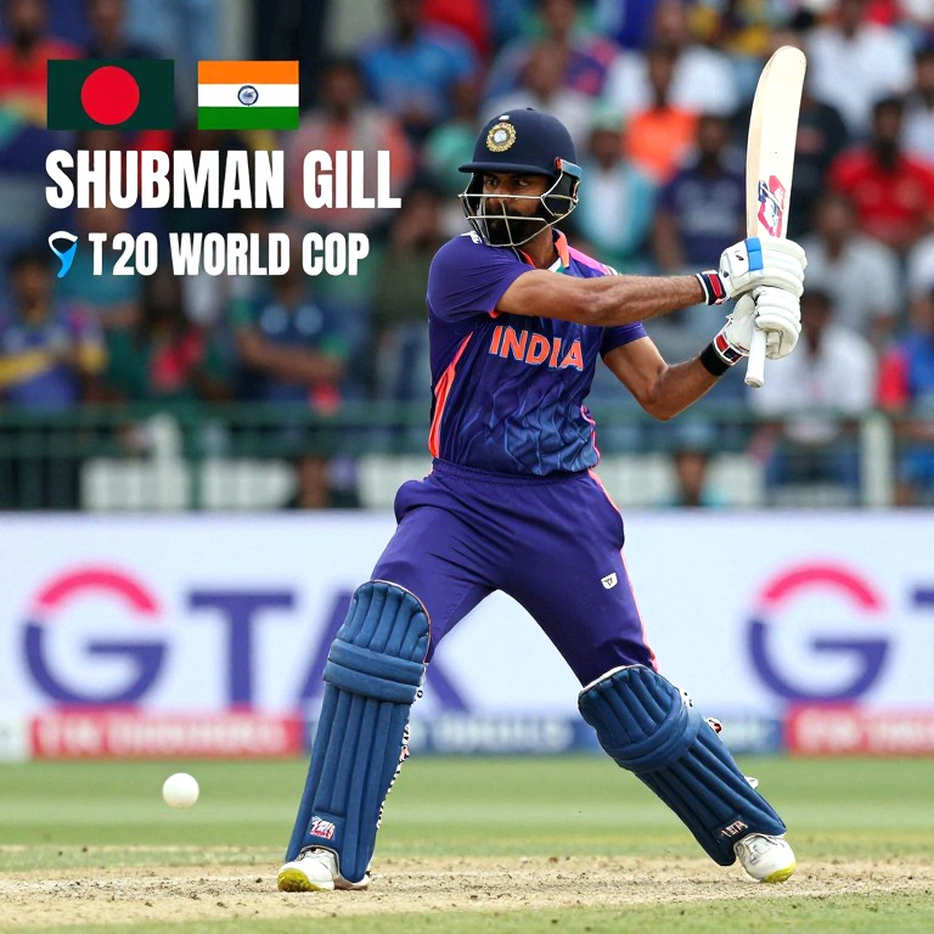
The biggest problem in player analysis is sample size. A T20 batter gets forty or fifty innings in a season, most of them requiring only ten or twenty balls. A strike rate built on those twenty balls does not by itself demonstrate "ability"; it reflects the conditions of the day, the quality of bowling and the team's requirement. Declaring a player "back in form" or "finished" on the basis of four or five innings is the most common and most expensive mistake in cricket journalism.
The second problem is role. Opener, anchor, finisher, all-rounder, wicketkeeper-batter, fast bowler, spinner — each role requires a different metric. Judging a finisher by his average is meaningless; what matters is his strike rate relative to the expected strike rate, and his performance in difficult situations (after wickets fall, in the last four overs). Similarly, a spinner should be assessed not only on wickets but on economy, dot-ball percentage and record against left- and right-handers. Suryakumar Yadav illustrates the point: his value lies in his exceptional T20I strike rate and 360-degree stroke play, and measuring him by long-format metrics would be a category error.
The third problem is selection bias. The innings that is remembered is often the outlier. A century is forgotten, five failures are remembered — or the reverse. The remedy is to look at a rolling window: the last ten innings, the last twelve months, compared against contemporaries in the same role rather than against the career average of some great player.
The fourth lapse is ignoring the age curve and injury history. A fast bowler's workload becomes sensitive around thirty; a batter's eyesight and reaction time decline in ways that often show in performance before they show in statistics. Any player assessment should therefore include injury history, balls bowled in the last twelve months, and format-wise splits. Virat Kohli's career is a good example: his profile has differed across the three formats, and inferring ability in one format from instability in another is logically unsound.
3. Team landscape, rankings and home-ground bias
In team analysis, the ICC ranking is a starting point, not the final truth. Rankings tell you where a team sits on average; they do not tell you how it will play in a particular condition. A mid-tier team can beat a top side at home and lose heavily to the same opponent away. Rankings must therefore always be read alongside the home-away split.
Squad structure rests on four pillars: batting depth, bowling combination, bench strength and age structure. Batting depth is not measured merely by the batters at seven and eight; it is measured by how many overs a team can survive when three top-order wickets fall early. In the bowling combination, it matters whether a team has separate specialists for the new ball, the middle overs and the death. Teams that expect one fast bowler to cover all three phases lose to fatigue at the back end of tournaments.
Age structure is a dimension that Indian cricket media often views emotionally. The truth is that a healthy squad needs three generations: experienced players who absorb pressure, peak players who win matches, and young players being prepared for the next cycle. A team missing any one of the three runs into a transition crisis within a season or two.
Matchup assessment is also incomplete without context. A left-arm seamer's dominance over right-hand batters, certain batters' weakness against spin, or a team's record at a particular ground — all of this is meaningful only when the opponent, the venue and the format are all known.
4. Leagues, auctions and the illusion of commercial value
Indian cricket's greatest interpretive challenge is that the sport and the market stand on the same stage. The Indian Premier League's broadcast rights, franchise valuations and player salaries are among the fastest-growing segments of the global sports economy. But this does not mean the most expensive player is the best international player.
Auction value is set by three things: demand, availability and alternatives. If finishers are scarce in a given season, even an average finisher can command a high price. This must be separated from sporting fair value. The amount paid at auction reflects a player's immediate utility, the team's need and the outcome of a bidding war — not proof of long-term ability. That is why a very highly priced player sometimes sits out the following season, while a cheap signing becomes the team's most valuable member.
The league-versus-national-team tension is also a permanent theme. Player availability, No Objection Certificates, central contracts and overlapping league windows are debated every year. In these debates it is worth remembering that a player's career is short and much of his income comes from leagues; viewing this purely as patriotism versus money oversimplifies the problem. It is fundamentally a labour-economics question, not a moral one.
The sustainability question is now also being raised. Calendar overload, broadcast-cycle renewals, viewer fatigue and multiple leagues running simultaneously are structural risks that will shape the sport over the coming decade.
5. Rules, governance and agenda
Cricket governance operates at two levels: the laws of the game (through the MCC and ICC) and commercial politics (through member boards' revenue shares). The two are connected, and often one is justified in the name of the other.
At the level of playing rules, DRS umpiring controversies, the limits of "umpire's call", the DLS calculation and tie-breaker rules recur periodically. These should be debated, because transparency of rules underpins the sport's credibility. But treating every controversy as conspiracy is as wrong as treating every rule as infallible.
At the second level is the question of revenue distribution. The enlarged share of the ICC's "Big Three" (India, Australia, England) has been disputed for years, and associate members have complained that resources are being concentrated in the name of growing the global game. That debate is legitimate and should be fought on facts, not allegations.
Eligibility and selection matters — NOC conditions, central-contract discipline, mandatory domestic cricket — are also part of governance. In analysing them, the test should be whether rules are being applied equally to all.
The geopolitical dimension should not be hidden either. The years-long freeze on India-Pakistan bilateral series, travel advisories in some countries, and the politicisation of hosting global events are all part of cricket's agenda and must be viewed realistically.
Amid all this, one thing should be said plainly: no report should allege match-fixing or spot-fixing unless there is a solid, verified basis. Turning suspicion into conclusion is not journalism; it is negligence.
6. The risk side
Any assessment of a team or player is incomplete without a risk matrix. Sporting risk (form, favourable opposition), personal risk (injury, workload, mental health), commercial risk (contracts, league availability), regulatory risk (suspensions, disputes) and public-opinion risk (media pressure) — all five must be viewed separately.
The most frequently ignored risk is the calendar. An international player can have more than two hundred playing days a year across three formats, domestic tournaments and leagues. Injury is the natural consequence, not a surprise. For fast bowlers, workload management has become a discipline, and the decision is not "rest" but a long-term investment.
The second major risk is mental health, which has only been taken seriously in the past few years. When a player takes a break, it should be read as investment in career longevity, not as loss of form.
The third risk is talent drain: economies with strong leagues attract players from other countries, weakening the domestic structures of smaller boards. This affects the balance of the game in the long run.
7. Narrative, hype cycles and the expectation gap
Cricket media's economy runs on stories. "The next Sachin", "the next captain", "the biggest auction", "the turning point of the series" — these templates recur because they work. A good story pulls readers, and readers bring advertising. The problem arises when the story takes the place of fact.
Any public narrative can be evaluated with three questions. First: does it have a solid basis? Second: how large is the sample? Third: which event in the next six months could break it?
For example, declaring a young batter "the player of the decade" after two excellent innings is a story with a very thin foundation. Six months later, when he struggles against fast bowling, the same media calls him "over-rated". Both extremes are faces of the same error: ignoring the sample.
Expectation-gap analysis is the cure. The distance between market expectation and objective assessment is the real story. If a team is expected to reach the semi-finals while its squad is structurally weak, that gap is a meaningful subject of analysis. But if a player's reputation rests only on sentiment, breaking it with data is also necessary — with courtesy, but with clarity.
8. Industry transmission: from broadcast to fantasy
A cricket event does not happen only on the field; it transmits through a chain. At the upstream end is youth development and talent supply, in the middle are national teams and leagues, and downstream are broadcast, advertising, fantasy sports, merchandise and derivative markets.
When a star emerges, the effect shows at three levels. First, broadcast value: rights for matches featuring big names sell at higher prices. Second, the South Asian market: in India and its neighbourhood cricket is not just a sport but a social event, so a big match's impact runs from television ratings to city markets. Third, the capital network: IPL franchise owners are now also investing in leagues in South Africa, the UAE and the United States, creating a global circuit of capital.
Fantasy sports and betting-adjacent markets are the most sensitive part of this chain. It should be stated clearly here that the purpose of any analysis is to understand the game, not to offer wagering advice. Sporting outcomes are inherently uncertain, and no analysis can eliminate that uncertainty.
Conclusion
The real job of cricket analysis is not prediction but making uncertainty intelligible. Good analysis first fixes the format, then examines the sample, then adds role and context, and finally admits what it does not know.
The moment a report stops admitting that its information is insufficient, it turns from news into story — and from story into confusion. Today's cricket audience is more informed than ever. It knows the difference between average and strike rate; it understands the gap between auction price and ability. That places a greater obligation on journalism: give the numbers, give the context, and where there is no information, say clearly that there is none.
That discipline is what separates cricket coverage from noise.