
Jemimah Rodrigues Eyes Return After Hamstring Tear: Fitness, Match-Sharpness and Selection Are Three Separate Tests
**उत्तर कैप्सूल — जेमिमा रोड्रिग्स की वापसी** **कौन:** जेमिमा रोड्रिग्स, भारतीय महिला टीम की बल्लेबाज़ (व्हाइट-बॉल, मध्य/शीर्ष क्रम)। **क्या हुआ:** दाहिनी हैमस्ट्रिंग में हाई-ग्रेड टियर (गंभीर मांसपेशी चोट), जिसका निदान BCCI मेडिकल टीम ने किया। **कब और कहाँ:** 3 अगस्त, कार्डिफ़ के सोफ़िया गार्डन्स में, द हंड्रेड लीग में सदर्न ब्रेव के लिए खेलते हुए (ICC रिपोर्ट के अनुसार)। **क्या चूका:** महिला T20 एशिया कप, एशियाई खेल और ज़िम्बाब्वे के खिलाफ़ घरेलू सीरीज़ (3-0 वनडे, 3-0 T20I)। **वर्तमान स्थिति:** वापसी की तैयारी में, लेकिन कोई आधिकारिक वापसी तिथि या लक्ष्य टूर्नामेंट घोषित नहीं। रिपोर्ट की भाषा ‘वापसी की नज़र’ है — यानी इच्छा, पूरी फिटनेस का प्रमाण नहीं। **टीम का प्रदर्शन:** उनके बिना भारत ने एशिया कप, एशियाई खेल स्वर्ण और ज़िम्बाब्वे के खिलाफ़ दोनों सीरीज़ जीतीं — गहराई का संकेत, पर प्रतिद्वंद्वी स्तर सीमित जानकारी। **मुख्य जोखिम:** दोबारा चोट (उच्च), मैच-शार्पनेस की कमी (मध्यम), चयन में प्रतिस्पर्धा (मध्यम)। समग्र रेटिंग: मध्यम। **ध्यान दें:** रिपोर्ट में बल्लेबाज़ी के कोई आँकड़े (औसत, स्ट्राइक रेट, विभाजन) नहीं हैं, इसलिए फ़ॉर्म पर कोई निष्कर्ष संभव नहीं। चार अलग फॉर्मेट/आयोजनों को एक में मिलाकर न पढ़ें।
New Delhi. India Women batter Jemimah Rodrigues is preparing to return after a lengthy spell out of the game, but the certainty surrounding her comeback is matched by equally real uncertainty. According to a report published by the International Cricket Council (ICC), she suffered an injury to her right hamstring on 3 August while playing for Southern Brave in The Hundred at Sophia Gardens, Cardiff. The BCCI medical team diagnosed the problem as a high-grade tear — significant damage to the muscle fibres.
The injury cost her three separate windows: the Women's T20 Asia Cup, the Asian Games, and the home bilateral series against Zimbabwe. The report names neither a return date nor a target tournament; it states only that she is eyeing a return. That is the language of intent, not of medical clearance.
Why a hamstring tear is the most stubborn injury in the game
In cricket, hamstring injuries are routinely underrated, yet they are among the most stubborn setbacks in a sport built on sprinting. A high-grade tear means substantial fibre damage. Rehabilitation is typically measured in weeks to months, and the dominant risk is recurrence.
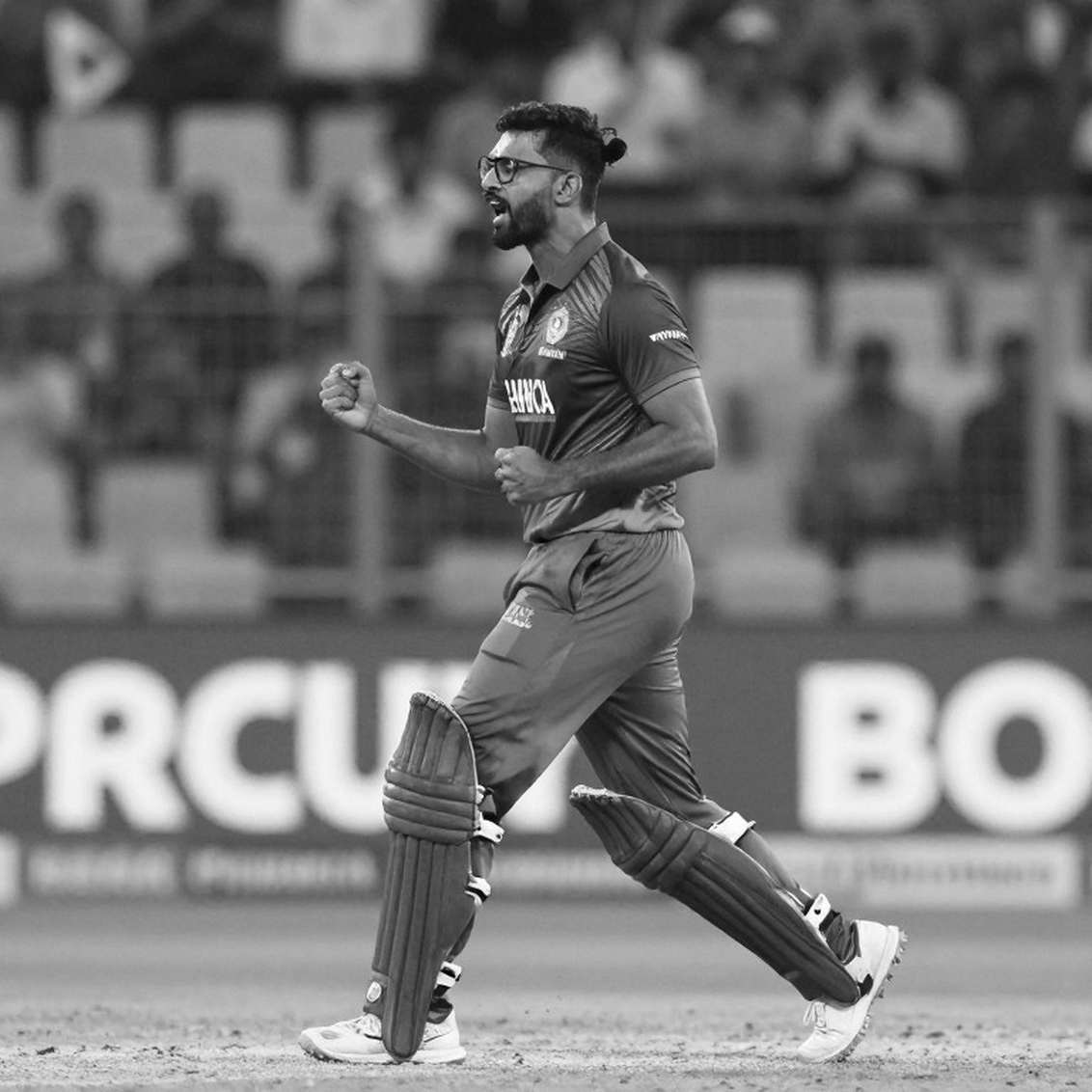
For Rodrigues the problem is compounded because her game rests heavily on exactly the capacity a hamstring governs: fast running between the wickets, sharp singles and twos, and outfield sprinting. The injury has not directly attacked her shot-making hand-eye component; it has attacked the physical platform that gives her batting its tempo and her fielding its edge.
It is also worth noting that this is soft-tissue damage, not joint or contact trauma. Pitch, surface and venue are not plausible causal factors. The cause is load, and the treatment will follow the same logic.
What she missed: the calendar burden
The three events referenced are of three different kinds — the Women's T20 Asia Cup (an ACC T20 tournament, played in the UAE according to the report), the Asian Games (a multi-sport continental event at which cricket was a medal sport and India won gold), and the Zimbabwe bilateral series (three ODIs and three T20Is).
Missing three separate event windows implies a layoff measured in months, not weeks. The direct consequence is that the largest question on return will not be fitness alone but match-sharpness. After months away from competitive cricket, timing, decision-making and the reading of pace all have to be rebuilt.
A finer point matters here: every one of those events is white-ball cricket. Any conclusion about her form therefore belongs to the T20 and ODI context, not to Test cricket.
India won everything without her: a depth signal, handled with care
The most cited fact in the report is that India won on every front in her absence — the Asia Cup title, Asian Games gold, a 3-0 ODI series and a 3-0 T20I series against Zimbabwe.
That is unquestionably evidence of squad depth and a functioning pipeline. Winning titles without a frontline batter shows a batting unit that does not depend on one individual. But the result can be misread in two ways.
First, 'won without her' does not mean 'did not need her'. Second, the report names only one bilateral opponent — Zimbabwe — which is not a peer-level side, so the 3-0 and 3-0 results carry limited informational weight about strength. The standard of the other opponents is not detailed. This is a result signal, not a process proof.
The data vacuum: no verdict on form is possible
Nothing in the available material gives her batting average, strike rate, home-away splits, or pace-versus-spin numbers. The direct implication is that any claim her form is rising or falling would be unsupported.
The only concrete data point in the entire item is medical, not technical — a BCCI-diagnosed high-grade tear of the right hamstring. That distinction should be held firmly: a decline in availability is proven; a decline in skill is not.
One reasonable inference is that she is a young player early in her career. Youth generally aids soft-tissue recovery, but it does not eliminate recurrence risk in explosive hamstring injuries.
Return readiness will be format-specific, not uniform
T20 and ODI place different physical demands on the body. T20 requires short, explosive sprints — the maximum hamstring load. ODI requires longer, repeated running. A green light for one format is not certification for the other.
The Hundred's 100-ball format is closest to T20 in physical demand. The format in which the injury occurred is therefore likely to be the first test of the return.
Franchise versus country: a clean case study
This item is, in itself, a clear illustration of the tension between franchise cricket and national duty. An Indian international was seriously injured in an overseas league, and the consequence was the loss of multiple national-team windows.
The strategic implication is that overseas league participation borrows against national-team availability risk. The exposure and experience a league offers are real, but so is the risk — and that risk is ultimately carried by the national board.
The source provides no NOC, insurance or compensation detail, so nothing can be concluded on those fronts. What is clear is that women's franchise leagues are becoming the primary injury-exposure venue for internationals, because they sit outside central-contract medical oversight.
Governance: who owns the return decision
The report makes clear that diagnosis and management sit with the BCCI medical team. That is an important governance signal: the return decision belongs to the board, not the franchise. It reduces the risk of a player being rushed back under a league's commercial pressure.
On the other hand, return announcements for contracted India players are typically board-gated. The 'eyeing a return' phrasing therefore likely reflects the player's ambition rather than a board-cleared timeline.
There is no rules controversy, no DRS or DLS issue and no integrity dimension here. Compliance risk in this item is genuinely low; the dimension is largely not applicable.
The quiet challenge: selection
What tends to be overlooked is that the team won titles without her. That means a returning player does not walk back into a settled spot; she has to compete for it.
This is good news for India and a hard reality for the individual. A side that has learned to win without you will not rush you back. That is precisely why strong domestic and franchise form becomes important for Rodrigues.
Risk assessment
The dominant risk is sporting: re-injury after a high-grade tear. The risk is elevated because her role involves fast running and fielding — exactly the load a hamstring injury compromises.
The second risk is match-sharpness. After a multi-month layoff, a dip in strike rate and running intensity in the first few fixtures is natural. That should be treated as a form-discovery window, not a verdict.
The third is selection displacement, created by the team's success in her absence. The fourth, lower-level risk is commercial: reduced league and endorsement visibility during the layoff, though the source quantifies nothing.
The fifth is public pressure — media and fans may demand a fast return before a marquee event. The sixth is systemic: the women's calendar is intensifying across leagues, continental tournaments, multi-sport events and bilateral series. The overall risk rating is Medium, driven mainly by physical factors.
Narrative: expectation is running ahead of evidence
The current narrative is the comeback of a young India batter — a redemption arc. It sits in an early, germination phase, because there is no date, no tournament and no performance data.
The source is the ICC, an official body, which gives the item high baseline credibility and lowers the risk of rumour-driven distortion. The framing is restrained and factual, so sentiment is not overheated relative to fundamentals.
But there is a quiet counter-narrative: the team won without her. This is a return into competition, not a return to rescue. Indian media amplification could overstate readiness, and if a major home event is the target, the noise will escalate sharply once a squad is named.
What it means for the industry
As women's franchise cricket grows, so does the pooled injury risk carried by national teams. The Hundred and the WPL give players a global stage, but their calendars directly affect national availability.
The natural next step is workload management — mandatory rest windows, match caps and injury-surveillance systems. This item is a concrete case study for that debate.
For broadcasters and brands, a comeback story has content value. But the source contains no broadcast-rights, salary or betting figures, so the financial magnitude cannot be quantified. A clean, well-managed comeback would carry outsized brand value for the player.
What to track next
First, the official return date and squad inclusion; naming a specific tournament will clarify the timeline. Second, the format of the return — the first playing XI will show how heavily the hamstring is being load-managed. Third, post-return output, especially strike rate and running; a sustained deviation from career baseline would suggest the layoff eroded sharpness. Fourth, structural workload policy — new rest windows or caps would change the industry's risk model. Fifth, verification of the reported venues for the missed events, cross-checked against ACC, OCA and ICC records, since the original report is somewhat loose on timeline and host details.
Fact-check note
The source bundles four different kinds of event — The Hundred (100-ball), the Women's T20 Asia Cup, the Asian Games and a Zimbabwe bilateral series. These should not be merged into a single format or a single timeline, and any downstream analysis must state the format explicitly.
Conclusion
This is a low-volume but physically significant item. A high-grade hamstring injury to a young India batter, sustained in an overseas franchise league, cost her multiple national windows, while India demonstrated its depth by winning through her absence.
The real question is not whether a return is announced. It is in which format, under what match load, and with what management of recurrence risk. Until those three are answered, a return announcement should be read as a stage of rehabilitation, not as full fitness.