
The New Framework of Cricket Analysis: When Data Meets Narrative
इस लेख का मुख्य बिंदु: क्रिकेट विश्लेषण में सबसे पहली शर्त प्रारूप (टेस्ट/वनडे/टी20) स्पष्ट होना है, क्योंकि तीनों के औसत, स्ट्राइक रेट और इकॉनमी एक-दूसरे से तुलनीय नहीं हैं। दूसरी शर्त है खिलाड़ी की भूमिका और बेंचमार्क के भीतर तुलना; तीसरी है स्थितिजन्य आंकड़े और छोटे नमूने से बचाव; चौथी है टॉस, ओस, डीएलएस और डीआरएस जैसे भाग्य-कारकों को अलग करना। लीग क्रिकेट में नीलामी की ऊंची कीमत को खेल-उपलब्धि का प्रमाण न मानें — व्यावसायिक मूल्य और खेल मूल्य अलग-अलग हैं। सत्यनिष्ठा के मामले में याद रखें कि फिक्सिंग का उल्लेख न होना सत्यनिष्ठा का सबूत नहीं, केवल साक्ष्य का अभाव है। सबसे बड़ा जोखिम विश्लेषणात्मक है: अपूर्ण इनपुट पर बना सुसंगत दिखने वाला विश्लेषण। इसलिए जहां तथ्य नहीं हैं, वहां स्पष्ट रूप से 'अपर्याप्त जानकारी' लिखना ही सही पत्रकारिता है।
Cricket is today among the most data-driven sports in the world. Every ball, every run, every catch and every decision ends up on a server somewhere. But an abundance of data and an understanding of data are two different things. In recent years a quiet but significant shift has taken place in cricket journalism and analysis: numbers now arrive before headlines, and verification has become a precondition for opinion. This article examines that shift through eight disciplines of reading cricket — format, player, team, league, governance, risk, public narrative and industry.
It must be stated at the outset that this is not a report on a single match, a single series or a single player. It is an analytical framework — a way of thinking through which any cricket story can be broken down, tested and weighed. Its first condition is simple: where facts do not exist, conjecture must never be presented as fact.
Format: the first and most fundamental condition
The most elementary error in cricket analysis is to weigh Test cricket, ODIs and T20s on the same scale. These are three different games whose laws may be identical but whose economies are entirely distinct. In Test cricket time is a resource and patience is a skill; in ODIs an equation of balance and tempo is built; in T20 risk itself is the strategy. The first question of any analysis must therefore be: which format? The moment that is unclear, every downstream conclusion becomes suspect.
Once the format is clear, the phases of the match come into view. Powerplay, middle overs and death overs make different demands. When will the new ball move, when will spin grip, when should a batter take risk — all of this is settled within that frame. Venue, the character of the pitch, weather, dew and Duckworth-Lewis all attach to it. Without these, any performance analysis remains incomplete, because a cricket result is a joint product of circumstance and skill.
Player evaluation: beyond the average
Assessing a player begins with the role. Opener, anchor, finisher, fast bowler, spinner, all-rounder, wicketkeeper — each role has its own yardstick. The number that is excellent for an anchor may be below average for a finisher. The first task is therefore to establish what the team is asking of the player, and then whether he is meeting that demand.
The second layer is the benchmark. Stating an average is not enough; it is also necessary to say where that average stands relative to that era and that league. Cricket's economic and technical environment has changed continuously — bat quality, boundary dimensions, bowling speeds, fielding standards — and all of it leaves marks on the numbers. Comparisons must therefore be made within the same time window and the same level.
The third layer is situational splits. Average under pressure, economy in the fourth innings, performance in overseas conditions, scoring rate in big matches — together these produce a picture that a plain average can never show. A player who scores in comfortable conditions and goes quiet in difficult ones may look large in the numbers while being of limited value to the team.
The fourth and most delicate layer is trend: the last six months of performance, technical change, injury history, the age curve. The relationship between age and performance is not a straight line; some players ripen late, some shine early and fade. None of this can be assessed without a clear name, role and format.
The trap of the small sample
The most common disease of cricket analysis is drawing large conclusions from a small sample. Calling three innings of brilliance 'form' and declaring one failed series a decline is easy, but it is not correct. Cricket contains a large element of chance: a dropped catch, an edge that flies, an umpiring decision — all of these change the face of a statistic.
Separating the luck factors is therefore essential. The effect of the toss, the effect of dew, a target revised by rain, a contentious DRS call — once all of these are stripped away, what remains is the real process. And it is that process which determines whether the result came from skill or from chance.
Team landscape and the politics of ranking
Team analysis begins with tier identification: is this side elite, mid-tier, emerging or an associate member? Then comes the ICC ranking question, with an important caution: the Test, ODI and T20 tables are not interchangeable. Each has its own mathematics, its own window and its own context.
Squad structure can be read across four dimensions — batting depth, bowling combination, bench strength and age structure. Batting depth shows how long a team can hold out under pressure. The bowling combination shows whether it has different options for different conditions. Bench strength shows how quickly it can recover from injury or loss of form. Age structure shows how the team's shape will change over the next three or four years.
Generational transition is the area where the most predictions are made and the most errors occur. The simultaneous retirement of several senior players delivers a shock that shows up in rankings immediately, but the real loss becomes visible two or three years later.
Home and away performance differ enormously. Home numbers often mask weaknesses, because conditions are familiar, pitches are friendly and crowds are supportive. The real test comes on overseas tours, where adaptation itself becomes the highest skill.
League economics: auction price versus sporting value
League cricket has transformed the economics of the sport. Broadcast rights, franchise valuations and player salaries are now a permanent part of cricket coverage. But one fundamental distinction must be understood: a high auction price is not proof of high achievement on the field. This distinction — commercial value versus sporting value — is the key to reading every league story.
A franchise pays a high price for a player because he completes its squad structure, or has greater market pull, or is attractive for broadcast. None of these reasons says anything about how successful that player will be internationally. Conflating the two is a mistake repeated constantly in cricket analysis.
The second tension is between league and national team. League windows, NOCs, central contracts, workload management and injury risk are all points where league interest and national interest collide. Whenever a major league cannot find space in the calendar alongside international duty, the argument restarts. No permanent solution has been found, and perhaps none can be, because the two sides' priorities are fundamentally different.
The third aspect is the fragility of smaller boards. The financial strength of global cricket is concentrated in a handful of markets. When a broadcast cycle turns over or interest declines in a large market, the effect lands directly on member nations whose income depends heavily on ICC distributions. That inequality may become the central issue of cricket governance in the coming years.
Governance, rules and integrity
Cricket is governed at three levels — the ICC, national boards and leagues. Power and revenue distribution among them shifts continuously. Disputes over the laws — ball condition, fielding restrictions, use of technology — surface periodically. Eligibility and selection debates are never far away. And political or geopolitical factors have never stayed far from cricket.
The integrity question is the most sensitive. One principle must be remembered: the absence of a fixing reference in a document is not evidence of integrity; it is only an absence of evidence. That distinction matters greatly in journalism, because anti-corruption stories often surface with the least noise and must be read with the greatest care.
Scenario analysis is useful in governance matters. Worst case, base case and best case kept separate make it possible to see in which direction risk is moving. This method does not predict; it organises possibilities.
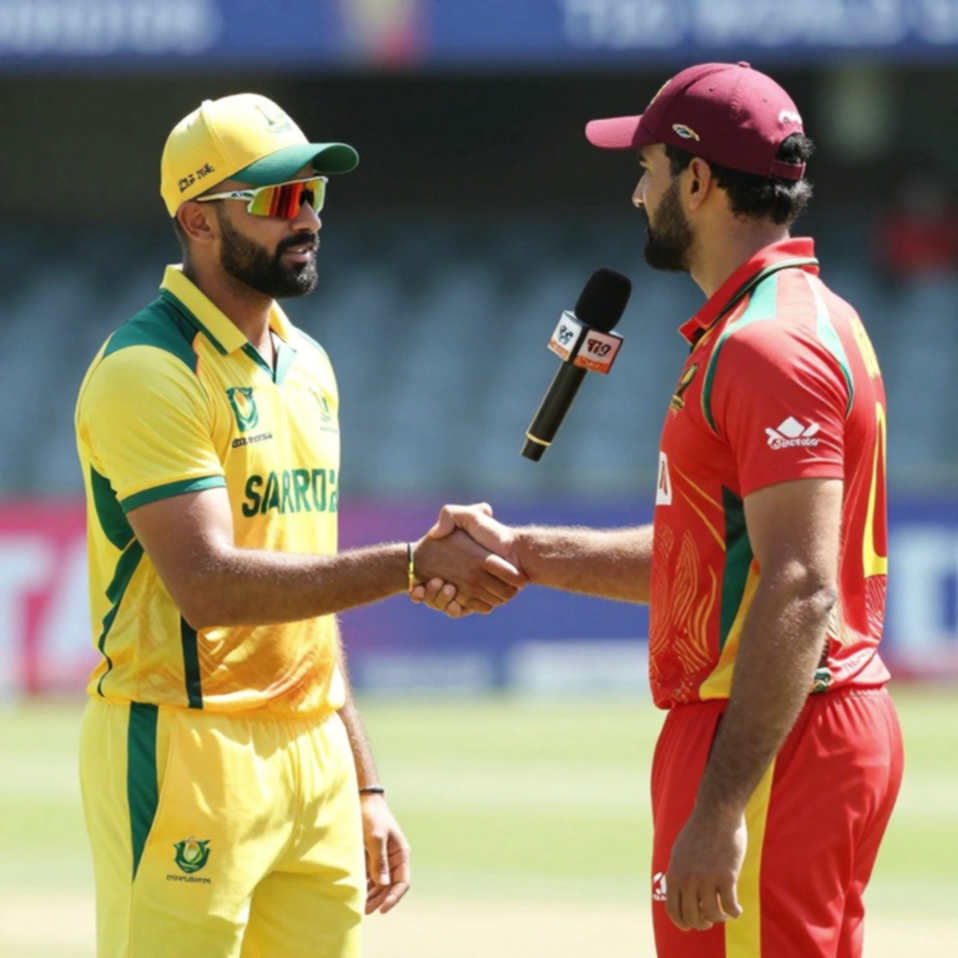
The full map of risk
Risk in cricket is layered. Sporting risk includes form, injury and the opponent's strategy. Personnel risk includes retirement, injury, coaching change and the danger of players moving to other leagues. Commercial risk includes rights rollover and franchise financial health. Rules and integrity risk is separate. Public-opinion risk attaches to scandals, the security of rivalries and the image of betting. Systemic risk includes weather, geopolitics and calendar restructuring.
Above all of these sits a risk that is often ignored — analytical risk. This is the situation in which an incomplete input produces an analysis that reads coherently but is tethered to no source. It is journalism's most damaging failure because the reader cannot detect it. There is only one cure: where facts do not exist, say so explicitly.
Public narrative and the expectation gap
Every big cricket story travels with a narrative. Sometimes it is a rivalry, sometimes a dynasty, sometimes a farewell, sometimes a comeback. These narratives are not wrong in themselves, but treating them as fact is wrong. To identify a narrative, one must first grade the source — official board, credible cricket journalist, general media, or a traffic-farming account. No claim can be weighted before its source tier is known.
The expectation-gap analysis rests on this. What the market expects and what is objectively possible — the distance between the two is the real story. But that distance can be measured only when data exists on both sides. If there is no market signal and no fundamentals baseline, the gap is not zero; it is undefined. The difference matters.
Narrative durability can also be tested. Is there real performance behind the story? How large is the sample? How long will the narrative last? Stories resting on a single match last until the next match. Stories resting on two seasons last for years.
Industry transmission: one event, many effects
No major cricket event transmits in a straight line; it passes through a chain. At the top is talent supply — junior cricket, domestic structure, coaching. In the middle sit national teams and leagues. At the bottom are broadcast, commercial markets and derivative products.
When a player is injured, the effect does not stay confined to his team. It moves to the league's squad structure, then to broadcast value, then to audience interest. Similarly, when tension grows between a board and a league, it touches player contracts, availability and the planning of future series.
The South Asian market is the largest node in this chain, because here cricket is not merely a sport but a social event. Yet the capital network has now globalised — Gulf leagues, new attempts in the American market, and the expansion of franchise cricket in Europe are all evidence of it.
Three directions will matter in the coming years. First, the expansion of women's cricket — growing leagues and growing audiences. Second, cricket's return to the Olympics, which will connect the sport to a new global audience. Third, cricket's foothold in the American market, still at an early stage. All three will affect not only revenue but the calendar and priorities of the game.
Conclusion: discipline is the real analysis
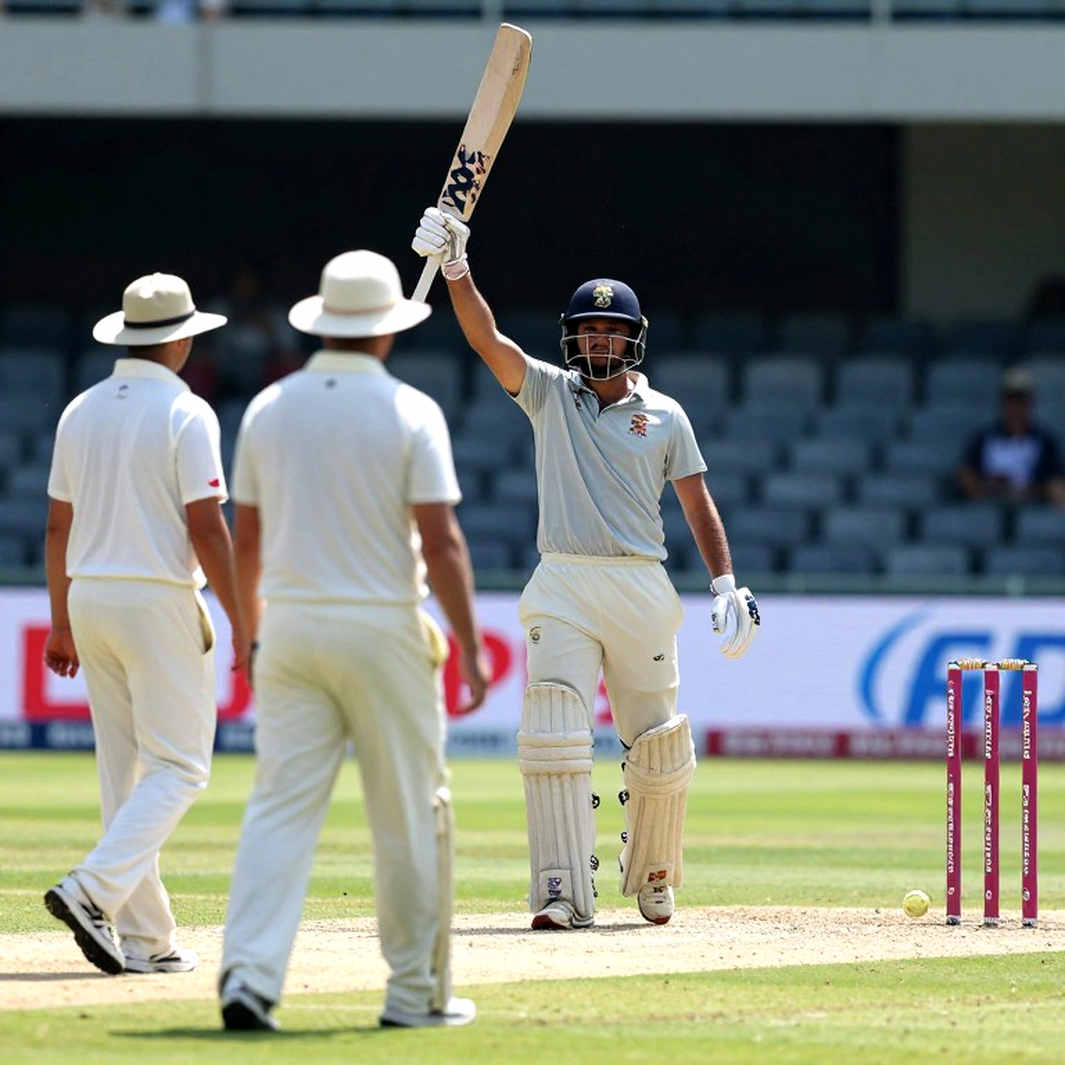
The hardest part of cricket analysis is not gathering data — there is plenty. The hardest part is deciding when to stay silent. When the format is unclear, when no player is even named, when the source is unknown, the most honest answer is that analysis is not possible. That is not weakness; it is discipline.
A good analyst is not one who answers every question, but one who can say on what basis each answer rests and which questions remain unanswered. In a world where opinion forms on every ball and argument follows every opinion, that discipline is journalism's greatest service.
Data tells a story, but narrative can grow larger than the data and break it. The real work is to hold both together — data within its limits, narrative within its evidence. On the day that balance holds, cricket journalism will reach its highest standard.