
Thirteen Weight Classes, Six Boxers, Zero Medals: The Ledger Behind India's Boxing Quad
**मुख्य उत्तर (≤60 शब्द):** पेरिस 2024 में भारत के छह मुक्केबाज़ों ने हिस्सा लिया और एक भी पदक नहीं जीता; कोई भी क्वार्टरफ़ाइनल से आगे नहीं पहुँचा। मुख्य वजह प्रतिभा की कमी नहीं, बल्कि IBA-आईओसी विवाद से जमे कोटा कैलेंडर और बदले हुए वज़न वर्ग रहे, जिसने भारत की सबसे मज़बूत श्रेणियों में भीड़ बढ़ा दी। **मुख्य तथ्य:** - पेरिस 2024 में मुक्केबाज़ी के 13 वज़न वर्ग थे: पुरुषों के 7, महिलाओं के 6; टोक्यो 2020 में पुरुष 8 और महिलाएँ 5 थीं। - भारत के छह मुक्केबाज़: निकहत ज़रीन (50 किग्रा), प्रीति पवार (54 किग्रा), जैस्मिन लांबोरिया (57 किग्रा), लवलीना बोरगोहैन (75 किग्रा), अमित पंघाल (51 किग्रा), निशांत देव (71 किग्रा)। - जून 2023 में आईओसी ने IBA की मान्यता वापस ली; फ़रवरी 2025 में वर्ल्ड बॉक्सिंग को अस्थायी मान्यता मिली। - मार्च 2025 में आईओसी सत्र ने लॉस एंजिलिस 2028 में मुक्केबाज़ी की बहाली को मंज़ूरी दी। - मार्च 2023 की नई दिल्ली महिला विश्व चैंपियनशिप (IBA) में भारत ने चार स्वर्ण जीते थे, जो ओलंपिक कोटा गणित में नहीं गिने गए। **स्रोत:** अंतरराष्ट्रीय ओलंपिक समिति (आईओसी) सत्र निर्णय, 22 जून 2023 और 20 मार्च 2025; पेरिस 2024 आधिकारिक स्टार्ट लिस्ट एवं परिणाम, 27 जुलाई–10 अगस्त 2024; IBA महिला विश्व चैंपियनशिप परिणाम, नई दिल्ली, मार्च 2023। **संबंधित प्रश्न-उत्तर:** प्रश्न: पेरिस 2024 में भारतीय मुक्केबाज़ी को एक भी पदक क्यों नहीं मिला? उत्तर: कोटा कैलेंडर IBA-आईओसी विवाद से बाधित रहा और चार में से तीन प्रमुख महिला मुक्केबाज़ ऐसी श्रेणियों में उतरीं जो सात किलो के दायरे में तीन ओलंपिक वर्ग बन गई थीं, जिससे प्रतिस्पर्धा का घनत्व बढ़ गया। प्रश्न: भारतीय मुक्केबाज़ के करियर में सरकारी नौकरी क्यों निर्णायक है? उत्तर: सर्विसेज़, रेलवे और राज्य पुलिस की नौकरी स्थायी आय देती है, लेकिन शिविर में रहने के लिए रिलीज़ लेटर और तैनाती को नियंत्रित करने वाला पोस्टिंग ऑर्डर अनिवार्य होता है। प्रश्न: लॉस एंजिलिस 2028 के लिए भारत के पास क्या स्पष्ट अवसर है? उत्तर: मार्च 2025 के बाद मान्यता और कोटा पद्धति दोनों तय हो चुकी हैं, इसलिए अगले दो वर्ष घरेलू कैलेंडर, स्थिर वज़न वर्ग और सर्विस पाइपलाइन ऑडिट के लिए सबसे साफ़ खिड़की हैं।
Paris 2026's boxing start list carried thirteen weight classes. Tokyo 2026 carried thirteen as well. The number stayed the same; the split did not. The men's eight categories shrank to seven, the women's five grew to six. On paper this was a one-line amendment. On the ground it reset the calendar for two generations of boxers. India sent six fighters to Paris — four women, two men. Not one of the six went past the quarterfinals. Since Beijing 2026, this is only the second Olympic cycle India has closed without a boxing medal; the first was Rio 2026. That week I opened my spreadsheet and changed the question. The question was not who lost. It was which account the loss was booked into.
I watched Paris from a lounge room in Melbourne, evening sessions bleeding past midnight AEST, a notebook full of sentences I had already decided I could not use. Tokyo 2026 had been the same: the outlet sent one staffer and it was the swimming desk. Watching from a distance has a cost — you lose the sound of the ring. It has one advantage. When you are outside the noise, you see the things people inside it have normalised. This time what I saw was the arithmetic of the weight classes.
The real story of the Paris cycle was settled not inside the ropes but between two institutions — and the bill landed on the boxer standing furthest down the chain.
Take the context first, because without it the zero makes no sense. In June 2026 the International Olympic Committee withdrew recognition from the International Boxing Association. After that, Olympic quotas were not distributed by any federation but by the Paris 2026 Boxing Unit. Which meant an entire four-year cycle in which an athlete's fate hung on the question of which side of the split their national federation stood. The Boxing Federation of India had to choose between the IBA, which ran the world championships, and the pathway the Olympic system recognised. The March 2026 women's world championships in New Delhi belonged to the IBA — India won four golds there (Nitu Ghanghas at 48kg, Nikhat Zareen at 50kg, Lovlina Borgohain at 75kg, Saweety Boora at 81kg) and topped the table. Three months later the IBA lost recognition. India's biggest triumph of the cycle was worth nothing in Olympic arithmetic. That contradiction was not one athlete's weakness. It was a structural trap.
In February 2026 World Boxing received provisional recognition, and in March 2026 the IOC Session restored boxing to Los Angeles 2028. The sport was saved. The question is whether the four years spent arguing can be recovered.
Now the arithmetic. India's depth in boxing has traditionally sat in two bands: 48 to 57kg among women, 51 to 57kg among men. Paris created 50, 54 and 57kg for women — three Olympic classes inside seven kilograms. India's strongest band became the world's most crowded band. Nikhat Zareen went at 50, Preeti Pawar at 54, Jaismine Lamboria at 57. All three were out before the quarterfinals — Nikhat to Wu Yu of China, Preeti to Chang Yuan of China, Jaismine to Nesthy Petecio of the Philippines. Among the men, Amit Panghal lost at 51kg to Patrick Chinyemba of Zambia, and Nishant Dev lost his 71kg quarterfinal 1-4 to Marco Verde of Mexico.
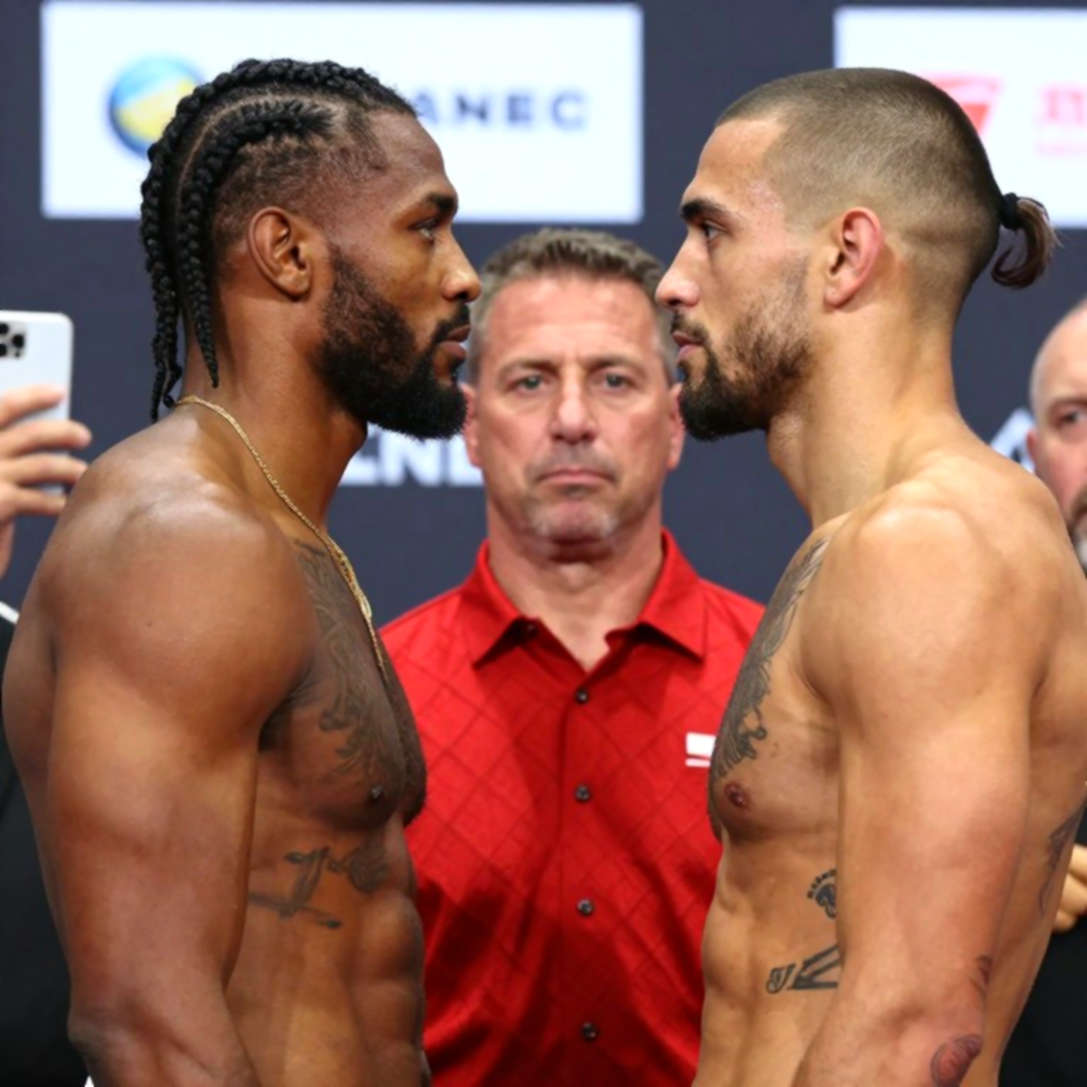
India's problem was not a shortage of talent. It was that the talent was standing in the one lane where the traffic was heaviest.
I built a spreadsheet to see what the applause could not. Four of India's six boxers in Paris competed in divisions that were either new or had shifted boundaries since Tokyo. When a fighter spends four years preparing for one weight and learns at the last moment that the weight itself has moved, the damage is not muscular. It is to the plan — sparring partners, coaching habits, the weight-cut cycle, all rebuilt from scratch. The men's 49kg class went through exactly this, and the boxers it stranded have never appeared in a single newsline. Some categories vanish quietly, without a press release.
Then there is the part I consider the most under-reported of all: the services pipeline. The central economic fact of an Indian boxer's career is that the most reliable income does not come from the ring. It comes from a job — Services, Railways, state police, CISF, ONGC. Those institutions are the actual spine of Indian boxing. The medal table never lists the man who checked the door, or the clerk who filed the release letter.
Two pieces of paper decide a career in this pipeline. The first is the release letter, without which no employed boxer can stay in a national camp. The second is the posting order, which decides where he spends the next two years. One posting order can eat an entire camp cycle. I learned this when a boxer told me on the phone, without complaint, in the flat tone of a man describing weather, that a transfer had cost him three months of camp.
Here I have to be precise about my own method. Where I have data but no witness, I keep the two apart. The architecture of jobs and release letters I can document. What I cannot document is which boxer was never informed about a camp, or was informed and stayed silent out of fear. That belongs to the people standing there, not to my file.
The trade-off, as the athletes describe it, is more exact than any moral framing: the job kept them in the ring and took obedience in return. Both things are true. Calling it pure exploitation flatters the writer and insults the choice a family made — in Bhiwani or Imphal, the calculation is the same, how many years can she box, and what happens after.
The third blind spot is the domestic calendar. The ladder exists — sub-junior, youth, elite nationals, Khelo India Youth Games — but the rungs are not joined. National championship dates are often announced within the year, so coaches cannot plan. And most of these events take place where no camera goes. A career that never appears on television generates no sponsorship model, no data, no comparison. Without comparison there is selection; without visibility there is no scrutiny of selection.
I keep a file dated 2026 called the Super Boxing League. Eight franchises, five weeks in July and August, Amir Khan and Bill Dosanjh fronting it. I logged every one of its sixty-odd bouts and found roughly seven in ten fighters had never boxed outside the amateur circuit, because the BFI would not release registered amateurs. The league folded after one season. That experience permanently changed how I write: I stopped opening with atmosphere and started asking who controls the pipeline.
Which is why I do not agree when people say Indian boxing needs a professional league. The shortage is not international exposure. It is domestic bout volume. An Indian boxer fights far fewer competitive rounds in an Olympic cycle than he or she sweats through in training. Ring craft is built by decisions, not punches — when to press, when to retreat, how a score flips in the third round. That is learned against a live opponent, not from video.
What looks like a rule change is often a quiet redistribution of power. Moving one men's class to the women's draw in Paris was, in principle, a welcome step. In practice it left countries whose depth sat in men's light-flyweight without a route, and gave an extra opening to countries strong in women's middleweight. India got caught between both — its strongest women's band was congested, and part of its men's cohort sat in divisions that no longer existed.
On the Mary Kom era, one uncomfortable thing needs saying. Six world titles and a 2026 Olympic bronze are the exceptionalism of one athlete, not an institution. Nikhat and Lovlina are heirs, not replications, and both came up through state units and family-funded pathways rather than any system Mary Kom built. The distinction matters: if you mistake an athlete for a foundation, you will never build the foundation.
Looking forward: Los Angeles 2028 is confirmed and World Boxing is recognised. That gives Indian boxing the only clean twenty-four months it has had in a decade — no argument over the qualifying system, no argument over federation recognition. Three things fit in that window: publish domestic calendar dates a year in advance, commit in writing to keeping weight classes stable for two cycles, and audit the services pipeline to count how many release letters stalled and how many camps were lost to postings. The third is the least glamorous and will matter most.
I have not closed the Paris page in my file. One line on it keeps proving true: the medal table never lists the man who checked the door. The question is who will be standing behind the next Indian boxer who walks to the ring — and whether anyone in that queue will still be keeping a count of what it cost.